
Philippines steps up crackdown on illegal online gambling
Criminal networks are believed to be using routes from Palawan to Sabah, then through Malaysia, with final destinations in Myawaddy (Myanmar) or Phnom Penh (Cambodia).
Criminal networks are believed to be using routes from Palawan to Sabah, then through Malaysia, with final destinations in Myawaddy (Myanmar) or Phnom Penh (Cambodia).


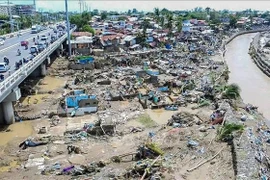
Preliminary reports from ReliefWeb estimate combined infrastructure damage in the Philippines from Kalmaegi and Fung-Wong at 292,000 USD, with agricultural losses of 184,000 USD, affecting over 600 farmers and fishermen and 460 hectares of farmland.
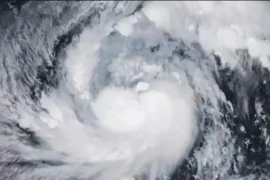
The Southeast Asian country is predicted to face Super Typhoon Fung-wong, locally known as Uwan, in the coming days.

The Philippines, which experiences an average of 20 storms annually, frequently suffers heavy losses, especially in poverty-stricken areas. Scientists warn that climate change is making storms increasingly intense and destructive.

At least five people have been killed and hundreds of thousands displaced as rains driven by Typhoon Kalmaegi flooded swathes of central Philippines on November 4.

Typhoon Kalmaegi is moving toward Leyte Island with sustained winds of around 120km/h and gusts reaching up to 150km/h, said the Philippine forecasting agency.
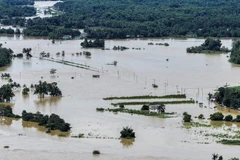
As many as 37,825 families, or 133,196 individuals, were affected by Storm Fengshen across nine provinces and 35 cities and municipalities of the Philippines.
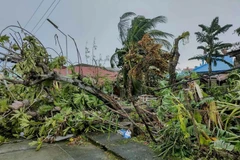
Tropical storm Fengshen lashed the northern and central Philippines on October 19, leaving at least seven people dead and forcing 47,000 to evacuate.
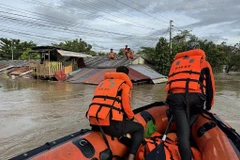
Typhoon Fengshen made landfall in the southeastern part of Luzon late on October 18 and early on October 19 before moving across Manila Bay, with wind gusts reaching up to 90 kilometres per hour. The Philippine meteorological agency said the storm is now heading towards provinces north of the capital.
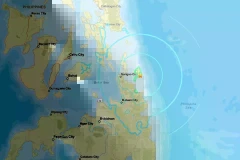
The tremor struck near Dapa municipality in Surigao del Norte province at a depth of around 69km, USGS reported.
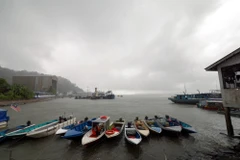
The Malaysian Meteorological Department (MetMalaysia) has forecasted that the upcoming monsoon season, which is expected to last until the end of March 2026, will be influenced by a weak La Niña phenomenon.

A 7.5-magnitude earthquake struck off Davao Oriental province on the southern island of Mindanao at 9:42 am on October 10, according to the Philippine Institute of Volcanology and Seismology (Phivolcs).

As of the end of September 2025, the Philippines had imported 3.5 million tonnes of rice, far exceeding the “reasonable” level of 2.7 million tonnes expected for this period of the year.

According to newly released data from the Philippine Statistics Authority (PSA), the country harvested more than 9.07 million tonnes of paddy from January to June, surpassing the previous all-time high of over 9.02 million tonnes in the same period of 2023 and 8.53 million tonnes last year.
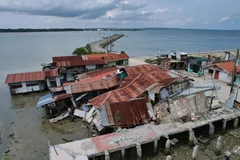
At landfall, the storm packed maximum sustained winds of 130 km/h, according to the Philippine Atmospheric, Geophysical and Astronomical Services Administration (PAGASA).
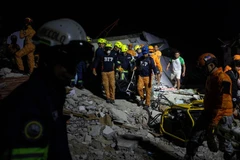
The Philippines sits on the Pacific "Ring of Fire" - an earthquake-prone belt of volcanoes stretching from South America to the Russian Far East. It experiences more than 800 quakes each year.

The Philippine Office of Civil Defence on October 2 reported that the death toll from the 6.9-magnitude offshore earthquake in the country’s central region on September 30 evening has risen to 72.

Coconut oil is a key agricultural export of the Philippines, but its prices can be highly volatile, such as when supply drops during storm seasons. Competition from alternative products like palm oil can also suppress demand for coconut oil.

Philippine seismology agency Phivolcs said close to 800 aftershocks have been recorded and warned affected areas to expect more tremors in the coming days, although their strength is expected to gradually diminish.

The shallow earthquake with its epicentre off Cebu Island collapsed or damaged at least 22 buildings in the central region of the Philippines.
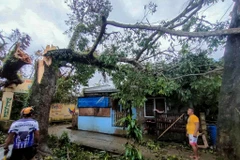
According to the Philippines' National Disaster Risk Reduction and Management Council, the three weather disturbances, Mitag, Ragasa, and Bualoi, have claimed at least 26 lives, while 14 people remain missing.
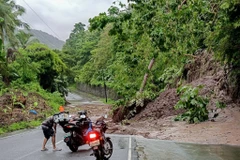
The storm battered small islands in the centre of the Philippines on September 26, toppling trees and power pylons, ripping roofs off homes, unleashing floods, and forcing 400,000 people to evacuate.
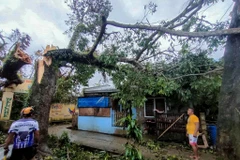
The Philippines has recorded a total of 14 deaths due to the combined effects of the southwest monsoon and three successive tropical storms, including Ragasa and Bualoi, in recent weeks.
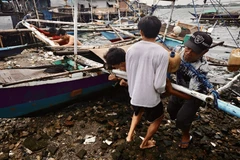
The Philippines evacuated 400,000 people and confirmed at least three deaths on September 26 as tropical storm Bualoi battered the country, still feeling the effects of Super Typhoon Ragasa.
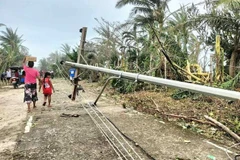
The Philippines is hit by an average of 20 storms and typhoons each year, putting millions of people in disaster-prone areas in a state of constant poverty. Scientists warn that storms are becoming more powerful as the earth warms due to the effects of human-driven climate change.