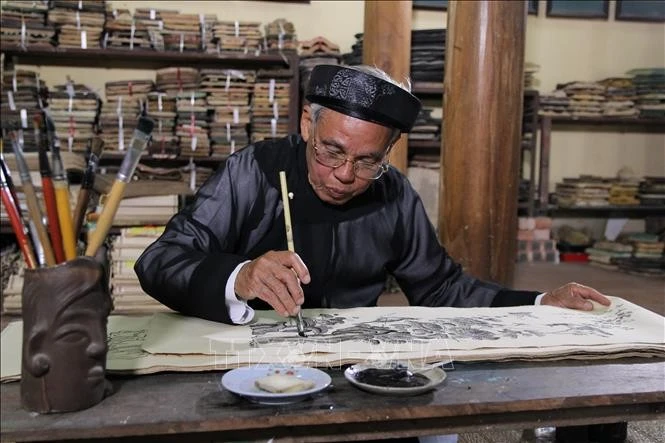
Dong Ho folk painting craft added to UNESCO’s urgent safeguarding list
This is Vietnam’s 17th intangible cultural heritage element recognised by the United Nations Educational, Scientific and Cultural Organisation (UNESCO).
This is Vietnam’s 17th intangible cultural heritage element recognised by the United Nations Educational, Scientific and Cultural Organisation (UNESCO).
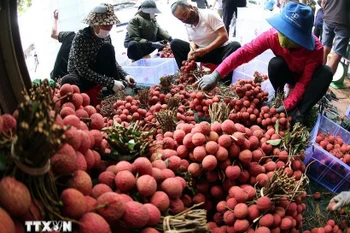
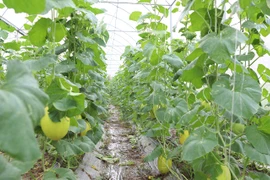
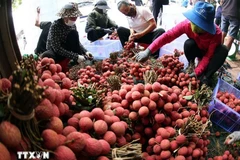
In 2026, the province targets expanding its lychee-growing area to 29,800 ha with an expected output of 160,000 tonnes. Of this, 17,500 ha will be produced under VietGAP standards with an estimated yield of 125,000 tonnes; GlobalGAP-certified lychee areas will be maintained at 235 ha; and organic lychee areas at 10 ha.
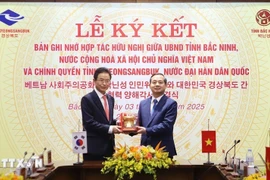
Under the agreement, both sides will work together on delegation visits and cultural exchanges, boosting cooperation and sharing information in areas like economy, trade, and science and technology. They’ll also promote the exchange of students and skilled workers to support mutual growth.
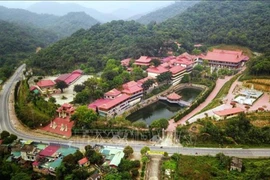
The recent recognition of the Yen Tu – Vinh Nghiem – Con Son, Kiep Bac complex as a UNESCO World Cultural Heritage Site has brought pride to Vietnam, particularly to the provinces and cities where the heritage is located, namely Quang Ninh, Bac Ninh and Hai Phong.
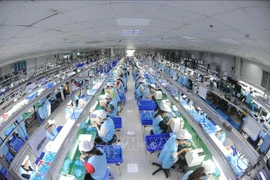
Bac Ninh province is accelerating efforts to attract investment to and develop high-tech, green, and digital industries, aiming to strengthen its role as a sustainable industrial hub by 2030, according to the provincial Industrial Zones Authority.
Bac Ninh is pursuing sustainable export development, leveraging comparative advantages and shifting towards deeper, value-added growth. Emphasis is placed on efficiently using resources, protecting the ecological environment, and addressing social issues, said Phuong.

By 2030, Bac Ninh expects to have at least 50 private companies directly participating in multinational supply chains, and at least five large-scale, internationally standard supporting-industry clusters in operation.”
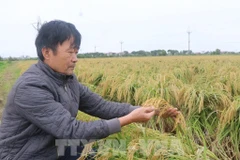
The selection council for rural industrial products of Bac Ninh province recently convened a meeting, during which it agreed upon 22 exemplary provincial-level rural industrial products for 2025, and proposed specific products to participate in the regional-level selection.
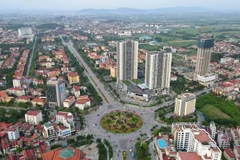
Bac Ninh aims to become a major regional hub for high-tech industry, processing and manufacturing, and supporting industries, forming a fully developed industrial ecosystem that serves as a growth engine for both the northern region and Vietnam.
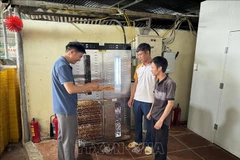
From now to 2030, the northern province of Bac Ninh will focus on developing its agricultural economy in depth, with strong links to processing and the consumption of farm produce.
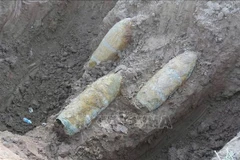
The bombs were detected on November 12 after local residents found a suspicious object and promptly informed the authorities.
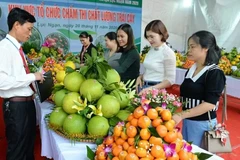
The Bac Ninh Fruit Festival 2025 will not only spotlight the province’s agricultural strengths and signature produce but also reinforce its image as a dynamic and sustainably developing locality.
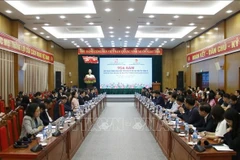
Vu Van Chung, deputy director of the agency, said Asian countries remain Vietnam’s largest investment partners, with more than 35,600 valid projects and total registered capital of 402 billion USD, accounting for nearly 80% of total FDI inflows into the country.
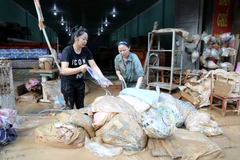
As much as 250 billion VND will be allocated to Thai Nguyen while Cao Bang, Lang Son, and Bac Ninh will receive 50 billion VND each to address urgent needs and support post-flood recovery.
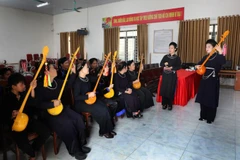
In 2019, the practice of Then in several provinces, including Bac Ninh, was inscribed by UNESCO on the Representative List of the Intangible Cultural Heritage of Humanity. Following this recognition, Bac Ninh rolled out comprehensive measures, including a master plan on safeguarding ethnic cultural heritage through 2030.
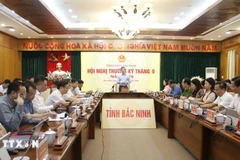
The northern province of Bac Ninh has continued to affirm its position as a dynamic growth hub in the north and a leading destination for investors, particularly in the fields of smart cities, green urban development, high technology, and the semiconductor industry.
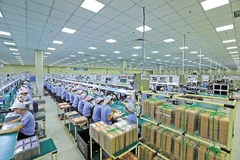
As of the end of August, Bac Ninh lured 4.68 billion USD in FDI, as compared to nearly 4.4 billion USD injected to the southern economic hub, which also leverages the FDI magnets of Binh Duong and Ba Ria – Vung Tau.
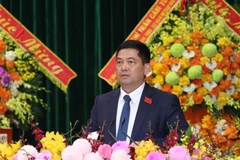
Senior Lieutenant General Nguyen Hong Thai, member of the Party Central Committee, member of the Central Military Commission and Deputy Minister of National Defence, was assigned as Secretary of the Bac Ninh Party Committee for the 2025 - 2030 tenure.

Situated more than 1,000 metres above sea level, Dong Cao Plateau is dubbed the “miniature Sa Pa.” Its endless green meadows, undulating rocky mountains, and refreshing climate make it an ideal camping destination, especially for young travelers. The highlight is the early-morning “cloud hunting” experience eagerly awaited by many.
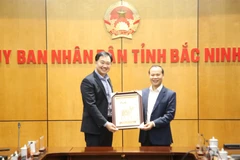
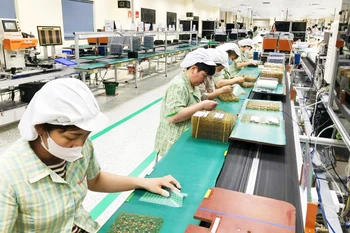
Bac Ninh is currently home to 33 industrial parks covering a total area of 10,171 hectares and 93 industrial clusters with a combined area of 3,497 hectares. Major corporations investing in high-tech industries and large-scale production lines have transformed Bac Ninh’s industrial structure.
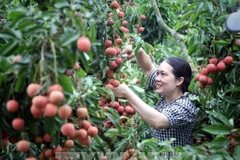
This year, Bac Ninh has about 29,700 hectares of lychee, producing over 205,000 tonnes with more areas certified under VietGAP and GlobalGAP.

Gia Binh International Airport will harmoniously and efficiently combine civilian and military purposes, helping enhance the mobility and combat readiness of the armed forces to contribute to the safeguarding of national independence, sovereignty, and territorial integrity.
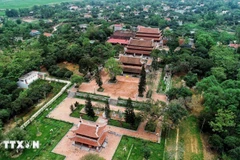
The Yen Tu – Vinh Nghiem – Con Son, Kiep Bac Complex of Monuments and Landscapes comprises 12 sites across forested mountains, lowlands, and river valleys in Quang Ninh, Bac Ninh, and Hai Phong. It has a core area of 525.75 hectares and a buffer zone of 4,380.19 hectares.

The Yen Tu – Vinh Nghiem – Con Son, Kiep Bac Complex is the 9th world heritage of Vietnam and the second inter-provincial world heritage, after Ha Long Bay - Cat Ba Archipelago in Quang Ninh province and Hai Phong city.
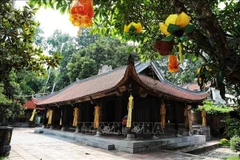
VinH Nghiem Pagoda, also known for its breathtaking architecture and rich history, draws visitors who seek both exploration and worship. It is part of the massive Yen Tu-Vinh Nghiem-Con Son, Kiep Bac complex that has recently been recognised by UNESCO as a World Cultural Heritage site.