Autumn Fair 2025 - multi-channel platform for Vietnamese businesses

The fair shows that the omni-channel model is emerging as an inevitable path for Vietnamese enterprises seeking to stay agile and competitive. By blending physical fairs with digital platforms, businesses not only expand sales but also build long-term connections with domestic and international customers.

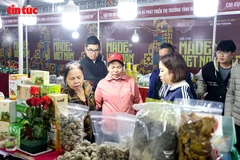
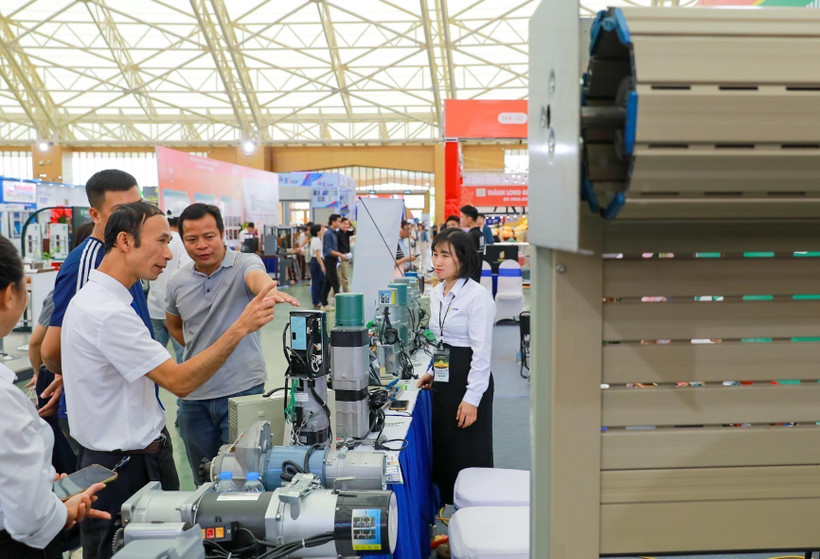
Visitors explore products at the Autumn Fair 2025 (Photo: VNA)

Hanoi (VNA) - The Autumn Fair 2025 has evolved beyond a cultural and tourism event of the capital, becoming a multi-channel trade platform where Vietnamese enterprises combine in-person and online sales.

From livestreaming product launches to linking with e-commerce sites and engaging audiences on social media, participating businesses are showcasing a dynamic shift in trade promotion in the digital era.

Bringing stalls online

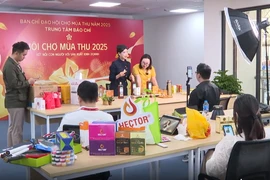
Vianco Marketing Director Nguyen Van Tien said the company saw the fair as a “dual-connection opportunity” to reach both on-site and online customers. Each day, the booth welcomed about 10,000 visitors while coordinating social media livestreams to serve distant buyers.

Vianco also hosted minigames and giveaways to boost engagement, building on its nationwide old bulb exchange campaign. The company has expanded telesales and digital advertising, achieving steady growth.

The multi-channel trend is also gaining ground in construction materials and interior design. At Omega Deco Luxury, sales staff reported that many contractors and dealers discovered the brand online but valued meeting in person at the fair.

Omega now integrates its website, social media and e-commerce channels with live demonstrations. Combining real experiences with digital reach strengthens both customer trust and sales efficiency, a representative noted.

Boosting brand presence

Home appliance maker LazyChef also used live sessions to showcase blenders and multifunctional kitchen products, attracting thousands of viewers. Marketing staff Tran Thi Huong Tra said combining fair promotions with online discounts of 10–20% helped raise total revenue by around 10% within days.

The firm's hybrid model ensures no customer group is missed — those at the fair can test products, while online viewers can order instantly, she said.

Beyond domestic retail, the multi-channel model is paving the way for Vietnamese firms to enter global e-commerce.

Nguyen Duc Hoa of Amazon Global Selling Vietnam said Amazon is partnering with trade agencies to train local businesses in cross-border sales. New participants receive free training and operational support in their first year before moving to advanced capacity-building programmes.

He noted that Vietnamese exhibitors at this year’s fair ranged from large exporters to small OCOP and handicraft producers. However, he cautioned that success requires adapting designs, packaging and branding for international tastes.

Amazon can provide the framework, but transformation must come from the businesses themselves, he said, adding that firms should shift from low-cost goods to high-value, sustainable products aligned with global trends.

The fair shows that the omni-channel model is emerging as an inevitable path for Vietnamese enterprises seeking to stay agile and competitive. By blending physical fairs with digital platforms, businesses not only expand sales but also build long-term connections with domestic and international customers.

For companies like Vianco and LazyChef, livestreaming amplifies their brand visibility, while Omega Deco Luxury and OCOP producers view this as a stepping stone toward cross-border e-commerce.

Thus, Autumn Fair 2025 is more than a showcase — it stands as a living laboratory for Vietnam’s digital trade transformation, where enterprises learn to bridge the physical and virtual markets, propelling Vietnamese products further on the global trade map./.

VNA
See more

Local residents and visitors tour and shop at a fair. (Photo: VNA)

Made in Vietnam Fair set to open in Hanoi

The Made in Vietnam Fair will showcase a wide range of products, including industrial and consumer goods, processed foods, agricultural produce and handicrafts, with the participation of distribution systems, e-commerce platforms, digital platforms and digital financial solution providers operating in Vietnam.

2025 a good year for Vietnam’s securities sector: SSC

2025 a good year for Vietnam’s securities sector: SSC

During the year, the SSC made significant progress in improving the legal and policy framework. Institutional work was implemented in a coordinated manner, including the issuance of two decrees, one resolution, seven circulars and three major schemes. At the same time, the regulator strengthened policy dialogue and expanded cooperation with international organisations to support the market upgrade process.

Vietnam shows strong FDI performance in the first 11 months of 2025 (Source: vtv.vn)

Vietnam shifting FDI attraction focus from volume to quality

As production relocation to Southeast Asia accelerates and competition for FDI intensifies, Vietnam faces increasing pressure from regional rivals such as India, Malaysia and Indonesia, which are offering bold tax incentives and developing specialised industrial parks. This reality requires Vietnam to shift its focus from attracting large volumes of capital to drawing high-quality investment, prioritising core technologies, innovation, value chain linkages and higher localisation rates.

Vice Chairman of the Ho Chi Minh City People’s Committee Hoang Nguyen Dinh inspects IUU fishing prevention efforts at Hung Thai Port in Long Hai commune. (Photo: VNA)

Ho Chi Minh City steps up oversight of unqualified fishing vessels

HCM City currently has 4,475 fishing vessels, all of which have been registered and updated on the VNFishbase system. Among them, 4,268 vessels, or 95.37%, have been granted fishing licences, while 207 unqualified vessels are being strictly managed and kept ashore.

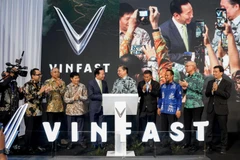
Airlangga Hartarto (fifth from right), Indonesian Coordinating Minister for Economic Affairs, and CEO of VinFast Asia Pham Sanh Chau (sixth from right) at the plant opening ceremony on December 15. (Photo: VinFast)

VinFast inaugurates EV plant in Indonesia

The VinFast Subang plant was completed and put into operation just 17 months after groundbreaking, demonstrating the company's rapid execution capability and strong implementation capacity. This is VinFast's fourth operational facility worldwide, and its first plant in Indonesia and Southeast Asia outside of Vietnam.

From early December, major retail chains in Ho Chi Minh City have recorded a noticeable increase in shoppers seeking Tet products. (Photo: VNA)

HCM City businesses ramp up production to meet Lunar New Year demand

From early December, major retail chains in the city have recorded a noticeable increase in shoppers seeking Tet products. Many consumers are taking advantage of promotional programmes to purchase gift items with long shelf lives, such as confectionery, soft drinks and processed foods, well ahead of the holiday peak.

Workers process fish to be tinned for export at KTC Canned Food Factory under Kien Giang Trading JSC. (Photo: VNA)

Vietnam to host seminar on export growth strategies

Vietnam's exports rose 16.1% to 430.2 billion USD in the first 11 months of 2025, while total trade hit 839.8 billion USD during the same period. This strong performance shows that exports remain a key driver of economic growth, boosting Vietnam's standing on the world stage in recent years.

The vessel carrying the 2 millionth TEU arrives at Hai Phong Port. (Photo:VNA)

Hai Phong Port reaches 2-million-TEU milestone

Handling the 2 millionth TEU in 2025 not only demonstrates Hai Phong Port’s operational capacity and the collective efforts of its workforce, but also highlights its increasingly important role in regional and global supply chains, the confidence of shipping lines, logistics firms and the business community, and the effectiveness of policies to improve the investment climate and strengthen maritime infrastructure and services.

Melons labelled with traceability codes on display at the Song Van agricultural produce store in Ninh Binh city, Ninh Binh province. (Photo: VNA)

Tracing origins hindered by fragmented data systems

As the Government accelerates the digital economy, establishing a unified national traceability system has become a crucial move to end data fragmentation and disconnection among ministries, sectors and localities.