Binh Lieu’s untouched beauty lures visitors

Binh Lieu district in Quang Ninh province, which is well known for its hills covered in ravishing white reeds, is emerging as a magnet to visitors, especially during autumn, the most beautiful season of the year.
Binh Lieu’s untouched beauty lures visitors ảnh 1A terraced rice field in Binh Lieu (Photo: VNA)

Quang Ninh (VNA) - Binh Lieu district in Quang Ninh province, which is well known for its hills covered in ravishing white reeds, is emerging as a magnet to visitors, especially during autumn, the most beautiful season of the year.

Compared to other more famous tourist destinations in Quang Ninh such as Ha Long Bay, Co To, or Quan Lan, Binh Lieu is just an obscure name. But this cannot hide the attractiveness of the region, especially to younger tourists.

Located in the northeast, more than 100km away from the centre of Ha Long City and right next to the border with China, the mountainous district has a peaceful atmosphere and spectacular landscapes of untouched beauty.

In July and August, the district is decorated with the golden colour of terraced fields as they enter harvest season, while in March and April, trẩu flowers (Vernicia Montana) bloom, which are only found in Binh Lieu, and the whole region bursts in an array of stunning colours.

Though it is beautiful in every season, many will like it best in the autumn.

When autumn comes, the hills of Binh Lieu are covered with white reeds, creating spectacular romantic views for travellers. Thus the area is known as the 'Reed Kingdom'.

These white reed hills can be found on border patrol road at an altitude of 700m, just west of Binh Lieu. To get there, tourists have to travel from Binh Lieu Town to Hoanh Mô, and then to Ngan Chuong Village in Luc Hon Commune.

From here, tourists can start the journey to visit the border route, which is about 16km long. Many majestic landmarks are numbered and prove popular places for young travellers to take photos.

Along the way, visitors can enjoy wonderful views of terraced fields, small villages hidden behind mountains and clear blue skies.

The small road leading to the reed fields is right on top of a high hill, and it is likened to walking on a back of a giant dinosaur. It is known locally as 'the spine of the dinosaur'.

It is also considered the biggest challenge of the whole journey as it leads to the peak of the highest mountain of Binh Lieu.

In the past there there was no road and travellers had to walk through many hidden dangers. However, a more than one-metre wide road was completed in 2018 and it is now more convenient, including 2,000 steps and guard rails on both sides.

To reach the landmark, it takes about 2 hours.

Besides natural beauty, tourists can also experience and witness the lives of local ethnic minorities.

A total of 96 percent of Binh Lieu’s population are ethnics, the highest concentration of minorities in the whole country. The Tay accounts for the majority, 51.27 percent. Others include the Dao (28.21 percent) and San Chay (15.25 percent).

Each ethnic group retains its own cultural values and unique dishes elaborately cooked with local ingredients. Some outstanding local dishes are five-colour sticky rice, black chicken, arrowroot noodles, and stir-fried wild bamboo shoot.

The patterns on the clothing of each group also vary, with the Dao embroidering using colourful thread, while the Tay and San Chi preferring to dye their fabrics in indigo and blue.

The mountainous district also has its own intangible cultural heritage, notably festivals including the Luc Na festival and the singing festival in March. During the festival, visitors can watch locals playing folk games like tug of war, and enjoy their unique traditional songs.

Relatively unspoilt by development, the cultural features of the ethnic communities in Binh Lieu are mesmerising, and the untouched landscapes make it an amazing place for tourists to explore./.

VNA

See more

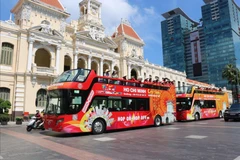
A double-decker sightseeing bus in Ho Chi Minh City. (Photo: VNA)

HCM City elevates destination appeal, enhances tourism workforce quality

As Ho Chi Minh City’s tourism sector continues to sustain growth momentum, it is shifting strongly from post-merger recovery to development acceleration, with a focus on restructuring destination spaces to offer diverse tourism models and attract more domestic and international visitors.

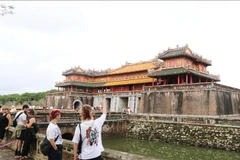
Visitors tour Ngo Mon (Noon Gate) at the Hue Imperial Citadel. (Photo: VNA)

Visit Vietnam Year – Hue 2025: renewing heritage, shaping distinct brand

Visit Vietnam Year – Hue 2025 has left a series of strong imprints, reflecting a marked transformation in Hue’s tourism in terms of scale, quality and brand positioning. More than a programme of events, it has become a powerful driver, helping position Hue as a competitive cultural and heritage tourism centre in the region.

A view of the talkshow within the conference in Hue on December 12 to review and discuss strategic orientations for the 2023-2025 roadmap to reduce plastic waste in the local tourism sector. (Photo: VNA)

Hue accelerates shift toward green, low-plastic tourism models

Over the past three years, Hue tourism authorities have strengthened communication and advocacy for plastic waste reduction through 10 training sessions with 690 participants, “Coffee Talk” events, professional Zalo groups, and direct engagement with businesses. As a result, 102 enterprises and business households have signed commitments to reduce plastics, and 12 hotels have pioneered plastic-reduction practices.

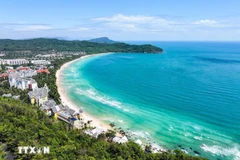
The inaugural flight from New Delhi lands at Phu Quoc International Airport (Photo: Sun Group)

Phu Quoc welcomes new direct flights from India

Phu Quoc International Airport welcomed over 180 Indian travellers on a new direct flight from New Delhi on December 10, marking the start of a month-long flight series that will link the two destinations and bring a fresh wave of visitors to Vietnam’s pristine island.

Visitors pose for a photo at Ben Thanh Market in HCM City (Photo: VNA)

HCM City speeds up digital tourism to draw more travellers

Following its goal of building a friendly destination, the Ho Chi Minh City Department of Tourism is rolling out a range of local stimulus programmes, with a focus on bringing the city’s signature attractions closer to domestic and international visitors through digital platforms.

Foreign visitors are touched to receive meaningful gifts from their Vietnamese friends (Photo: VietnamPlus)

Vietnam welcomes more than 19 million international visitors in 11 months

A UN Tourism report highlighted Vietnam’s performance as one of the most notable recoveries worldwide. While tourism across the Asia–Pacific has rebounded to only around 90% of pre-COVID levels, Vietnam is among a select group of destinations, alongside Japan, recording rapid and sustained growth, it said.

Foreign visitors explore Hanoi’s old quarters by cyclo, admiring the city’s timeless beauty. (Photo: VNA)

Vietnam draws French holidaymakers during Christmas, New Year

Patrice Caradec, President of the Syndicate of French Tour-Operators (SETO), said the country has not attracted as many French tourists since COVID-19. As Vietnam reopened later than several Asian destinations, pent-up demand has surged with the full recovery of tourism. The “S-shaped” nation has now returned to pre-pandemic levels of French arrivals.

Tourists enjoy leisure activities around the Hoan Kiem Lake pedestrian zone. (Photo: VNA)

Hanoi posts sharp rise in visitors, revenue

In December, the Hanoi tourism sector will focus on completing a project to reform the management, conservation and promotion of the Huong Son (Perfume Pagoda) Special National Relic Site; continue surveys on community-based, agricultural and night-time tourism offerings; and host the 2025 Hanoi Craft Village and Craft Street Cuisine and Tourism Festival. Preparations are also under way for participation in the National Green Tourism Forum in Lam Dong.