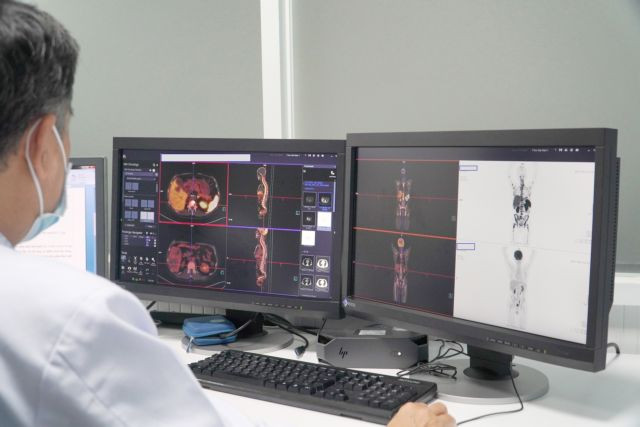
Hanoi (VNS/VNA) - Clinical research plays a significant role in developing and applying new methods for diagnosing and treating cancer, which has helped extend the lives of late-stage lung cancer patients from mere months to years, said health experts.
According to Dr Do Anh Tu, Deputy Director of the National Cancer Hospital, in Vietnam, lung cancer ranks third in prevalence after liver and breast cancer, but it has the second-highest mortality rate.
Each year, there are 26,262 new cases of lung cancer in Vietnam, with 23,797 deaths annually. This indicates that lung cancer remains a significant burden both globally and in Vietnam.
The doctor pointed out that most early-stage lung cancer patients do not exhibit clear clinical symptoms. The disease progresses silently, and it is only when symptoms appear that patients seek medical attention, by which time the cancer is usually advanced and metastatic.
For instance, in 2023, 73.6% of lung cancer patients treated at Ho Chi Minh City’s Cho Ray Hospital were in advanced, metastatic stages, with only over 26% detected at an early stage.
Currently, with available treatment methods and the capabilities of healthcare professionals, lung cancer can be cured if detected and treated early.
According to Tu, although Vietnam does not yet have a national screening programme, efforts in diagnosis have increased the surgery rates for lung cancer patients.
"We are living in the era of targeted therapy and immunotherapy, but traditional therapies like chemotherapy, radiation therapy and surgery remain the backbone of treatment. The combination of classic and new methods has improved treatment outcomes for patients," he said.
In particular, the survival time for late-stage lung cancer patients, which used to be measured in months, can now extend to several years.
Tu emphasised the critical importance of clinical trials in treating cancer patients, including those with lung cancer, to achieve these results.
Among the many clinical studies conducted in Vietnam, the research on patients with locally advanced, inoperable non-small cell lung cancer has produced particularly outstanding results. This study was recently presented at the 2024 American Society of Clinical Oncology (ASCO) Conference.
Specifically, the patients' survival time without disease progression was extended to 39.1 months. This success is the result of collaboration and joint efforts by researchers from various hospitals across the country.
According to Dr Nguyen Ngo Quang, Acting Director of the Department of Science, Technology and Training under the Ministry of Health, the number of clinical studies in Vietnam has increased rapidly in recent years. This reflects the dedication and commitment of scientists, doctors and the entire healthcare system. This growth also demonstrates Vietnam’s potential and aspirations for development in the healthcare sector.
In 2023, the US Food and Drug Administration (FDA) inspected research at two clinical trial sites in Vietnam. The results showed that no additional measures were necessary. This is a source of pride for Vietnam, showcasing the advancements in clinical research and earning high trust from the international community.
Clinical research is a crucial and necessary phase in the process of developing new treatment solutions or pharmaceuticals, contributing to changes in treatment practices and having a positive impact on human health.
Deputy Minister of Health Nguyen Thi Lien Huong believed that Vietnam has gained significant advancements from traditional chemotherapy methods to targeted drugs and advanced immunotherapy in cancer treatment. These achievements have not only improved treatment efficacy but also brought hope to many patients.
Huong said the approval of research proposals indicated that clinical trial units in Vietnam had actively participated and were trusted by international organisations as research sites.
As a result, the number of clinical trials in our country had increased rapidly in recent years. Many hospitals had participated in multi-centre clinical trials, conducted according to international standards.
Numerous studies had positively contributed to changing clinical practice methods and discovering new drugs that improve patient outcomes, from extending survival times and enhancing quality of life to increasing chances of cure, she added.
Clinical trials provided many patients with opportunities to access new medications, reducing treatment costs.
Huong said the ministry had always regarded the promotion of scientific research and the development of new products as one of its top priorities. In recent times, the ministry had established and refined the legal framework for these activities.
Based on this foundation, the ministry had standardised procedures, conducted evaluations, and issued Good Clinical Practice (GCP) certificates to clinical trial facilities.
Additionally, the ministry had enhanced the capabilities of researchers to facilitate the development and implementation of high-quality clinical trials for new product development, ensuring they meet international standards, she stressed./.
Rising cancer rates concern Vietnamese amid healthcare inflation
The Manulife Asia Care Survey reveals that cancer is the standout health concern for people in Vietnam. Despite growing awareness of available treatments, rising healthcare costs alongside insufficient financial planning provide an obstacle to mental and financial well-being.