Comprehensive approaches employed for better HIV response amid shift in transmissions

Vietnam’s authorities have taken comprehensive approaches to curb the spread of HIV amid the significant shift in the spread of the virus from blood-borne to sexual transmissions, especially among key populations.

Dr Phan Thi Thu Huong, director of the Vietnam Administration for HIV/AIDS Control (VAAC) addresses the press briefing on November 18. (Photo: VNA)

Hanoi (VNS/VNA) - Vietnam’s authorities have taken comprehensive approaches to curb the spread of HIV amid the significant shift in the spread of the virus from blood-borne to sexual transmissions, especially among key populations.

The country’s data and efforts in HIV response up until Q3-2024 were released by the Vietnam Administration for HIV/AIDS Control (VAAC) in a press briefing on November 18, within the National Action Month for HIV/AIDS Prevention and Control (November 10 - December 10).

Among the new infections, blood-borne transmission decreased from 47.5% in 2010 to 6.5% as of September.

Meanwhile, sexual contact has become the primary mode of HIV transmission, increasing from 47.5% to 70.8% in the same period.

In the first nine months of 2024, the country recorded 11,421 new HIV cases and 1,263 deaths related to the virus.

Among them, 82.9% are male, many aged between 15-29 (40%) or 30-39 (27.3%). Men who have sex with men (MSM) are the most affected group, at 42.2%.

Geographically, nearly 70% of these new transmissions are recorded in the southern region of the country, with the Mekong Delta at 31.2%, Ho Chi Minh City at 24.3% and the southeastern region at 12.8%.

However, statistics also revealed potential risks of HIV prevalence due to drug injections, including chemsex (the practice of consuming drugs to enhance sexual activity).

In response, testing services have been expanded across 1,300 health care facilities, with community-based testing available in 33 localities, to reach two million people.

Among them, 176,000 are receiving antiretroviral therapy (ART), as recorded in the nationwide Electronic ARV Drug Management Tool (HMED).

“By providing treatment in an early stage and ensuring that they have stable health conditions, we can disrupt the transmission chains in the community, therefore, ART plays a powerful role [in HIV response],” said VAAC director Dr Phan Thi Thu Huong.

Vietnam’s ART programmes have received high regard from the international community, with 97% of people on treatment achieving viral suppression (≤1000 copies/mL).

Policy-wise, a new streamlined, updated government decree serving as a guideline for implementation of the Law on HIV/AIDS Prevention and Control will enter into force next month, on December 15.

Decree No 141/2024/ND-CP will replace three current legal documents regarding HIV response, testing conditions and opioid replacement therapy (decrees No 108/2007/ND-CP, No 75/2016/ND-CP and No 90/2016/ND-CP).

Highlights of the new document include psychological therapy as a harm reduction prevention for people who use drugs, and removing the requirement of a local police clearance certificate for those who wish to register as peer supporters for people living with HIV.

“This is an opportunity and a basis to facilitate engagement in intervention programmes as peer supporters,” said Dr Nguyen Thi Minh Tam, head of the prevention department at VAAC.

The new decree also addresses the shortcomings in current regulation for HIV drug management and distribution for improved medication access, including for rescue workers, children in need of prevention measures against mother-to-child transmission of HIV, and people in closed settings./.

VNA

See more

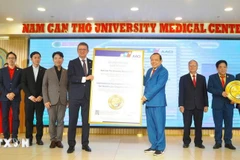
At the event (Photo: VNA)

First hospital in Mekong Delta earns US AACI accreditation

Nam Can Tho University Hospital on December 15 hosted a ceremony to announce its accreditation by the American Accreditation Commission International (AACI), a US-based body, becoming the first facility in the Mekong Delta and among a select few in Vietnam to earn the distinction.

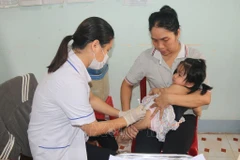
A health worker administer IPV polio vaccine to a child in Dong Thap province. (Photo: VNA)

Vietnam proactively takes polio prevention measures amid outbreak in Laos

The meeting took place following an assessment by the World Health Organisation (WHO) warning that Vietnam is facing a very high risk of polio import and re-emergence. The risk arises after neighbouring Laos officially declared a polio outbreak on October 7, following the detection of circulating vaccine-derived poliovirus type 1 (cVDPV1).

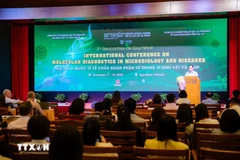
A view of the International Conference on Molecular Diagnostics in Microbiology and Diseases, organised by Rencontres du Vietnam and the International Centre for Interdisciplinary Science and Education (ICISE) in the central province of Gia Lai on December 11. (Photo: VNA)

Nearly 100 international scientists attend molecular diagnostics conference in Vietnam

The conference features almost 80 presentations across plenary sessions, parallel sessions and poster sessions, focusing on leading research trends such as point-of-care diagnostics; predictive biomarkers used to anticipate individual responses to therapy; and the development of new tools and platforms for rapid molecular-level detection and diagnosis.

Digital transformation in healthcare is being strongly promoted. (Photo: Organising Committee of the 2024 “Technology with Heart” Award, co-hosted by Vietnam News Agency and Viettel)

AI and precision medicine: Emerging prospects for Vietnam-Canada cooperation

Canada has strong experience in compiling and analysing genomic data, while Vietnam has a large population with diverse genetic structures. This complementarity can help Vietnam narrow its technological gap and enhance its capacity to treat rare diseases — an area many countries are prioritising for development.

Maternal and child healthcare in Tuyen Quang province. (Photo: VNA)

Vietnam on path to become a healthy nation

Resolution 72 not only focuses on health care but is also closely interlinked with other sectors, helping to build a solid foundation for sustainable national development and create momentum for Vietnam to “take off” and further integrate into the world.

The emergency ward at Bach Mai Hospital, Hanoi. (Photo: VNA)

Health sector targets free hospital fee for all

The total value of medical expenses not covered by the health insurance fund is estimated at around 24.8 trillion VND (942 million USD) per year. Health insurance contributions remain low, at 4.5% of the salary or reference base used for calculation.

Sen. Lieut. Gen. Vongsone Inpanphim, Lao Deputy Minister of National Defence and Director of the General Department of Politics presents the Friendship Order of Laos to Vietnam’s Central Military Hospital 108. (Photo: VNA)

Vietnam, Laos expand cooperation in military medicine

Over the past two decades, many Vietnamese experts have undertaken long-term missions at the Central Hospital 103 to provide training and technical assistance, contributing to the successful treatment of complex cases. The Central Military Hospital 108 has also trained 206 Lao doctors, six nurses and two engineers — a clear demonstration of substantive, long-standing cooperation.

Deputy Minister Do Xuan Tuyen (left) and Alberto Anaya Gutiérrez, General Secretary of the Mexican Workers' Party (PT). (Photo: VNA)

Vietnam, Mexico boost medical cooperation

As both nations look to keep their long-standing partnership in good health, the health ministries of Vietnam and Mexico have been accelerating cooperation, especially in traditional medicines.

The opening of Vietnam Medi-Pharm 2025 and Vietmedicare Expo in Ho Chi Minh City on November 27, 2025. (Photo: VNA)

Major medical, pharmaceutical exhibitions kick off in HCM City

The 33rd Vietnam International Medical and Pharmaceutical Exhibition (Vietnam Medi-Pharm 2025) and the International Exhibition on Pharmaceuticals, Medical Devices and Healthcare (Vietmedicare Expo 2025) kicked off at the Saigon Exhibition and Convention Centre on November 27.

Doctors Do Thi Ngoc Linh (left) and Le Diep Linh at the RCS membership certificate award ceremony in London. (Photo: VNA)

Vietnamese surgeons honoured with prestigious Royal College Fellowship

The fact that the Vietnamese doctors have been awarded with FRCS certificate proves Vietnam’s surgical expertise has met international standards, contributing to improving the quality of treatment at home, expanding academic cooperation with world leading medical institutions and inspiring younger doctor to pursue higher standards.