Hanoi Convention: A powerful message of multilateralism in action

Speaking of Vietnam’s role in the convention building and adoption, Xiaohong Li, Director of the UN Office on Drugs and Crime (UNODC) New York Liaison Office, praised the country’s hosting the signing ceremony, calling it a landmark event that demonstrates Vietnam’s commitment to collective action against global threats. She said over the five years of negotiations, Vietnam acted as a bridge-builder, helping to narrow differences among UN member states.

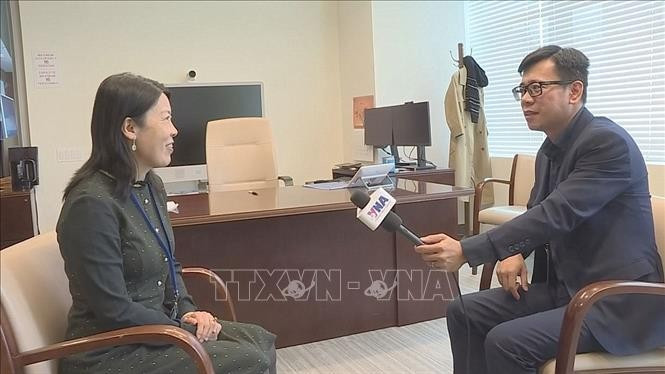
Xiaohong Li, Director of the UN Office on Drugs and Crime (UNODC) New York Liaison Office (L) speaks to Vietnam News Agency correspondent in New York. (Photo: VNA)

New York (VNA) – Xiaohong Li, Director of the UN Office on Drugs and Crime (UNODC) New York Liaison Office, highlighted the UN Convention against Cybercrime's significance and Vietnam's role in advancing global cooperation against cyber threats on the occasion of the opening for the signature of the convention in Hanoi from October 25–26.

Speaking to Vietnam News Agency correspondents in New York, Li said the rapid development of information and communication technologies in recent years has transformed societies, improved governance, and promoted sustainable development. However, it has also given rise to new forms of transnational crime. According to a recent UNODC report, East Asia and Southeast Asia witnessed a sharp rise in cybercrime from 2021 to 2024, causing estimated losses of more than 37 billion USD. This, she stressed, underscores the urgent need for a global response to a global threat.

Against this backdrop, the adoption of the UN convention marks a historic milestone, the first non-criminal convention related to cyberspace governance. The convention provides a comprehensive, multidisciplinary framework to prevent and combat cybercrime, harmonising national laws on issues such as online fraud and establishing stronger mechanisms for law enforcement cooperation.
Regarding the collection and storage of electronic data, she said, the convention provides mechanisms and measures to promote international cooperation, including multilateral support for storing, collecting, and sharing electronic data, as well as extradition. Notably, it establishes a 24/7 hotline, enabling stakeholders to respond more swiftly to cross-border and emergency cases. In addition, it lays the groundwork for comprehensive cybercrime prevention measures aimed at tackling the root causes of such crimes, strengthening technical cooperation, and building capacity to narrow the technological gap between countries.
xiaohong-li.jpg
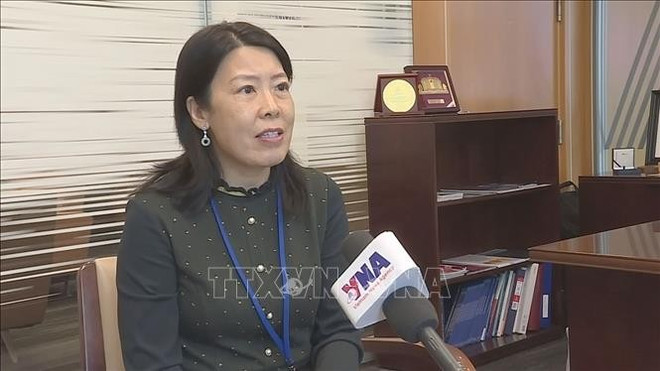
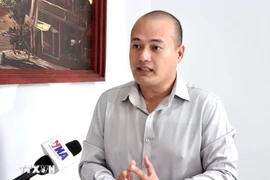
Xiaohong Li, Director of the UN Office on Drugs and Crime (UNODC) New York Liaison Office. (Photo: VNA)

She noted that the convention aims to protect human rights through robust legal tools. Li expressed confidence that once in effect, the document will serve as an effective, comprehensive global legal framework for tackling cybercrime.

Speaking of Vietnam’s role in the convention building and adoption, the UNODC official praised the country’s hosting the signing ceremony, calling it a landmark event that demonstrates Vietnam’s commitment to collective action against global threats. She said over the five years of negotiations, Vietnam acted as a bridge-builder, helping to narrow differences among UN member states.

The UN’s decision to select Hanoi as the venue sends a strong message of multilateralism in action, Li noted.

It reflects Vietnam’s growing international prestige as a responsible, constructive and reliable partner within the UN and the global community.

The upcoming Hanoi ceremony, she added, carries even greater significance as Asia is now among the regions most affected by cybercrime. Li expressed confidence that Vietnam will continue to play an active role in convention implementation.

Looking ahead, Li said that after the Hanoi event, the UN will continue with the signing process at its headquarters in New York or another designated venue. Member states will then proceed with national ratification within 90 days. The convention will enter into force once at least 40 countries complete the ratification process.

During this phase, UNODC will continue to assist member states through legal and strategic advisory support, digital forensics training, and international cooperation programmes. It will also serve as secretary for future meetings of the convention’s parties, with the first session scheduled for January 2026 in Vienna, Austria, to discuss procedural rules and cooperation mechanisms./.

VNA

See more

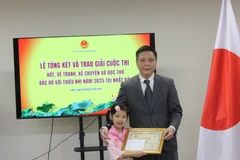
Nguyen Thanh Ha, Consul General of Vietnam in Western Australia and the Northern Territory presents Certificates of Commendation from the Consul General to students and volunteers in recognition of their outstanding contributions to the organisation of Xuan Que Huong (Homeland Spring) 2025. (Photo: VNA)

Vietnamese community in Australia united through youth engagement

Speaking at the ceremony, Nguyen Thanh Ha, Consul General of Vietnam in Western Australia and the Northern Territory, praised the dedication of young Vietnamese living in the region. She emphasised that the success of Xuan Que Huong was built not only on its colourful performances, but also on the strong sense of responsibility and tireless behind-the-scenes efforts of students and volunteers.

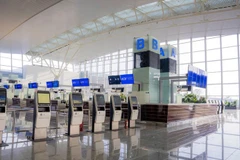
A full suite of automated technologies has been deployed across the Terminal T2 at Noi Bai International Airport, giving travellers greater control over their procedures from check-in to boarding. (Photo: VNA)

Noi Bai Airport to operate expanded int’l terminal with comprehensive automation

The upgrade follows directives from the Prime Minister and the Ministry of Construction and is designed to ease pressure on existing infrastructure by lifting the terminal’s annual capacity from 10 million to 15 million passengers. For the first time, a full suite of automated technologies has been deployed across the terminal, giving travellers greater control over their procedures from check-in to boarding.

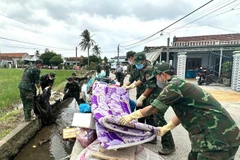
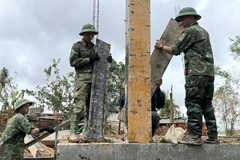
Soldiers help flood-hit communities clean up in Hoa Thinh commune, Dak Lak province. (Photo: VNA)

Concerted efforts help disaster-hit communities rebuild lives

The “Quang Trung Campaign” to rapidly repair and rebuild houses for affected families in central provinces is seen as a catalyst for faster and more sustainable recovery, extending beyond housing restoration to reinforcing essential infrastructure, enhancing community resilience, and strengthening public trust in the Party and Government.

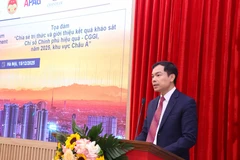
Associate Professor Dr Nguyen Manh Hung, Vice President of the Ho Chi Minh National Academy of Politics, addresses the dialogue in Hanoi on December 15. (Photo: VNA)

Vietnam among Asia’s leaders in governance capacity

Vietnam has climbed 12 places in the 2025 Chandler Good Government Index (CGGI) since 2021, rising from 60th to 48th globally. Over the past five years, the country has recorded progress in six out of seven CGGI pillars, making it one of Asia’s most notable governance reformers.

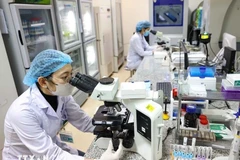
Scientific research activities at the National Hospital of Endocrinology. (Photo: VNA)

Vietnam sets roadmap for intellectual workforce to 2045

The strategy aims to build a high-quality Vietnamese intellectual workforce with a rational structure, identified as a core driving force for the rapid development of modern productive forces, as well as a leading force in digital transformation, innovation and international integration.

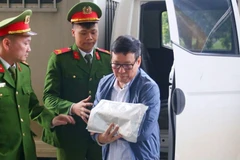
Le Duy Thanh, former Chairman of the Vinh Phuc People’s Committee, is escorted to the courtroom. (Photo: anninhthudo.vn)

Appeal trial opened for Phuc Son Group corruption case

According to the first-instance verdict, Nguyen Van Hau, Chairman and CEO of Phuc Son Group, exploited personal and professional connections to bribe over 132 billion VND (over 5 million USD) to leaders of the Party Committees, People’s Committees, and departments in Vinh Phuc and Quang Ngai, enabling Phuc Son Group to secure many contracts in these localities and Phu Tho province.

A performance at the year-end review programme in Sydney on December 14, co-organised by the Vietnam-Australia Scholars & Experts Association and Vietnam-Australia Cultural Exchange Organisation. (Photo: VNA)

Gathering honours knowledge, culture, community spirit of OVs in Australia

Addressing the gathering that drew more than 300 guests, Vietnamese Consul General in Sydney Nguyen Thanh Tung highlighted contributions of the Vietnamese community in Australia, particularly intellectuals and professionals, to the host society as well as cooperation between the two countries.

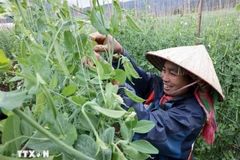
Agricultural production models help farmer access modern technology to improve output. (Photo: VNA)

Three national target programmes basically meet, exceed 2021-2025 goals

A report from the Central Steering Committee for National Target Programmes for the 2021–2025 period showed that poverty reduction in ethnic minority-inhabited areas averaged 3.2% per year. Per capita income among ethnic minorities is estimated to reach 45.9 million VND (1,760 USD) in 2025, a 3.3-fold increase from the 2020 level, well surpassing the goal of more than doubling.

Professor Dr. Tran Hong Thai receives the honorary doctorate title and certificate from Professor Nikolay Rogalev of MPEI. (Photo published by VNA)

Vietnamese professor awarded honorary doctorate by Moscow institute

Professor Dr. Tran Hong Thai, Standing Vice President of the Vietnam Academy of Science and Technology (VAST) was granted an Honorary Doctorate by The Moscow Power Engineering Institute (MPEI) for his outstanding contributions to scientific development, education and international cooperation in the energy sector.