Hanoi to limit polluting vehicles in pilot low-emission zones

The Hanoi People’s Council on December 12 approved a resolution to establish low-emission zones in the capital city.

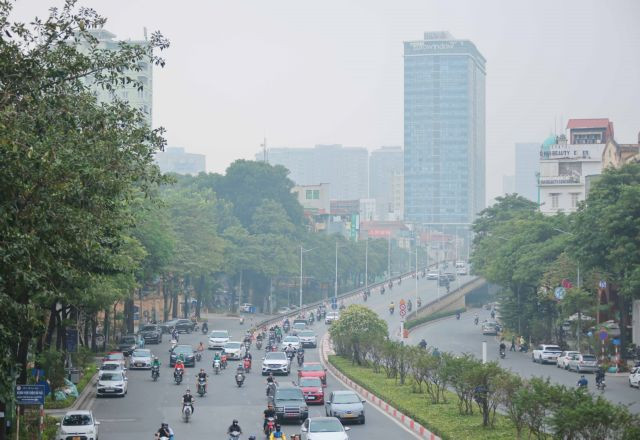
Smog blankets Hanoi on November 15, 2024 (Photo: VNA)

Hanoi (VNS/VNA) – The Hanoi People’s Council on December 12 approved a resolution to establish low-emission zones in the capital city.

Measures will primarily focus on transportation, including allowing vehicles that are environmentally friendly, not emitting pollutants and using clean and green energy.

Vehicles of priority or with circulation permits from authorities can operate within the low-emission zones.

Restrictions or bans can be applied for vehicles that do not meet the Euro emissions standards, specifically Euro 4 for cars and Euro 2 for motorcycles, in these zones during specific hours.

Proposals for fees and charges for pollution-emitting vehicles travelling in low-emission zones are expected to be put forward sometime in the future, while the first zones could come into force in 2025.

In addition, support policies will be proposed for residents in these zones, for organisations and businesses transitioning from fossil fuel-powered to environmentally friendly vehicles, as well as for investments into clean energy transportation infrastructure.

According to the document, the criteria to identify low-emission zones are locations belonging to emission-restricted and protected areas as stated in the capital’s Master Plan to 2030 with a vision to 2050; frequently experiencing serious traffic congestion according to Vietnam’s standards for urban roads (TCVN 13592:2022); with the average air quality (measured over at least one year prior) not meeting the National Technical Regulation on Air Quality (QCVN 05:2023/BTNMT) for key indicators: SO2, NO2, Total Suspended Particulate (TSP).

The low-emission zones must be planned for urban development with a priority for public transportation, or sufficient road infrastructure for appropriate traffic planning.

Authorities must also devise a plan to monitor and assess emission levels and emission reduction in these areas and to prepare for transportation mode transition.

The specific implementation roadmap states that low-emission zones will be piloted in Hoan Kiem and Ba Dinh districts from 2025 to 2030, while other localities are encouraged to implement a similar model.

From 2031 onwards, areas in the capital city that have one of the above criteria must implement the low-emission zone model.

Based on the above criteria, the district-level People’s Committees will develop a proposal for a low-emission zone, customised for the specific conditions and capacity of their locality.

The proposal for the low-emission zone must be published in the media for at least 30 days for the planned area, inviting feedback, in addition to comments from State management agencies responsible for environmental protection and transport.

A report from the Hanoi People's Council showed that the capital city is facing challenges in air pollution management and environmental protection with a widespread decline in air quality, which has significant impacts on public health.

To date, low-emission zones have been implemented in 320 cities across Europe as well as major cities in Asia such as Beijing (China), Seoul (the Republic of Korea) and Jakarta (Indonesia).

Prior to the issuance of the low-emission zone resolution, feedback was gathered from 30 districts and municipalities for the drafting process./.

VNA

See more

Official heritage plaque i sinstalled on the 12 recognised Shan Tuyet tea trees in Dong Phuc commune. (Photo: VNA)

Thai Nguyen: 12 ancient Shan Tuyet tea trees win national heritage status

The recognition honours the biological, cultural and historical values of these centuries-old Shan Tuyet tea trees – natural treasures deeply woven into the livelihoods, traditions and identity of local ethnic communities. The title affirms the community’s commitment to preserving and promoting the value of this iconic local tea variety.

Sarus cranes at Tram Chim National Park (Photo: VNA)

Return of sarus cranes: Hope takes wing in Dong Thap wetland

Beneath the wide Mekong Delta sky, Tram Chim National Park is racing against time, pouring heart and science into a decade-long (2022–2032) plan to rescue the Eastern sarus crane – an elegant, scarlet-headed bird listed as endangered on the International Union for the Conservation of Nature (IUCN) Red List and a living emblem of both the park and all of Dong Thap province

French Ambassador Olivier Brochet speaks at the press conference in Hanoi on December 11 to mark the 10th anniversary of the Paris Agreement on climate change and highlighting the COP30 outcomes. (Photo: VNA)

International community ready to support Vietnam in energy transition, climate response

In a video message to the press conference, UN Resident Coordinator in Vietnam Pauline Tamesis said the UN is ready to support Vietnam in building a pipeline of projects capable of absorbing financing mobilised under the Political Declaration on establishing the Just Energy Transition Partnership (JETP), as well as from global climate finance sources, including the Green Climate Fund and the Loss and Damage Fund.

Forest rangers in Son La province apply technological devices and software to forest management, monitoring, and protection. (Photo: nhandan.vn)

Digital technology application enhances forest management, protection

With a total forest area of over 14 million hectares, including more than 10 million hectares of natural forests, forests exist in all 34 provinces and cities across the country. Given the large area and limited workforce, applying digital solutions in forest management and protection has become a top priority for the forestry sector.

Sunda pangolins (Manis javanica), also known as the Javan pangolin, are listed in Group IB – critically endangered and strictly protected from all commercial exploitation (Photo: VNA)

Quang Ngai releases rare pangolin back into nature

Initial verification showed that the animal weighed 3.7kg and measured over 60cm. It was identified as a Sunda pangolin (Manis javanica), also known as the Javan pangolin, listed in Group IB – critically endangered and strictly protected from all commercial exploitation.

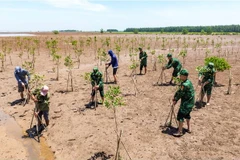
Residents of Tuyen Quang province take part in the One Billion Trees Programme. (Photo: VNA)

Tree-planting programme exceeds one-billion-tree goal

The total comprises 573.9 million scattered trees and 865.2 million trees grown in concentrated plantations, equivalent to 429,125 hectares of forest. Provinces posting the strongest results include Phu Tho with 177.9 million trees, Lao Cai with 108.8 million, and An Giang with 98.5 million.

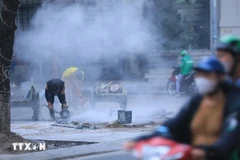
Construction activity is one of the causes of air pollution in Hanoi. (Photo: VNA)

Hanoi takes urgent measures to curb air pollution

The city requires the enhanced application of advanced technologies and remote monitoring systems, including satellite remote sensing, drones, and AI-integrated traffic cameras, to monitor, detect, and strictly address the illegal burning of garbage, straw, and agricultural by-products.