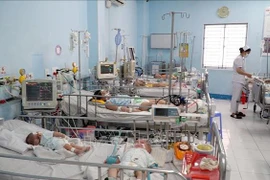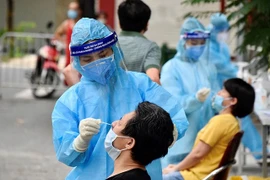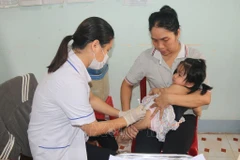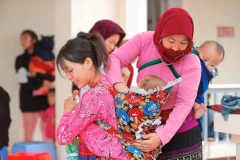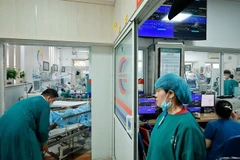
HCM City (VNS/VNA) - HCM City has seen a surge in hand-foot-mouth disease (HFMD) cases over the past week with some affected children experiencing severe symptoms.
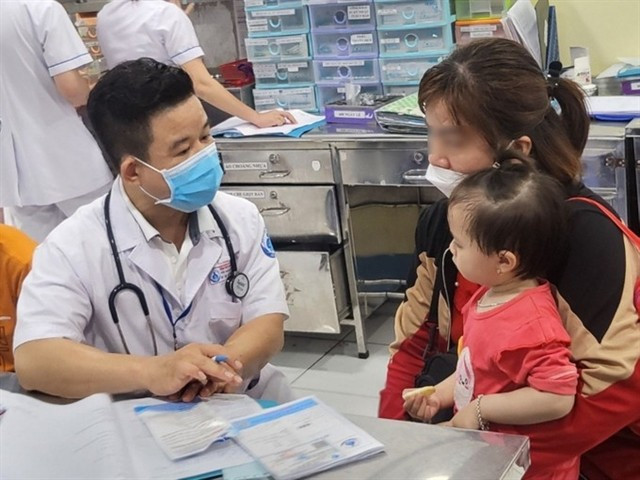
According to the HCM City Center for Disease Control (HCDC), children’s hospitals across the city have reported an uptick in visits for examinations and treatment in recent days.
Last week alone, there were 916 new cases of HFMD, a surge of 40% compared to the average of the previous four weeks.
Since the start of 2025, over 6,700 cases have been documented in the city, up 49% compared to the same period last year.
Hospitalisations have also risen by 15%, although there have been no reported fatalities.
The districts with the highest number of infections include 1, 5, 7, 12, Binh Chanh, Binh Tan, Tan Binh, and Thu Duc city.
Dr. Le Nguyen Thanh Nhan, head of the Department of Guidance at Children’s Hospital 1, said that on May 22, the hospital was treating 30 HFMD cases, three of which required mechanical ventilation due to their severe condition.
Dr. Tran Ngoc Luu, an infectious disease specialist at Children’s Hospital 2, said April often marks the beginning of a spike in HFMD cases.
The disease can occur throughout the year but is most prevalent from March to May and again from September to December, primarily affecting children under the age of five, he added.
HFMD is an acute infectious illness caused by enteroviruses, capable of leading to outbreaks.
Children usually contract the virus through contaminated hands, utensils, and toys, particularly when these items come into contact with faeces or secretions from infected individuals. The disease can also spread through respiratory droplets or saliva during close interactions.
Initial symptoms include fever, mouth ulcers, and rashes that appear as small blisters on the palms, soles, knees, elbows, or buttocks.
Unfortunately, immunity to the disease is not long-lasting, meaning children can become reinfected.
If a child shows signs of infection, it’s crucial to seek medical attention immediately or consult the nearest healthcare facility for guidance, medical experts said.
Without prompt treatment, HFMD can lead to serious complications, including encephalitis, brainstem encephalitis, meningitis, and potential impacts on the cardiovascular and respiratory systems, which could be fatal.
According to Dr. Truong Huu Khanh, vice chairman of the city’s Infectious Diseases Association, vaccination remains the safest and most effective method to prevent infectious diseases. However, there is currently no vaccine available for HFMD in Vietnam.
To protect children from the disease, parents are urged to limit their exposure to potential sources of infection, keep sick children home from school, maintain a clean environment, and regularly disinfect toys and surfaces.
Frequent handwashing with soap is essential, especially before meals, after using the bathroom, changing clothes or diapers, and after contact with sick children’s secretions.
In a related move, a vaccine against HFMD caused by the Non-Mouse-Adapted Enterovirus 71 (EV71) strain has been developed in Taiwan (China) and is waiting for approval from the Ministry of Health.
The vaccine was tested by the Pasteur Institute in HCM City on 2,700 children over the past three years with an efficacy of 99.21% with no reported complications or hospitalisations.
See more
First hospital in Mekong Delta earns US AACI accreditation
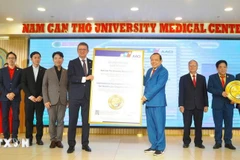
Nam Can Tho University Hospital on December 15 hosted a ceremony to announce its accreditation by the American Accreditation Commission International (AACI), a US-based body, becoming the first facility in the Mekong Delta and among a select few in Vietnam to earn the distinction.
Vietnam proactively takes polio prevention measures amid outbreak in Laos
The meeting took place following an assessment by the World Health Organisation (WHO) warning that Vietnam is facing a very high risk of polio import and re-emergence. The risk arises after neighbouring Laos officially declared a polio outbreak on October 7, following the detection of circulating vaccine-derived poliovirus type 1 (cVDPV1).
WHO welcomes Vietnam’s strong stance on banned e-cigarettes, heated tobacco products
WHO Representative in Vietnam Dr Angela Pratt said, “WHO is delighted with the decision to include e-cigarettes and HTPs in the list of banned enterprises under the Investment Law, without exceptions. This is crucial for upholding the National Assembly’s ban on these products – Resolution 173.”
Nearly 100 international scientists attend molecular diagnostics conference in Vietnam
The conference features almost 80 presentations across plenary sessions, parallel sessions and poster sessions, focusing on leading research trends such as point-of-care diagnostics; predictive biomarkers used to anticipate individual responses to therapy; and the development of new tools and platforms for rapid molecular-level detection and diagnosis.
French NGO ADM Vietnam marks 33 years of medical aid, language bridge
The association was established with three core missions: medical assistance, social support, and promotion of medical French - sending volunteer doctors to Vietnam, donating equipment, and helping medical students master French to secure clinical internships in France.
AI and precision medicine: Emerging prospects for Vietnam-Canada cooperation
Canada has strong experience in compiling and analysing genomic data, while Vietnam has a large population with diverse genetic structures. This complementarity can help Vietnam narrow its technological gap and enhance its capacity to treat rare diseases — an area many countries are prioritising for development.
Vietnam on path to become a healthy nation
Resolution 72 not only focuses on health care but is also closely interlinked with other sectors, helping to build a solid foundation for sustainable national development and create momentum for Vietnam to “take off” and further integrate into the world.
Health sector targets free hospital fee for all
The total value of medical expenses not covered by the health insurance fund is estimated at around 24.8 trillion VND (942 million USD) per year. Health insurance contributions remain low, at 4.5% of the salary or reference base used for calculation.
Vietnam, Laos expand cooperation in military medicine
Over the past two decades, many Vietnamese experts have undertaken long-term missions at the Central Hospital 103 to provide training and technical assistance, contributing to the successful treatment of complex cases. The Central Military Hospital 108 has also trained 206 Lao doctors, six nurses and two engineers — a clear demonstration of substantive, long-standing cooperation.
Vietnam, Mexico boost medical cooperation
As both nations look to keep their long-standing partnership in good health, the health ministries of Vietnam and Mexico have been accelerating cooperation, especially in traditional medicines.
Major medical, pharmaceutical exhibitions kick off in HCM City
The 33rd Vietnam International Medical and Pharmaceutical Exhibition (Vietnam Medi-Pharm 2025) and the International Exhibition on Pharmaceuticals, Medical Devices and Healthcare (Vietmedicare Expo 2025) kicked off at the Saigon Exhibition and Convention Centre on November 27.
Vietnam's healthcare system approaches international standards
The goal for the next decade is to bring Vietnam's quality standards closer to international benchmarks, promote independent certification, introduce quality-linked payment mechanisms, and expand digital transformation.
Organs from neurologically deceased donors save 29 lives within two weeks
Surgeons at the 108 Military Central Hospital successfully carried out a multi-organ transplant using organs from a brain-dead donor on November 22, marking two consecutive weeks in November during which the hospital has helped save 29 patients.
Vietnam prioritises protecting youth from new-generation tobacco products
“Our duty is to protect future generations through strong, decisive and evidence-based policies.”
Vietnamese surgeons honoured with prestigious Royal College Fellowship
The fact that the Vietnamese doctors have been awarded with FRCS certificate proves Vietnam’s surgical expertise has met international standards, contributing to improving the quality of treatment at home, expanding academic cooperation with world leading medical institutions and inspiring younger doctor to pursue higher standards.
Vietnam affirms global standing in organ transplantation
In mid-August, Viet Duc University Hospital announced that its doctors successfully performed Vietnam’s first-ever combined heart–lung transplant, marking a major step forward for the country’s medical field.
First kidney transplants from brain-dead donor performed in Mekong Delta
The two kidneys were among five organs, including the heart, liver, kidneys and corneas, donated by a man from Can Tho city who passed away following a traffic accident.
Over 1,000 impoverished border residents receive health insurance cards
The initiative aims to not only lower medical costs but also strengthen social welfare and support sustainable poverty reduction.
Quang Ngai doctors transfer pediatric anesthesia techniques to Lao counterparts
Under the three-month programme, the Vietnamese specialists will provide hands-on instruction and technology transfer to Viengkhon Manivong and other doctors from Attapeu. Once the Lao doctors master the procedures, the Quang Ngai team will travel to Attapeu to complete the transfer and give on-site guidance.
For first time in Vietnam: Two lung transplants performed successfully in single day
The success of the two transplants for two patients in a single day has brought the total number of successful lung transplants performed by the National Lung Hospital to nine, placing Vietnam among the world’s leading lung transplant centres.