HCM City makes strides in sustainable poverty reduction

HCM City reduced the number of poor and near-poor households by 69,914, or 2.7% of the total households during 2021-2025 period,  said Nguyen Thi Hong Ha, Chief of the Office of the city’s Steering Committee for Sustainable Poverty Reduction.

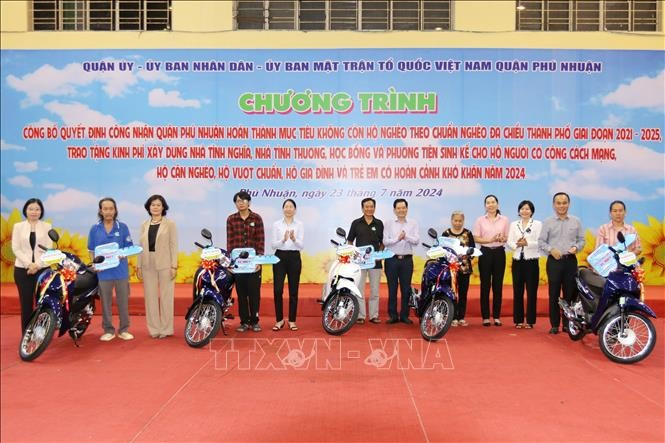
Near-poor and disadvantaged households in HCM City’s Phu Nhuan district receive motorbikes as a means of livelihood. (Photo: VNA)

HCM City (VNA) – Since 2009, Ho Chi Minh City has taken a significant step in its poverty reduction efforts by adopting a multidimensional approach, ensuring that disadvantaged households not only increase their income but also gain access to minimum living standards and essential social services

This shift has helped improve not just financial stability but also the overall quality of life for many residents.

In 2016, the Vietnam Fatherland Front (VFF) Committee in Binh Chanh district launched the “Livelihoods for a Sustainable Future” programme, which has supported hundreds of households with the tools they need to generate income and gradually escape poverty.

One such case is Pham Thi Lan, who previously had no land and no stable job. With funding from local businesses, the district VFF Committee provided her with a sewing machine in 2018.

“Once I had the sewing machine, I began taking garment orders from local shops and offering clothing repair services to neighbours. That brought my family a stable source of income,” she said.

Her husband also found employment at a small company, allowing the family to begin saving. By early this year, Lan was thrilled to see their once-dilapidated home replaced with a solid house, and her children now attend school regularly.

Many other households in the district have also benefited from similar support. The livelihood assistance programme follows a clear process — from planning and needs assessment to beneficiary selection and monitoring of implementation. As a result, nearly 84% of participating households have made effective use of the support provided.

At the start of the 2021–2025 period, the city had over 58,000 poor and near-poor households, accounting for 2.3% of all households. To address this, the city has introduced a variety of support policies and programmes — including production and business development, livelihood diversification, micro-loans, vocational training, nutritional support, educational aid, and housing assistance.

Changing mindsets

A key highlight of the programme is the shift in mindset among poor and near-poor households.

Huynh Van Beo’s family in Binh Thanh district is an example. Once classified as poor, the family of six managed to improve their circumstances through access to preferential loans and the donation of a motorbike, which enabled them to earn a living.

“Our income is stable now, and we’ve renovated our home. I wanted to give this opportunity to others who need it more,” Beo said.

His family was among 122 households in the district that voluntarily withdrew from the poverty reduction programme in late 2024.
poverty-reduction.jpg
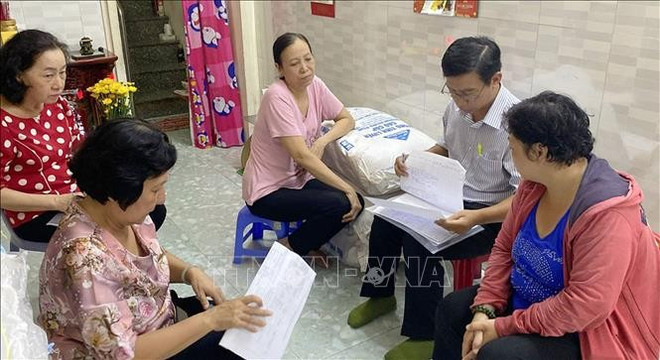
The inspection team on the implementation of the sustainable poverty reduction programme for the 2021-2025 period reviews the list of poor and near-poor households in HCM City’s District 5 (Photo: VNA)

Binh Thanh district was officially recognised as having no poor households under the city’s multidimensional poverty standard one year ahead of schedule. This achievement was attributed to various welfare initiatives, including health insurance coverage, job placement and vocational counseling, tuition waivers, home repair support, and preferential loans.

Currently, many districts across the city have met their targets for eliminating poverty based on the city’s 2021–2025 multidimensional poverty standard.

According to Nguyen Thi Hong Ha, Chief of the Office of the city’s Steering Committee for Sustainable Poverty Reduction, HCM City reduced the number of poor and near-poor households by 69,914, or 2.7% of the total households during the reviewed period. So far, 13 districts have met the poverty-free target, with the remaining nine expected to achieve it in the first quarter of this year.

A standout success of the programme has been the growing awareness and self-reliance among poor and near-poor households. Many have strived to stabilise their lives, and pursue education, vocational training, and employment, making the most of the support opportunities available to them and reducing their dependence on government or external aid.

Tran Thi Dieu Thuy, Vice Chairwoman of the municipal People’s Committee, emphasised that in the coming years, the city will continue implementing sustainable poverty reduction strategies, preventing people from falling back into poverty, and promoting inclusive economic growth and social security.

By 2030, the city aims to raise its poverty income threshold to twice the national standard, eliminate poverty under the national definition, and reduce the number of poor households under the city’s own standards to below 0.5%.

“The city will continue exploring practical solutions to support production and business, create opportunities, and empower the poor to live independently and confidently, thus transforming their lives from poverty to prosperity, and contributing to building a livable, modern, civilised, and compassionate city,” Thuy said./.

VNA

See more

Nguyen Thanh Ha, Consul General of Vietnam in Western Australia and the Northern Territory presents Certificates of Commendation from the Consul General to students and volunteers in recognition of their outstanding contributions to the organisation of Xuan Que Huong (Homeland Spring) 2025. (Photo: VNA)

Vietnamese community in Australia united through youth engagement

Speaking at the ceremony, Nguyen Thanh Ha, Consul General of Vietnam in Western Australia and the Northern Territory, praised the dedication of young Vietnamese living in the region. She emphasised that the success of Xuan Que Huong was built not only on its colourful performances, but also on the strong sense of responsibility and tireless behind-the-scenes efforts of students and volunteers.

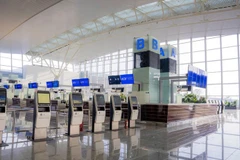
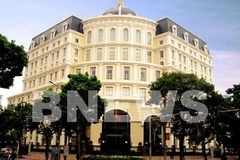
A full suite of automated technologies has been deployed across the Terminal T2 at Noi Bai International Airport, giving travellers greater control over their procedures from check-in to boarding. (Photo: VNA)

Noi Bai Airport to operate expanded int’l terminal with comprehensive automation

The upgrade follows directives from the Prime Minister and the Ministry of Construction and is designed to ease pressure on existing infrastructure by lifting the terminal’s annual capacity from 10 million to 15 million passengers. For the first time, a full suite of automated technologies has been deployed across the terminal, giving travellers greater control over their procedures from check-in to boarding.

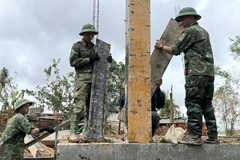
Soldiers help flood-hit communities clean up in Hoa Thinh commune, Dak Lak province. (Photo: VNA)

Concerted efforts help disaster-hit communities rebuild lives

The “Quang Trung Campaign” to rapidly repair and rebuild houses for affected families in central provinces is seen as a catalyst for faster and more sustainable recovery, extending beyond housing restoration to reinforcing essential infrastructure, enhancing community resilience, and strengthening public trust in the Party and Government.

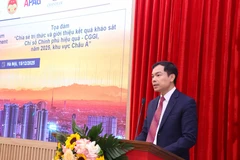
Associate Professor Dr Nguyen Manh Hung, Vice President of the Ho Chi Minh National Academy of Politics, addresses the dialogue in Hanoi on December 15. (Photo: VNA)

Vietnam among Asia’s leaders in governance capacity

Vietnam has climbed 12 places in the 2025 Chandler Good Government Index (CGGI) since 2021, rising from 60th to 48th globally. Over the past five years, the country has recorded progress in six out of seven CGGI pillars, making it one of Asia’s most notable governance reformers.

Scientific research activities at the National Hospital of Endocrinology. (Photo: VNA)

Vietnam sets roadmap for intellectual workforce to 2045

The strategy aims to build a high-quality Vietnamese intellectual workforce with a rational structure, identified as a core driving force for the rapid development of modern productive forces, as well as a leading force in digital transformation, innovation and international integration.

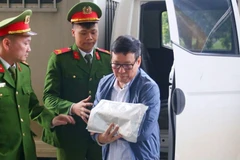
Le Duy Thanh, former Chairman of the Vinh Phuc People’s Committee, is escorted to the courtroom. (Photo: anninhthudo.vn)

Appeal trial opened for Phuc Son Group corruption case

According to the first-instance verdict, Nguyen Van Hau, Chairman and CEO of Phuc Son Group, exploited personal and professional connections to bribe over 132 billion VND (over 5 million USD) to leaders of the Party Committees, People’s Committees, and departments in Vinh Phuc and Quang Ngai, enabling Phuc Son Group to secure many contracts in these localities and Phu Tho province.

A performance at the year-end review programme in Sydney on December 14, co-organised by the Vietnam-Australia Scholars & Experts Association and Vietnam-Australia Cultural Exchange Organisation. (Photo: VNA)

Gathering honours knowledge, culture, community spirit of OVs in Australia

Addressing the gathering that drew more than 300 guests, Vietnamese Consul General in Sydney Nguyen Thanh Tung highlighted contributions of the Vietnamese community in Australia, particularly intellectuals and professionals, to the host society as well as cooperation between the two countries.

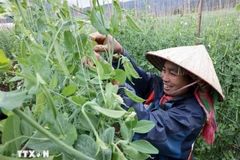
Agricultural production models help farmer access modern technology to improve output. (Photo: VNA)

Three national target programmes basically meet, exceed 2021-2025 goals

A report from the Central Steering Committee for National Target Programmes for the 2021–2025 period showed that poverty reduction in ethnic minority-inhabited areas averaged 3.2% per year. Per capita income among ethnic minorities is estimated to reach 45.9 million VND (1,760 USD) in 2025, a 3.3-fold increase from the 2020 level, well surpassing the goal of more than doubling.

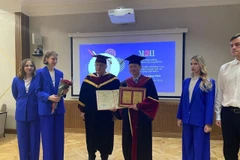
Professor Dr. Tran Hong Thai receives the honorary doctorate title and certificate from Professor Nikolay Rogalev of MPEI. (Photo published by VNA)

Vietnamese professor awarded honorary doctorate by Moscow institute

Professor Dr. Tran Hong Thai, Standing Vice President of the Vietnam Academy of Science and Technology (VAST) was granted an Honorary Doctorate by The Moscow Power Engineering Institute (MPEI) for his outstanding contributions to scientific development, education and international cooperation in the energy sector.