International cooperation key to tackling cybercrime: Russian official

The Hanoi Convention has received strong support from UN member states for its goal to establish effective cooperation mechanisms and involve IT innovators in ensuring information security and combating cybercrime.

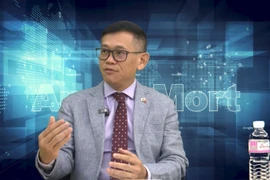
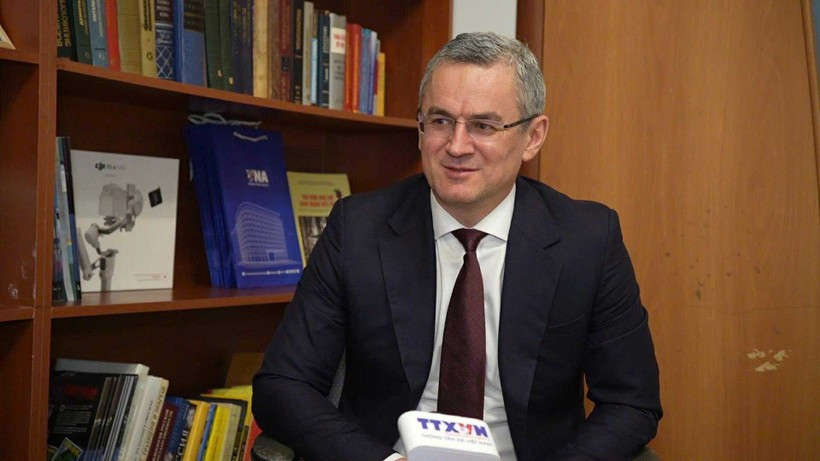
Artur Lyukmanov, Director of the Department of International Information Security of the Ministry of Foreign Affairs of Russia. (Photo: VNA)

Moscow (VNA) - Combating cybercrime is a shared challenge for all nations in the face of rapidly advancing information technology, demanding coordinated action from the international community, said Artur Lyukmanov, Director of the Department of International Information Security of the Ministry of Foreign Affairs of Russia.

In an interview with a Vietnam News Agency correspondent in Russia, Liukmanov, who is also the Russian President’s Special Representative for International Cooperation in Information Security, praised Vietnam for hosting the signing ceremony of the UN Convention against Cybercrime (Hanoi Convention) on October 25-26, underscoring the deepened cybersecurity cooperation between Russia and Vietnam.

He said Vietnam fully deserves the honour of hosting the Opening for Signature of the UN Convention against Cybercrime - the UN’s first convention on combating cybercrime, noting that Russia takes pride in contributing to the global efforts in this field.

According to Liukmanov, since launching the Hanoi Convention, Russia has actively supported Vietnam at the UN General Assembly’s plenary session in December 2024 and worked closely with Vietnamese agencies to prepare for the signing ceremony. The two countries have jointly conducted activities including large-scale cyberattack prevention training, capacity-building workshops, and technical support initiatives to combat cybercrime.

Regarding Vietnam’s efforts in cybercrime prevention and international cooperation, Liukmanov highlighted that Russia and Vietnam share a common approach and have signed numerous cooperation agreements between their foreign ministries and relevant agencies.

Notably, the two countries have signed an intergovernmental agreement on international information security, which is currently being actively implemented. The forthcoming Hanoi Convention also reflects the bilateral cooperation between the two nations, together with other international partners.

He added that Russia and Vietnam share the view that UN member states should establish legally binding agreements to safeguard the security and safety of their citizens.

In terms of specific cooperation between Vietnam and Russia in combating cybercrime, the two sides regularly share experiences and coordinate through multiple channels, including the UN Security Council, their ministries of home affairs, workshops, conferences, and information security training programmes. Both countries place strong emphasis on the human element in safeguarding information security. Their cooperation has also been strengthened within the Russia-ASEAN dialogue framework, with an information security dialogue held in Sochi on October 23, attended by Vietnam.

Although the Hanoi Convention marks a significant step forward, new challenges in this field continue to arise, Liukmanov said, stressing the need to maintain effective cooperation mechanisms and hold regular meetings and discussions as cybercrime becomes increasingly sophisticated and agile.

The Hanoi Convention has received strong support from UN member states for its goal to establish effective cooperation mechanisms and involve IT innovators in ensuring information security and combating cybercrime, he noted.

He also highlighted technological sovereignty, noting that regardless of which country a technology belongs to, it must ensure information security for its citizens./.

VNA

See more

Prime Minister Pham Minh Chinh and delegates visit booths showcasing products at TechFest Vietnam 2025. Photo: VNA

Vietnam to become attractive destination for tech talent, innovative startups: PM

TechFest Vietnam 2025, held from December 12 to 14, is expected to attract more than 60,000 participants both in person and online, with the participation of over 20 corporations, 50 investment funds, more than 100 supporting organisations and incubators, and delegates from Southeast Asia, Northeast Asia, Central Asia, the Middle East, North America, and Europe.

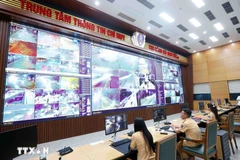
Police offiers mornitor the traffic through AI camera (Photo: VNA)

Applying the Internet of Things in smart transport

The project aims to build a unified, safe and efficient IoT platform to support the management, operation and exploitation of smart transport systems under the Ministry of Construction, with data shared across ministries and localities.

Through long-term commitment, Viettel has brought millions of Burundians into the mobile era and become the first operator to roll out 5G in the country, Viettel Burundi CEO Phan Truong Son noted. (Illustrative photo: VNA)

Viettel secures three prestigious international awards

Viettel has won honours in the “People & Culture” and “Best Operator in a Growth Market” categories at the 2025 World Communication Awards (WCA), alongside the “Best Digital Transformation Project” at the 2025 Global Telecoms Awards (Glotel).

A view of the Can Gio sea-encroaching urban area project (Photo: VNA)

Green-tech push for Can Gio

Vietnam has the capacity, ambition and technological foundation to join the group of leading sustainable coastal urban nations in the coming decade, experts said at a dialogue on "advancing to the sea with ESG++ megacities: breakthroughs through green technology", held on December 9 in Hanoi by the Vietnam Institute for Real Estate Studies (VIRES).

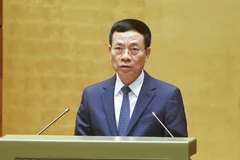
Minister of Science and Technology Nguyen Manh Hung speaks at the meeting (Photo: VNA)

Vietnam turns intellectual property into bankable assets in new law

About AI-generated content, the law draws a clear line: purely autonomous AI creations are not eligible for copyright or patent protection. Those who provide substantial creative input, such as ideas, curation, editing, or selection, qualify as authors or inventors.

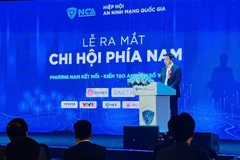
Lieutenant General Nguyen Minh Chinh, NCA Vice Chairman, speaks at the launch ceremony of the southern branch of the National Cybersecurity Association. (Photo: VNA)

National Cybersecurity Association opens branch in HCM City

The southern branch aims to become a coordinating body for cybersecurity tasks, workforce development, awareness-raising and the strengthening of digital defence capabilities across the region, contributing to the safe and sustainable growth of Vietnam’s digital economy.

Viettel exceeds target of 20,000 new 5G stations by more than three weeks. (Illustrative photo: VNA)

Viettel exceeds target of 20,000 new 5G stations by more than three weeks

Viettel plans to continue scaling up its network from now until the end of 2025, with an additional 23,500 stations scheduled for installation, nearly quadruple the number rolled out in 2024. Once completed, Viettel will operate Vietnam’s largest 5G network, with 30,000 stations covering 90% of outdoor areas and 70% of indoor spaces nationwide, from major cities to rural regions.

In Vietnam, demand for infrastructure supporting AI, cloud computing, and digital services is rising at an unprecedented level. (Illustrative photo: VNA)

Vietnam emerges as new hub for data centres

Data centres have surged to become the second most preferred alternative asset class in the region. Vietnam is no exception to this trend as the demand for infrastructure supporting AI, cloud computing, and digital services has risen at an unprecedented level.

Professor Kurt Kremer, from the Max Planck Institute for Polymer Research in Germany, speaks at the event. (Photo: VNA)

Vietnam has advantages to develop versatile humanoid robots: experts

At the symposium, international and Vietnamese experts also discussed the latest trends in robotics, from socially interactive humanoids and collaborative service robots to medical and rehabilitation systems, and examined major challenges surrounding AI safety and ethics to ensure that robotics evolves in a responsible, human-centred and sustainable manner.