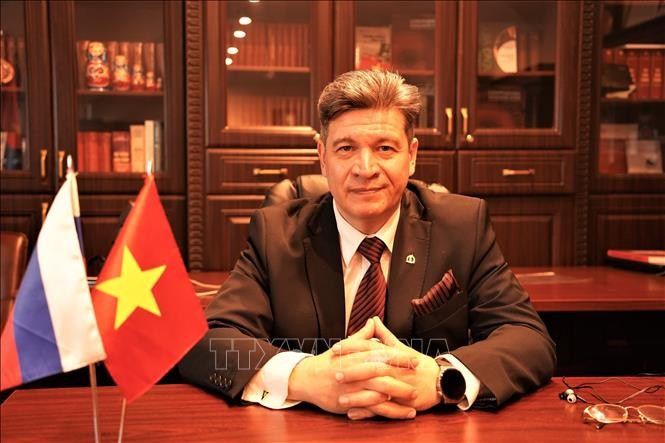
Hanoi (VNA) - The decisive factor behind Vietnam’s revolutionary success has been the Communist Party of Vietnam (CPV) - the force that spread Ho Chi Minh’s ideology and safeguarded the nation’s interests, stated a Russian scholar.
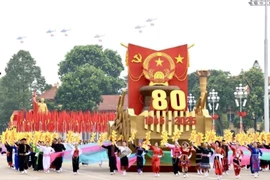
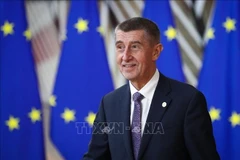
The establishment of the Democratic Republic of Vietnam was the result of a process prepared and executed by President Ho Chi Minh under the leadership of the CPV, Prof., Dr. Vladimir Kolotov, head of the Department of History of Far Eastern Countries and Director of the Ho Chi Minh Institute at Saint Petersburg State University told the Vietnam News Agency on the occasion of the 80th anniversary of Vietnam’s August Revolution and National Day.
At the moment when Japanese militarism lost control in Vietnam and French colonial rule had not yet been restored, the revolutionary forces, led by the Party and President Ho Chi Minh, successfully carried out the August Revolution and proclaimed independence.
This paved the way for subsequent achievements, such as the successful organisation of the general election for the 1st National Assembly, the adoption of the first Constitution, and preparations for resistance against the returning French colonial forces. All this was accomplished at a time when Vietnam faced tremendous challenges and lacked solid material foundations, said Prof. Kolotov.
He underlined that President Ho Chi Minh managed to unite around him outstanding comrades such as Tran Van Giau, Vo Nguyen Giap, and Pham Van Dong to break the oppressive colonial rule. “I think these were historic achievements inscribed in golden letters in the history of the Vietnamese nation”.
The scholar highlighted the Communist Party of Vietnam as the decisive factor for these successes. Founded by President Ho Chi Minh, it only took 15 years after its establishment to lead the August Revolution and declare independence. The Party then directed the armed forces and people of Vietnam in defeating French colonialism and American aggression, reunifying the country, and resisting the genocidal Pol Pot regime, he noted.
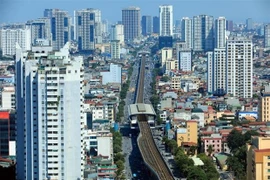
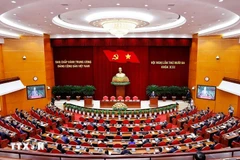
After achieving national reunification, in 1986, the Party launched the Doi Moi (Renewal) scheme, which profoundly transformed the economy and the lives of the people. Today, Vietnam is implementing the Resolution of the 13th National Party Congress, aiming to become a developing country with modern industry and upper-middle income by 2030; and a developed, high-income nation by 2045, the centenary of the Democratic Republic of Vietnam, now the Socialist Republic of Vietnam.
It is fair to say that for the past 95 years, the CPV has continuously led the nation from one victory to another, not only militarily, but also in economic development and science and technology.
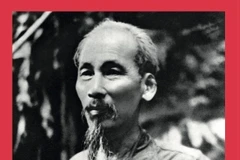
The scholar also underscored the significance of Marxism–Leninism and Ho Chi Minh Thought as the guiding principles of the Vietnamese revolutionary movement. Indeed, they are the ideology of the Vietnamese nation itself, he said, adding that Ho Chi Minh’s thought can be regarded as the ideology of the CPV.
One could say that Vietnam’s current independence, prosperity, freedom, and genuine sovereignty are, in many respects, the concrete realisation of Ho Chi Minh’s ideological legacy. Put simply, by following Ho Chi Minh’s thought, the Vietnamese revolution achieved success.
Prof. Kolotov described the historic developments of August and September 1945 in Vietnam as a turning point that charted a new path of national development, with the CPV consistently leading the people from victory to victory.
During the Cold War, Vietnam was one of the world’s hottest spots and the only country in Northeast and Southeast Asia that overcame polarisation and confrontation to achieve national reunification in 1975, he stressed.
At present, Vietnam is a fully sovereign state, genuinely enjoying independence, freedom, and the right to determine its own development path without hosting any foreign military bases on its territory. This is the result of the spread of President Ho Chi Minh’s thought and the leadership of the CPV, according to the scholar.
Prof. Kolotov underlined that in 1945, the CPV, as a new political force, assumed the historic mission of the nation, bringing the message of independence under the red flag with a yellow star. The Party acted solely in the interests of the people, leading a thorough revolutionary struggle against French colonialists and Japanese militarism. This remains the greatest lesson for Vietnam’s current and future development, which highlights the decisive role of a political force that genuinely protects national interests, he said.
Another equally important lesson from the August Revolution is unity, the professor noted. Only when the entire nation is united as one can it achieve great success in safeguarding its interests. This principle continues to ensure the stability and growth of modern Vietnam – a sovereign nation that enjoys independence and self-determination, taking full responsibility for its destiny.
He concluded by saying that Vietnam now records high economic growth and continuously improves people’s living standards – a long-cherished aspiration of President Ho Chi Minh and generations of Vietnamese patriots - that has become a reality today./.
VNA