PM chairs national conference on new rural development, sustainable poverty reduction

The programme on sustainable poverty reduction has achieved its annual targets for reducing the poverty rate as assigned by the National Assembly and the Government. It has fulfilled five specific objectives and five five-year goals, and met nine out of 12 indicators related to addressing basic social service shortages.

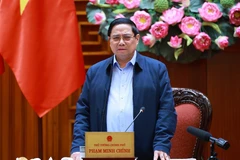
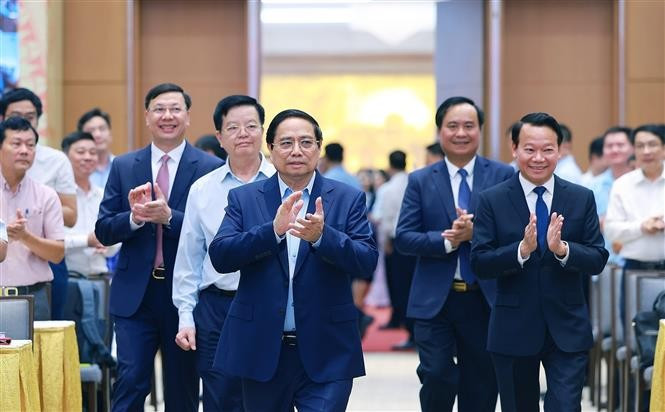
Prime Minister Pham Minh Chinh (centre) at the conference (Photo: VNA)

Hanoi (VNA) – Prime Minister Pham Minh Chinh presided over a national online conference on June 22 to review the national target programmes on building new-style rural areas and sustainable poverty reduction. The conference also looked into “the whole nation joins hands to build new-style rural areas” and “for the poor - leaving no one behind” movements in 2021-2025. In his remarks, the Government leader, who is also Head of the Steering Committee for National Target Programmes and Chairman of the Central Emulation - Commendation Council, held that agriculture, farmers, and rural areas are the foundation and pillars of national socio-economic development.

Farmers play the central role, while agriculture is motivation and rural areas are the foundation, importantly contributing to maintaining macroeconomic stability, controlling inflation, ensuring food security, and serving as a cradle for the creativity, preservation, and transmission of the cultural heritage of wet rice civilisation of the country.

The conference aimed to outline guiding viewpoints and new policy directions for implementing the national target programmes in the coming years, in line with the upcoming two-tier local administration model, he said.

According to the PM, the Government has issued decrees specifying management mechanisms and implementation frameworks for the above-mentioned national target programmes. A system of steering committees has been set up at all levels to oversee and coordinate their execution.

Besides the national target programmes, the two movements have mobilised the involvement of the entire political system and encouraged active participation from the public, the business community, and organisations both at home and abroad, in order to successfully achieve the goals set out by the programmes.
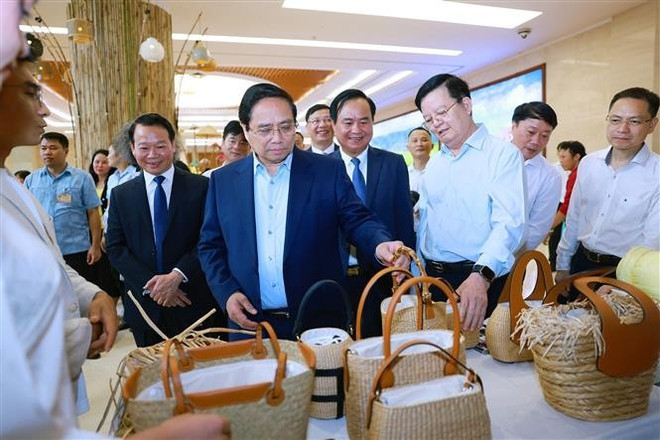
Prime Minister Pham Minh Chinh visits a booth displaying OCOP products. (Photo: VNA)

Prime Minister Pham Minh Chinh visits a booth displaying OCOP products. (Photo: VNA)

Accordingly, the programme on sustainable poverty reduction has achieved its annual targets for reducing the poverty rate as assigned by the National Assembly and the Government. It has fulfilled five specific objectives and five five-year goals, and met nine out of 12 indicators related to addressing basic social service shortages. Meanwhile, the programme on building new-style rural areas has seen 79% of communes meeting new rural standards, 51% of district-level localities recognised as meeting or completing the programme’s goals, and 12 provinces and cities officially acknowledged by the PM for having fulfilled the programme’s objectives.

The emulation movements have been widely launched across localities, reaching households, individuals, and the business community. They have inspired numerous innovative and effective practices, with many outstanding examples recognised and commended for their positive contributions.

However, many areas still have high poverty rates, and significant development gaps remain between regions, the PM said, noting that several poor districts have yet to see any commune meet new rural standards, and in some localities, the quality of achieved criteria has not been adequately maintained.

He requested the conference to focus on assessing the results achieved in comparison with the set goals; clearly identify the targets that have been met, exceeded, or missed; analyse specific limitations, challenges, and bottlenecks; pinpoint their causes and draw lessons learned from the implementation of the two national target programmes and related emulation movements during the 2021–2025 period.

He also called for the sharing of effective models, innovative practices, and exemplary initiatives, as well as proposals for the implementation of the programmes for the 2026–2035 period./.

VNA

See more

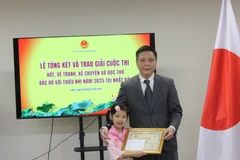
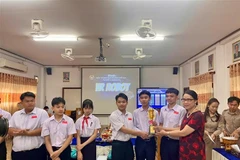
Nguyen Thanh Ha, Consul General of Vietnam in Western Australia and the Northern Territory presents Certificates of Commendation from the Consul General to students and volunteers in recognition of their outstanding contributions to the organisation of Xuan Que Huong (Homeland Spring) 2025. (Photo: VNA)

Vietnamese community in Australia united through youth engagement

Speaking at the ceremony, Nguyen Thanh Ha, Consul General of Vietnam in Western Australia and the Northern Territory, praised the dedication of young Vietnamese living in the region. She emphasised that the success of Xuan Que Huong was built not only on its colourful performances, but also on the strong sense of responsibility and tireless behind-the-scenes efforts of students and volunteers.

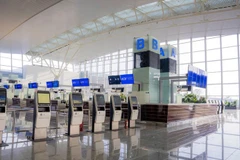
A full suite of automated technologies has been deployed across the Terminal T2 at Noi Bai International Airport, giving travellers greater control over their procedures from check-in to boarding. (Photo: VNA)

Noi Bai Airport to operate expanded int’l terminal with comprehensive automation

The upgrade follows directives from the Prime Minister and the Ministry of Construction and is designed to ease pressure on existing infrastructure by lifting the terminal’s annual capacity from 10 million to 15 million passengers. For the first time, a full suite of automated technologies has been deployed across the terminal, giving travellers greater control over their procedures from check-in to boarding.

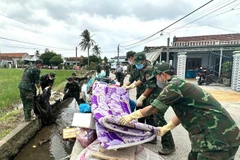
Soldiers help flood-hit communities clean up in Hoa Thinh commune, Dak Lak province. (Photo: VNA)

Concerted efforts help disaster-hit communities rebuild lives

The “Quang Trung Campaign” to rapidly repair and rebuild houses for affected families in central provinces is seen as a catalyst for faster and more sustainable recovery, extending beyond housing restoration to reinforcing essential infrastructure, enhancing community resilience, and strengthening public trust in the Party and Government.

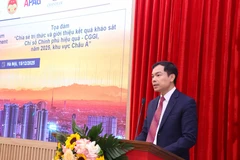
Associate Professor Dr Nguyen Manh Hung, Vice President of the Ho Chi Minh National Academy of Politics, addresses the dialogue in Hanoi on December 15. (Photo: VNA)

Vietnam among Asia’s leaders in governance capacity

Vietnam has climbed 12 places in the 2025 Chandler Good Government Index (CGGI) since 2021, rising from 60th to 48th globally. Over the past five years, the country has recorded progress in six out of seven CGGI pillars, making it one of Asia’s most notable governance reformers.

Scientific research activities at the National Hospital of Endocrinology. (Photo: VNA)

Vietnam sets roadmap for intellectual workforce to 2045

The strategy aims to build a high-quality Vietnamese intellectual workforce with a rational structure, identified as a core driving force for the rapid development of modern productive forces, as well as a leading force in digital transformation, innovation and international integration.

Le Duy Thanh, former Chairman of the Vinh Phuc People’s Committee, is escorted to the courtroom. (Photo: anninhthudo.vn)

Appeal trial opened for Phuc Son Group corruption case

According to the first-instance verdict, Nguyen Van Hau, Chairman and CEO of Phuc Son Group, exploited personal and professional connections to bribe over 132 billion VND (over 5 million USD) to leaders of the Party Committees, People’s Committees, and departments in Vinh Phuc and Quang Ngai, enabling Phuc Son Group to secure many contracts in these localities and Phu Tho province.

A performance at the year-end review programme in Sydney on December 14, co-organised by the Vietnam-Australia Scholars & Experts Association and Vietnam-Australia Cultural Exchange Organisation. (Photo: VNA)

Gathering honours knowledge, culture, community spirit of OVs in Australia

Addressing the gathering that drew more than 300 guests, Vietnamese Consul General in Sydney Nguyen Thanh Tung highlighted contributions of the Vietnamese community in Australia, particularly intellectuals and professionals, to the host society as well as cooperation between the two countries.

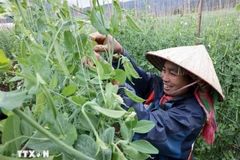
Agricultural production models help farmer access modern technology to improve output. (Photo: VNA)

Three national target programmes basically meet, exceed 2021-2025 goals

A report from the Central Steering Committee for National Target Programmes for the 2021–2025 period showed that poverty reduction in ethnic minority-inhabited areas averaged 3.2% per year. Per capita income among ethnic minorities is estimated to reach 45.9 million VND (1,760 USD) in 2025, a 3.3-fold increase from the 2020 level, well surpassing the goal of more than doubling.

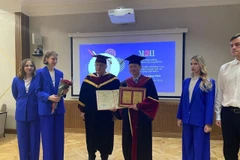
Professor Dr. Tran Hong Thai receives the honorary doctorate title and certificate from Professor Nikolay Rogalev of MPEI. (Photo published by VNA)

Vietnamese professor awarded honorary doctorate by Moscow institute

Professor Dr. Tran Hong Thai, Standing Vice President of the Vietnam Academy of Science and Technology (VAST) was granted an Honorary Doctorate by The Moscow Power Engineering Institute (MPEI) for his outstanding contributions to scientific development, education and international cooperation in the energy sector.