Strategic vision, strong reform needed for Vietnam’s high-income goal: ADB

After nearly four decades of “Doi moi” (renewal) with achievements recognised by the international community, Vietnam moved from a low-income to a middle-income country. This is a historic milestone, but also the beginning of a more complex and challenging development stage.

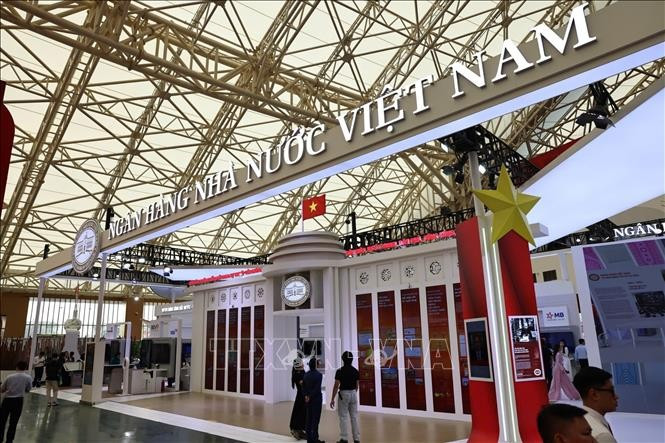
the State Bank of Vietnam's booth at the Exhibition on National Achievements on the occasion of the 80th anniversary of National Day. (Photo: VNA)

Hanoi (VNA) – Bold institutional reforms are crucial for Vietnam to escape the “middle-income trap” and achieve its ambitious goal of becoming a high-income nation by 2045, a process that will require strategic vision, close coordination, and sustained investment in implementation capacity, according Shantanu Chakraborty, Country Director of the Asian Development Bank (ADB) for Vietnam.

"Reform is like a marathon, not a sprint,” requiring strategic vision, close coordination, and sustained investment in implementation capacity to reach the finish line successfully, the ADB official stressed.
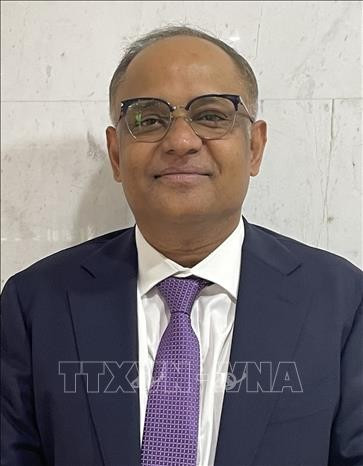
cai-cach-1.jpg
Shantanu Chakraborty, Country Director of the Asian Development Bank (ADB) for Vietnam. (Photo: VNA)

A boost for national competitiveness

After nearly four decades of “Doi moi” (renewal) with achievements recognised by the international community, Vietnam moved from a low-income to a middle-income country. This is a historic milestone, but also the beginning of a more complex and challenging development stage.

Vietnam’s growth model, long reliant on capital and cheap labour, is nearing its limits. The economy faces structural challenges of the “middle-income trap,” such as declining investment efficiency, low productivity growth, and a global value chain position still concentrated in processing and assembling with limited added value.

In this context, ADB considers Vietnam’s ongoing comprehensive institutional reform a bold and necessary undertaking. If implemented decisively and effectively, ADB noted, the reform will generate far-reaching impacts, providing a strong boost to the country’s competitiveness in both the medium and long term.

The most immediate and tangible impact lies in improving the business environment. According to ADB, simplifying administrative procedures in long-standing bottlenecks such as licensing, land, and project approvals will create a dual effect - reducing delays to unlock public investment while lowering costs and increasing predictability for the private sector. This will establish a fairer and more transparent “playing field,” helping enhance investment efficiency and giving Vietnamese businesses fresh competitive momentum both at home and abroad.

ADB stressed that Vietnam’s business environment must also align with international standards. This would not only make the country more attractive to strategic foreign investors but also serve as essential preparation for domestic enterprises to compete on the global stage.

A more dynamic public administration, capable of responding swiftly to economic changes, would provide a strong foundation to remove bottlenecks, support production, and help businesses seize opportunities from next-generation free trade agreements (FTAs) such as the Regional Comprehensive Economic Partnership (RCEP) and the Comprehensive and Progressive Agreement for Trans-Pacific Partnership (RCEP).

At the same time, reform will drive productivity and enable more efficient allocation of resources. A leaner and more effective public administration will cut unnecessary operating costs and ease compliance burdens for both the state and businesses.

According to ADB, this will allow the Government to strategically channel resources into future-shaping areas such as essential infrastructure, high-quality healthcare and education - the foundations of long-term development. In parallel, as barriers are lifted, the private sector can optimise investment returns and confidently channel capital toward the most productive and high–value-added production and business activities.

An efficient allocation of resources—by both the state and the market—is the key to breaking through the limits of the old growth model and unlocking stronger momentum for the economy as a whole.

Beyond pure economic gains, institutional reform carries a deeper significance - strengthening sustainability and resilience for the country. ADB emphasised that a stronger public area after reform will exercise state management more effectively, serving as a capable “steersman” to balance growth and development goals. This balance lies in fostering healthy market competition while protecting the environment and ensuring social welfare. In other words, a robust institutional system is the tool to address the downsides of a market economy, reduce inequality, and bring the country closer to achieving sustainable development goals (SDGs) in a practical way.

Three pillars for success

Drawing on its international experience, ADB noted that implementing large-scale reform that reshapes the entire social structure is a highly complex and challenging process. Such transformation is never smooth and will inevitably face transitional hurdles, requiring thorough preparation and synchronous solutions. These challenges may include temporary disruptions in public services and governance, dislocation for certain groups and communities, and new demands on the capacity of the civil service.

Based on its extensive experience in supporting institutional and structural reforms across the Asia–Pacific, ADB identified three key pillars for Vietnam to successfully navigate its reform - strong commitment and consistency in strategy, developing a skilled workforce, and having a monitoring and evaluation mechanism that ensures effectiveness and adaptability.

From the perspective of a long-standing and trusted development partner, ADB affirms that Vietnam’s pursuit of institutional reform is both the right choice and a turning point. It holds the key to unlocking a new phase of qualitative growth, overcoming medium-term challenges, and realising the country’s ambitious long-term goals.

The road ahead remains challenging, but with strategic vision, close coordination, and strengthened implementation capacity, Vietnam is well positioned to succeed in this historic “marathon,” ADB said./.


VNA

See more

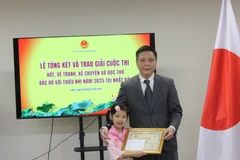
Nguyen Thanh Ha, Consul General of Vietnam in Western Australia and the Northern Territory presents Certificates of Commendation from the Consul General to students and volunteers in recognition of their outstanding contributions to the organisation of Xuan Que Huong (Homeland Spring) 2025. (Photo: VNA)

Vietnamese community in Australia united through youth engagement

Speaking at the ceremony, Nguyen Thanh Ha, Consul General of Vietnam in Western Australia and the Northern Territory, praised the dedication of young Vietnamese living in the region. She emphasised that the success of Xuan Que Huong was built not only on its colourful performances, but also on the strong sense of responsibility and tireless behind-the-scenes efforts of students and volunteers.

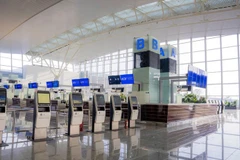
A full suite of automated technologies has been deployed across the Terminal T2 at Noi Bai International Airport, giving travellers greater control over their procedures from check-in to boarding. (Photo: VNA)

Noi Bai Airport to operate expanded int’l terminal with comprehensive automation

The upgrade follows directives from the Prime Minister and the Ministry of Construction and is designed to ease pressure on existing infrastructure by lifting the terminal’s annual capacity from 10 million to 15 million passengers. For the first time, a full suite of automated technologies has been deployed across the terminal, giving travellers greater control over their procedures from check-in to boarding.

Soldiers help flood-hit communities clean up in Hoa Thinh commune, Dak Lak province. (Photo: VNA)

Concerted efforts help disaster-hit communities rebuild lives

The “Quang Trung Campaign” to rapidly repair and rebuild houses for affected families in central provinces is seen as a catalyst for faster and more sustainable recovery, extending beyond housing restoration to reinforcing essential infrastructure, enhancing community resilience, and strengthening public trust in the Party and Government.

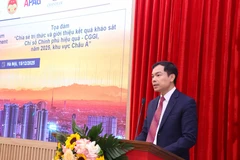
Associate Professor Dr Nguyen Manh Hung, Vice President of the Ho Chi Minh National Academy of Politics, addresses the dialogue in Hanoi on December 15. (Photo: VNA)

Vietnam among Asia’s leaders in governance capacity

Vietnam has climbed 12 places in the 2025 Chandler Good Government Index (CGGI) since 2021, rising from 60th to 48th globally. Over the past five years, the country has recorded progress in six out of seven CGGI pillars, making it one of Asia’s most notable governance reformers.

Scientific research activities at the National Hospital of Endocrinology. (Photo: VNA)

Vietnam sets roadmap for intellectual workforce to 2045

The strategy aims to build a high-quality Vietnamese intellectual workforce with a rational structure, identified as a core driving force for the rapid development of modern productive forces, as well as a leading force in digital transformation, innovation and international integration.

Le Duy Thanh, former Chairman of the Vinh Phuc People’s Committee, is escorted to the courtroom. (Photo: anninhthudo.vn)

Appeal trial opened for Phuc Son Group corruption case

According to the first-instance verdict, Nguyen Van Hau, Chairman and CEO of Phuc Son Group, exploited personal and professional connections to bribe over 132 billion VND (over 5 million USD) to leaders of the Party Committees, People’s Committees, and departments in Vinh Phuc and Quang Ngai, enabling Phuc Son Group to secure many contracts in these localities and Phu Tho province.

A performance at the year-end review programme in Sydney on December 14, co-organised by the Vietnam-Australia Scholars & Experts Association and Vietnam-Australia Cultural Exchange Organisation. (Photo: VNA)

Gathering honours knowledge, culture, community spirit of OVs in Australia

Addressing the gathering that drew more than 300 guests, Vietnamese Consul General in Sydney Nguyen Thanh Tung highlighted contributions of the Vietnamese community in Australia, particularly intellectuals and professionals, to the host society as well as cooperation between the two countries.

Agricultural production models help farmer access modern technology to improve output. (Photo: VNA)

Three national target programmes basically meet, exceed 2021-2025 goals

A report from the Central Steering Committee for National Target Programmes for the 2021–2025 period showed that poverty reduction in ethnic minority-inhabited areas averaged 3.2% per year. Per capita income among ethnic minorities is estimated to reach 45.9 million VND (1,760 USD) in 2025, a 3.3-fold increase from the 2020 level, well surpassing the goal of more than doubling.

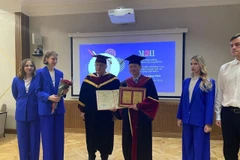
Professor Dr. Tran Hong Thai receives the honorary doctorate title and certificate from Professor Nikolay Rogalev of MPEI. (Photo published by VNA)

Vietnamese professor awarded honorary doctorate by Moscow institute

Professor Dr. Tran Hong Thai, Standing Vice President of the Vietnam Academy of Science and Technology (VAST) was granted an Honorary Doctorate by The Moscow Power Engineering Institute (MPEI) for his outstanding contributions to scientific development, education and international cooperation in the energy sector.