Timely removal of obstacles for businesses in logistics, import-export activities needed

Based on feedback from the business community, Board IV recommended that the Prime Minister direct relevant ministries to continue reviewing and reforming administrative procedures, especially in areas of high priority such as attracting investment, industrial park development, logistics, and enhancing export-import facilitation.

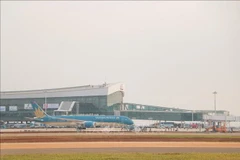
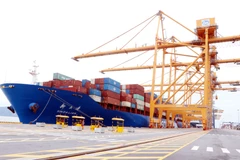
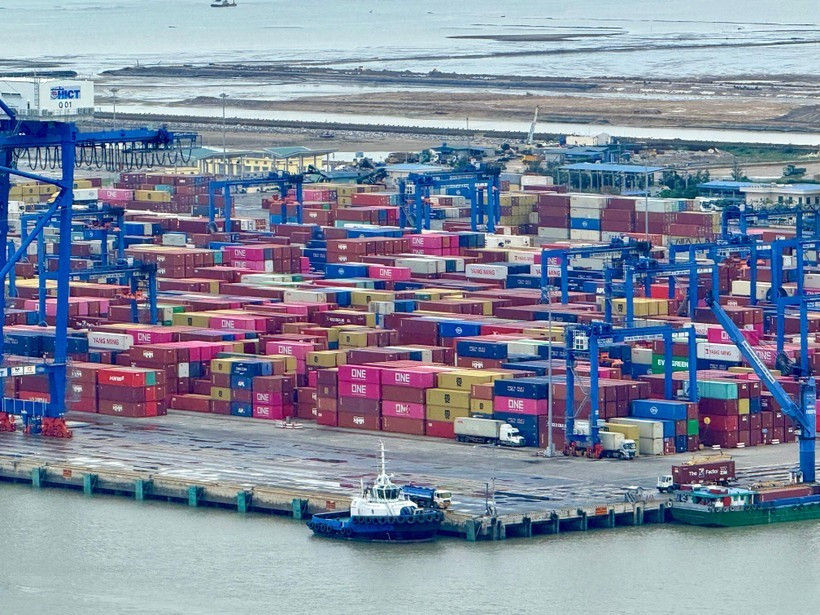
Illustrative image (Photo: VNA)

Hanoi (VNA) - Vietnam’s logistics sector has not yet reached its full potential, affecting the country’s transportation capacity and competitiveness of local goods in the international market. This is a key finding in a recent report by the Private Economic Development Research Board (Board IV) under the Prime Minister’s Administrative Reform Advisory Council submitted to the PM.

In an update to the media on December 10, Board IV highlighted that Vietnam is still in a "logistics trade deficit" position, with its ports primarily focused on cargo handling, which covers only about 20% of the functions of an international maritime hub by global standards. Most value-added services such as shipbuilding, repairs, finance, maritime insurance, and digital technology services are outside the port area and rely heavily on foreign businesses.

Despite these challenges, Vietnam has several advantages, such as its strategic geographical location on the international maritime route, accounting for 65% of global trade; its position among the top 17 largest trading nations; 17 signed Free Trade Agreements (FTAs) covering over 60 markets and 90% of global GDP; and the presence of the Cai Mep - Thi Vai port complex, capable of handling some of the world’s largest vessels (24,000-25,000 TEU). These factors present an opportunity for Vietnam to become a new maritime-logistics and production hub in Asia.

The report also points out that inland waterway transport has not been developed in proportion to its potential, leading to inefficiencies in the transportation of goods. Vietnam has one of the world’s densest river networks, with 2,360 rivers and channels spanning over 42,000 km, of which about 17,000 km (41%) are navigable. This system covers key economic regions, especially the Red River Delta, Mekong Delta, and Southeast region, forming a natural, low-cost, high-capacity, low-emission, and energy-efficient transport network.

The country has nearly 6,500 inland waterway ports, about 1,800 companies operating in the inland waterway transport sector, with more than 270,000 vessels, ensuring the transportation of about 20% of the total goods of Vietnam - far higher than the 5-7% average in the region. Around 70% of inland waterway cargo is concentrated in the southern region, where the river and canal networks are closely linked with industrial centres and deep-water ports such as Cai Mep - Thi Vai, Ho Chi Minh City, and Dong Nai.

However, public investment in this sector only accounted for about 2% of total investment in the transportation sector from 2001-2020, with a slight increase since 2021 but still far below the actual contribution of inland waterway transport to goods circulation, regional connectivity, and emission reduction. Meanwhile, 82% of investment in this sector comes from private sources, indicating significant potential for private sector involvement if supported by appropriate policies.

Based on feedback from the business community, Board IV recommended that the Prime Minister direct relevant ministries to continue reviewing and reforming administrative procedures, especially in areas of high priority such as attracting investment, industrial park development, logistics, and enhancing export-import facilitation.

It proposed the PM direct the development of new approaches based on strong public-private collaboration to build strategic and "practical" programmes aimed at increasing the competitiveness of Vietnam's maritime and logistics sectors.

On December 9, the Government Office issued Document No. 12131/VPCP-DMDN, instructing ministries and local authorities to consider and act on these proposals. These actions aim to optimise Vietnam's logistics and export capabilities, ensuring a more competitive business environment./.
VNA

See more

Vietnam shows strong FDI performance in the first 11 months of 2025 (Source: vtv.vn)

Vietnam shifting FDI attraction focus from volume to quality

As production relocation to Southeast Asia accelerates and competition for FDI intensifies, Vietnam faces increasing pressure from regional rivals such as India, Malaysia and Indonesia, which are offering bold tax incentives and developing specialised industrial parks. This reality requires Vietnam to shift its focus from attracting large volumes of capital to drawing high-quality investment, prioritising core technologies, innovation, value chain linkages and higher localisation rates.

Vice Chairman of the Ho Chi Minh City People’s Committee Hoang Nguyen Dinh inspects IUU fishing prevention efforts at Hung Thai Port in Long Hai commune. (Photo: VNA)

Ho Chi Minh City steps up oversight of unqualified fishing vessels

HCM City currently has 4,475 fishing vessels, all of which have been registered and updated on the VNFishbase system. Among them, 4,268 vessels, or 95.37%, have been granted fishing licences, while 207 unqualified vessels are being strictly managed and kept ashore.

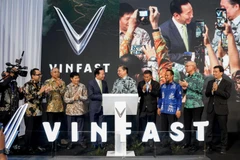
Airlangga Hartarto (fifth from right), Indonesian Coordinating Minister for Economic Affairs, and CEO of VinFast Asia Pham Sanh Chau (sixth from right) at the plant opening ceremony on December 15. (Photo: VinFast)

VinFast inaugurates EV plant in Indonesia

The VinFast Subang plant was completed and put into operation just 17 months after groundbreaking, demonstrating the company's rapid execution capability and strong implementation capacity. This is VinFast's fourth operational facility worldwide, and its first plant in Indonesia and Southeast Asia outside of Vietnam.

From early December, major retail chains in Ho Chi Minh City have recorded a noticeable increase in shoppers seeking Tet products. (Photo: VNA)

HCM City businesses ramp up production to meet Lunar New Year demand

From early December, major retail chains in the city have recorded a noticeable increase in shoppers seeking Tet products. Many consumers are taking advantage of promotional programmes to purchase gift items with long shelf lives, such as confectionery, soft drinks and processed foods, well ahead of the holiday peak.

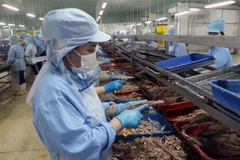
Workers process fish to be tinned for export at KTC Canned Food Factory under Kien Giang Trading JSC. (Photo: VNA)

Vietnam to host seminar on export growth strategies

Vietnam's exports rose 16.1% to 430.2 billion USD in the first 11 months of 2025, while total trade hit 839.8 billion USD during the same period. This strong performance shows that exports remain a key driver of economic growth, boosting Vietnam's standing on the world stage in recent years.

The vessel carrying the 2 millionth TEU arrives at Hai Phong Port. (Photo:VNA)

Hai Phong Port reaches 2-million-TEU milestone

Handling the 2 millionth TEU in 2025 not only demonstrates Hai Phong Port’s operational capacity and the collective efforts of its workforce, but also highlights its increasingly important role in regional and global supply chains, the confidence of shipping lines, logistics firms and the business community, and the effectiveness of policies to improve the investment climate and strengthen maritime infrastructure and services.

Melons labelled with traceability codes on display at the Song Van agricultural produce store in Ninh Binh city, Ninh Binh province. (Photo: VNA)

Tracing origins hindered by fragmented data systems

As the Government accelerates the digital economy, establishing a unified national traceability system has become a crucial move to end data fragmentation and disconnection among ministries, sectors and localities.

Hyundai unveils its new Avante Hybrid model in Seoul, the Republic of Korea, on August 13, 2020. (Photo: Yonhap/VNA)

Tax cuts poised to ignite Vietnam’s hybrid vehicle boom from 2026

Experts forecast that 2026-2030 will mark a period of strong growth for hybrid vehicles in Vietnam, a trend that will invigorate the automotive sector while supporting national objectives on emissions reduction, sustainable development and the broader transition to green mobility.