Truong Sa’s pagodas: Vietnam’s quiet claim in East Sea

For soldiers, officers, and residents stationed on these isolated islands, the pagodas offer a rare haven of calm. Beyond their role as places of worship, they embody Vietnam’s cultural claim to the archipelago.

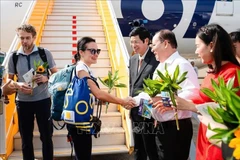
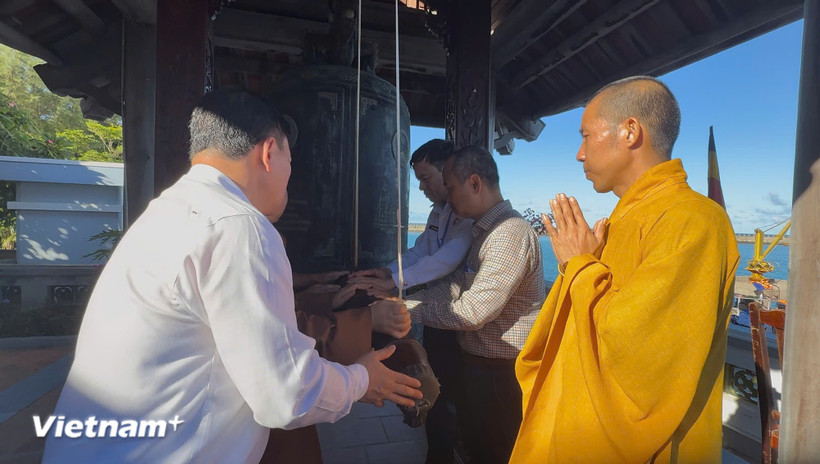
Passengers aboard the “Great Solidarity Ship” ring the bell at Da Tay A Pagoda (Photo: VietnamPlus)

Hanoi (VNA) – In the Truong Sa (Spratly) Archipelago, Vietnam’s pagodas stand with a stillness that belies their weight. Far from the ornate, gilded temples of the mainland, these structures rise with a spare dignity, their unadorned presence asserting sovereignty as surely as any flag. They are not merely buildings but anchors, tethering a nation’s heart to its outermost edges.

Sacred landmarks at sea

For soldiers, officers, and residents stationed on these isolated islands, the pagodas offer a rare haven of calm. Beyond their role as places of worship, they embody Vietnam’s cultural claim to the archipelago.

Local fishermen, braving the perilous seas, find both refuge and reverence at the pagodas. Here, they moor their boats, light incense, and pray for safe trips, bountiful catches, and good health to carry them through.

At Da Tay A Pagoda, Venerable Thich Nhuan Hieu presides over Buddhist rituals, from the Lord Buddha’s birthday celebration to Lunar New Year and Vu Lan ceremonies, mirroring traditions on the mainland. These practices provide soldiers and islanders a spiritual anchor, fostering resilience and peace as they guard Vietnam’s maritime frontier.

Soul of the nation amid vast seas

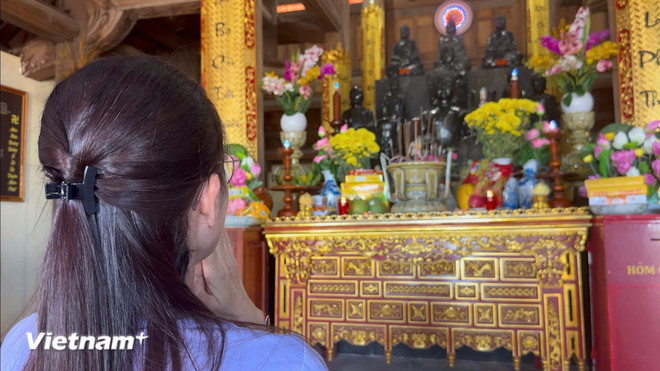
“I’ve travelled widely, but standing before a temple in the middle of the sea, I felt my roots for the first time”, said Pham Thi Nhung, a Vietnamese expatriate from Malaysia, during her first visit to Truong Sa. “One stick of incense, one bell’s ring – it bounds my heart to the homeland”.
hep.jpg
Pham Thi Nhung, a Vietnamese expatriate from Malaysia, prays at the pagoda (Photo: VietnamPlus)

For Phan Thi Thu Hang, a Vietnamese expatriate from Poland, the sight of the pagodas stirred profound emotion.

“It’s a pride that runs deep, a sacred reminder that every wave, every inch of this place, carries Vietnam’s cultural, historical, and spiritual essence”, she said.

Nun Dr. Thich Minh Thinh, abbess of Dien Phuc Pagoda in Hanoi and a member of the Central Committee of the Vietnam Fatherland Front, said the construction of these pagodas, initiated by the Party and State, offer more than spiritual solace, but a vital source of emotional support for those living far from the mainland.

Around the pagodas, lush trees and blooming flowers, tended by monks, naval officers, and local Buddhists, bring a touch of mainland life to the seascape.
1.jpg
2.jpg
3.jpg
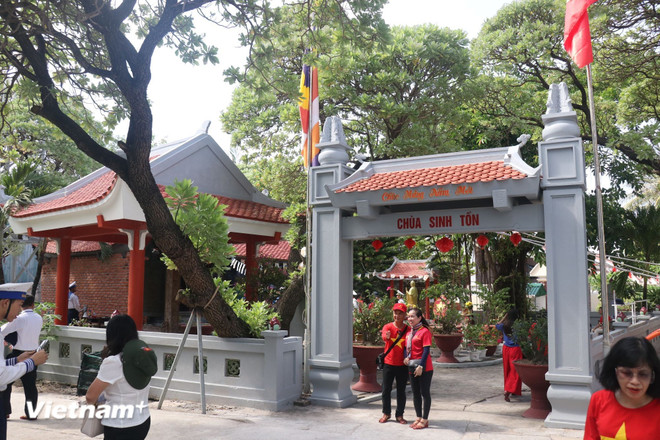
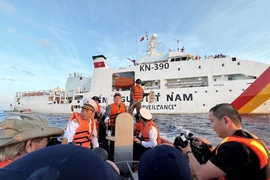
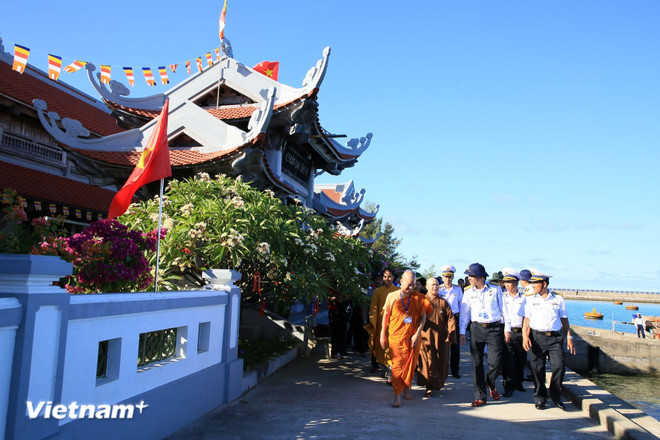
“Great Unity Ship” ferries passengers to Da Tay A, Sinh Ton, and Truong Sa pagodas (Photo: VietnamPlus)

“Sustaining spiritual life in such harsh conditions is a way to nurture faith, bring peace of mind, and strengthen the will to serve, ultimately ensuring the steadfast defence of Truong Sa and the enduring sovereignty of our beloved Vietnam”, said Thinh.

A lasting impression in every Vietnamese heart

“My first glimpse of the island was a towering pagoda, proclaiming Vietnam’s sacred sovereignty amid the vast sea,” said Nguyen Thi My Van, a Vietnamese expatriate from the US. “These pagodas are a lifeline, empowering our soldiers to guard our seas for generations. This memory will stay with me forever”.
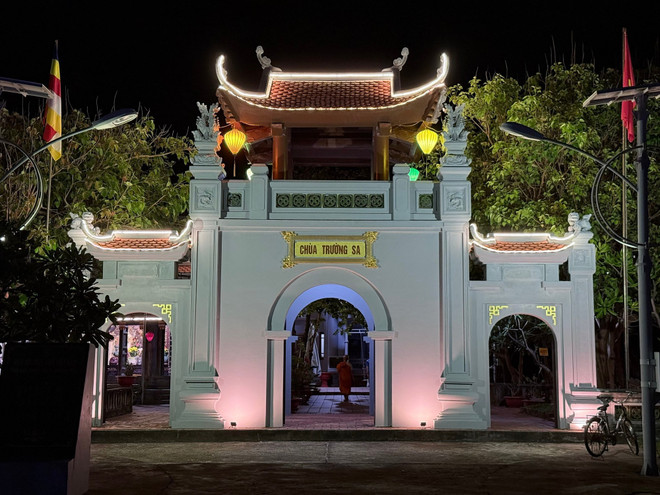
sa.jpg
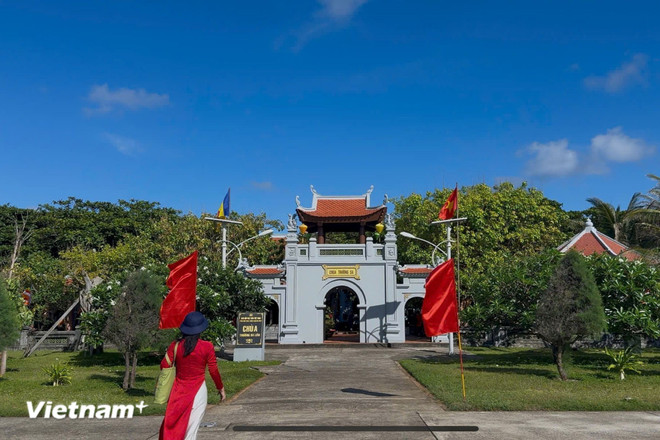
Truong Sa Pagoda (Photo: VietnamPlus)

More than places of worship, Truong Sa’s pagodas are emblems of Vietnam’s spirit, weaving together threads of culture, history, and patriotism. They stand as quiet sentinels, reminding every Vietnamese that these far-off islands are never far from the nation’s soul./.
VNA

See more

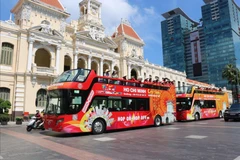
A double-decker sightseeing bus in Ho Chi Minh City. (Photo: VNA)

HCM City elevates destination appeal, enhances tourism workforce quality

As Ho Chi Minh City’s tourism sector continues to sustain growth momentum, it is shifting strongly from post-merger recovery to development acceleration, with a focus on restructuring destination spaces to offer diverse tourism models and attract more domestic and international visitors.

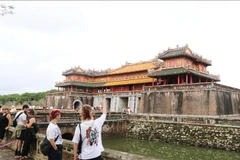
Visitors tour Ngo Mon (Noon Gate) at the Hue Imperial Citadel. (Photo: VNA)

Visit Vietnam Year – Hue 2025: renewing heritage, shaping distinct brand

Visit Vietnam Year – Hue 2025 has left a series of strong imprints, reflecting a marked transformation in Hue’s tourism in terms of scale, quality and brand positioning. More than a programme of events, it has become a powerful driver, helping position Hue as a competitive cultural and heritage tourism centre in the region.

A view of the talkshow within the conference in Hue on December 12 to review and discuss strategic orientations for the 2023-2025 roadmap to reduce plastic waste in the local tourism sector. (Photo: VNA)

Hue accelerates shift toward green, low-plastic tourism models

Over the past three years, Hue tourism authorities have strengthened communication and advocacy for plastic waste reduction through 10 training sessions with 690 participants, “Coffee Talk” events, professional Zalo groups, and direct engagement with businesses. As a result, 102 enterprises and business households have signed commitments to reduce plastics, and 12 hotels have pioneered plastic-reduction practices.

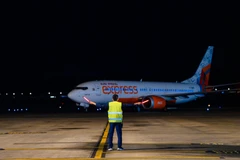
The inaugural flight from New Delhi lands at Phu Quoc International Airport (Photo: Sun Group)

Phu Quoc welcomes new direct flights from India

Phu Quoc International Airport welcomed over 180 Indian travellers on a new direct flight from New Delhi on December 10, marking the start of a month-long flight series that will link the two destinations and bring a fresh wave of visitors to Vietnam’s pristine island.

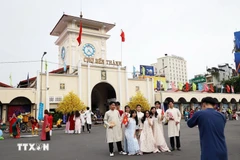
Visitors pose for a photo at Ben Thanh Market in HCM City (Photo: VNA)

HCM City speeds up digital tourism to draw more travellers

Following its goal of building a friendly destination, the Ho Chi Minh City Department of Tourism is rolling out a range of local stimulus programmes, with a focus on bringing the city’s signature attractions closer to domestic and international visitors through digital platforms.

Foreign visitors are touched to receive meaningful gifts from their Vietnamese friends (Photo: VietnamPlus)

Vietnam welcomes more than 19 million international visitors in 11 months

A UN Tourism report highlighted Vietnam’s performance as one of the most notable recoveries worldwide. While tourism across the Asia–Pacific has rebounded to only around 90% of pre-COVID levels, Vietnam is among a select group of destinations, alongside Japan, recording rapid and sustained growth, it said.

Foreign visitors explore Hanoi’s old quarters by cyclo, admiring the city’s timeless beauty. (Photo: VNA)

Vietnam draws French holidaymakers during Christmas, New Year

Patrice Caradec, President of the Syndicate of French Tour-Operators (SETO), said the country has not attracted as many French tourists since COVID-19. As Vietnam reopened later than several Asian destinations, pent-up demand has surged with the full recovery of tourism. The “S-shaped” nation has now returned to pre-pandemic levels of French arrivals.

Tourists enjoy leisure activities around the Hoan Kiem Lake pedestrian zone. (Photo: VNA)

Hanoi posts sharp rise in visitors, revenue

In December, the Hanoi tourism sector will focus on completing a project to reform the management, conservation and promotion of the Huong Son (Perfume Pagoda) Special National Relic Site; continue surveys on community-based, agricultural and night-time tourism offerings; and host the 2025 Hanoi Craft Village and Craft Street Cuisine and Tourism Festival. Preparations are also under way for participation in the National Green Tourism Forum in Lam Dong.