Jakarta (VNA) - Vietnam’s shift to a two-tier local administration model marked a historic institutional reform, underscoring the country’s determination to streamline its state apparatus, making it more efficient, effective, and closer to the people. The change has drawn great attention from Indonesian scholars and the Vietnamese community living and working in the country.
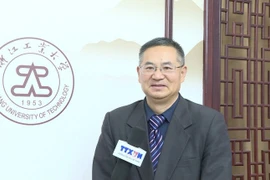
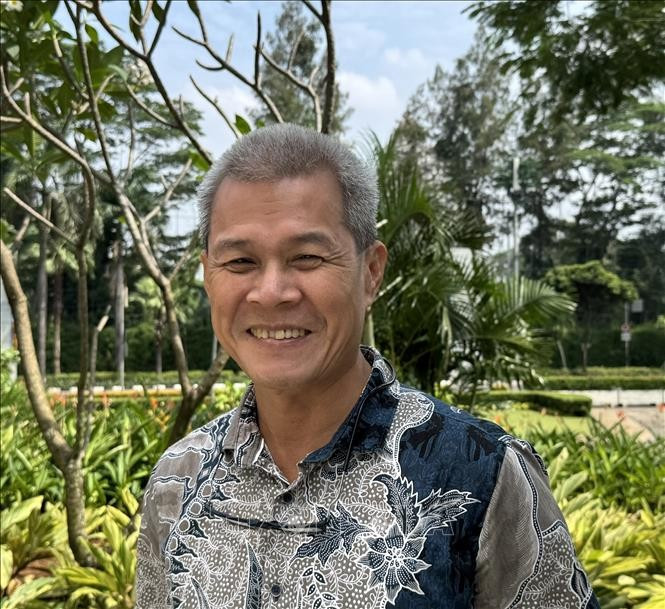
Tran Dong Phuong, Senior Policy Advisor at the Economic Research Institute for ASEAN and East Asia (ERIA), expressed his support for the sweeping reforms being implemented by the Party and Government of Vietnam. He believed they lay a crucial groundwork for the country’s development as it enters a new era.
Phuong said that reducing the administrative structure from three levels to two is a major step forward. It is expected to cut red tape, lower operating costs, save public funds, and ultimately improve the efficiency of public administration. He added that businesses will benefit significantly from lower costs and better responsiveness, giving a boost to the private sector.
The expert acknowledged that the transition may face initial hurdles – particularly in terms of personnel restructuring and operational adjustments – but he expressed his confidence that the process will be smooth, given strong consensus among both officials and people. He expected the new system to become operational quickly and deliver tangible, wide-reaching benefits for the nation's progress.
Meanwhile, Nguyen Le Tuy Hanh, a Vietnamese national who has lived in Bali for 22 years, also welcomed the reforms. Despite living abroad, she has closely kept a close watch on the situation in Vietnam. Hanh believed that abolishing the district-level administrations will reduce staffing in the state apparatus and help cut costs – a move she described as highly commendable. She hoped that the two-tier model will lead to greater efficiency in local governance and that both people and businesses will soon experience the benefits, even if such reforms inevitably take time to yield results.
Indonesian scholars and policy experts have also weighed in, offering perspectives on the opportunities, challenges, and strategic implications of Vietnam’s reforms – not only from a technical governance standpoint but also as a pivotal shift in administrative philosophy.
Beni Sukadis, Senior Researcher at the Indonesia Institute for Defence and Strategic Studies (LESPERSSI), called Vietnam’s adoption of the two-tier model a major step towards more efficient public administration. He said the change will enable local administrations to act more decisively and manage resources more effectively, including budgets, personnel, and infrastructure.
He highlighted that this model reflects a shift in governance philosophy towards service-oriented and citizen-centric administration. Local authorities are being encouraged to act boldly, embrace innovation, and drive digital transformation. In his view, this is more than just a structural overhaul – it’s a strategic move to modernise governance and support sustainable development.
Sukadis believed the reforms will lay the foundation for smart city development, stimulate regional economic hubs, and enhance integration. He noted that local leaders will have more autonomy and clearer accountability, empowering them to deliver real results.
He further stressed that the two-tier model is not just about administrative efficiency – it is about reimagining public governance to make it more dynamic, inclusive, and better equipped to handle future challenges.
Dinna Prapto Raharja, a policy expert at Indonesia’s Synergy Policies Research and Training Institute, described Vietnam’s decision as a bold and progressive political move – one not without challenges, particularly in implementation and ensuring the new system functions as intended. She pointed out that the greatest difficulty will lie in how the reforms are carried out and how the integrity of the new structure is maintained.
She held that integrity in this context is not just technical – it is about whether the new system can genuinely meet the needs of the public. A successful transition, she said, should avoid creating new barriers between administrations and people and must deliver clear, tangible benefits in line with public expectations.
The expert underlined that the key to success lies in striking the right balance between innovation and stability. Raharja noted that Vietnam has already begun merging several ministries earlier this year and is now moving ahead with eliminating an administrative tier.
She believed the Vietnamese Government has weighed on the risks and rewards carefully, particularly against a backdrop of global geopolitical uncertainties. Raharja said she is optimistic that Vietnam’s bold reforms will yield positive outcomes./.
VNA