Vietnam braces for Chikungunya risk as global outbreaks intensify

Vo Hai Son, Deputy Director of Vietnam’s Department of Preventive Medicine under the Ministry of Health, discussed the escalating global situation and Vietnam’s response in a recent interview

Deputy Director of Vietnam’s Department of Preventive Medicine Vo Hai Son (Photo: VietnamPlus)

Hanoi (VNA) - Vietnam remains free of community-transmitted Chikungunya cases, but with Aedes mosquitoes thriving at their seasonal peak, the nation is on high alert for potential outbreaks.

Chikungunya, a mosquito borne viral disease, is surging worldwide, with outbreaks reported on Indian Ocean islands like La Réunion and Mayotte, and spreading to Africa, South Asia, and parts of Europe.

Vo Hai Son, Deputy Director of Vietnam’s Department of Preventive Medicine under the Ministry of Health, discussed the escalating global situation and Vietnam’s response in a recent interview.

Reporter: The MoH is monitoring the global Chikungunya situation, especially the recent developments in China, notably Guangdong province. Could you provide an update?

Vo Hai Son: Chikungunya, caused by the Chikungunya virus (CHIKV), is transmitted by Aedes mosquitoes, the same vectors responsible for dengue. These mosquitoes are most active during daylight, particularly in early morning and late afternoon.

The World Health Organisation (WHO) first identified Chikungunya in Tanzania (East Africa) in 1952. On July 22, 2025, WHO flagged its rapid global spread, with major outbreaks on Indian Ocean islands such as La Réunion and Mayotte, now extending to Africa, South Asia, and Europe.

In China’s Guangdong province, the Centre for Disease Control and Prevention reported over 4,800 cases in the first half of 2025, the largest outbreak in the region. All cases were mild, with no severe illnesses or fatalities.

Singapore also saw a spike, with 17 confirmed cases by August 2, 2025, compared to eight in the same period last year. At least 13 of these were linked to travel in outbreak zones.

Vietnam’s Department of Preventive Medicine is working closely with WHO and international health agencies under the International Health Regulations (IHR) to monitor the situation, share information, and recommend timely prevention and control measures.

Reporter: Has Vietnam recorded any Chikungunya cases recently?

Vo Hai Son: So far, Vietnam’s infectious disease surveillance system has not detected any cases of the Chikungunya virus. However, the virus’s rise in neighboring China and the prevalence of Aedes mosquitoes domestically heighten the risk of imported cases sparking local transmission, particularly via infected travelers.

Reporter: Based on updated data, what factors have caused the rise or outbreaks of Chikungunya in China and other countries, and what contributes to its spread?

Vo Hai Son, Deputy Director of the Department of Preventive Medicine (Photo: VietnamPlus)

Vo Hai Son: In July 2025, WHO warned of Chikungunya’s rapid spread, with large outbreaks in La Réunion and Mayotte, later extending to Africa, South Asia, and Europe. In addition, case numbers have risen in Guangdong (China) and Singapore.

Chikungunya does not spread directly from person to person but through the Aedes mosquito. Currently, the rainy season in many Northern Hemisphere countries creates ideal conditions for mosquitoes, increasing their population and thus viral transmission. Summer’s peak travel season further amplifies the risk; as international visitors inadvertently carry the virus across borders.

Reporter: How does the ministry assess the risk of Chikungunya entering and spreading in Vietnam, and what response plans are in place?

Vo Hai Son: Despite no local cases, Vietnam faces elevated risks due to thriving mosquito populations and heavy summer travel.

To prevent outbreaks, the ministry has directed municipal and provincial authorities to strengthen disease surveillance at border checkpoints, medical facilities, and communities to detect suspected cases early, especially among travelers returning from affected areas. Relevant units also investigate outbreaks to prevent spread, monitor mosquito populations and vectors at border areas and in the community as guided by the ministry. They also ensure proper patient care, detailed medical history collection, timely treatment, and hospital capacity management to prevent overloading.

Reporter: What are the typical symptoms of Chikungunya, and how can people distinguish it from other mosquito-borne illnesses such as dengue fever?

Vo Hai Son: Symptoms emerge 4–8 days after an infected mosquito bite, typically presenting as sudden high fever and severe joint pain, often accompanied by joint stiffness, arthritis, headaches, fatigue, and rashes. While similar to dengue, Chikungunya is marked by more intense joint pain and swelling, whereas dengue often involves bleeding-related symptoms.

Self-diagnosis and self-treatment are strongly discouraged. Individuals with suspected symptoms should seek immediate medical attention at the nearest healthcare facility.

Travelers returning from outbreak areas should avoid mosquito bites, monitor their health, and report symptoms to health authorities promptly.

Reporter: Thank you very much!
VNA

See more

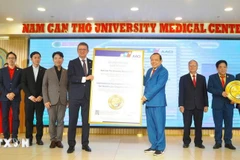
At the event (Photo: VNA)

First hospital in Mekong Delta earns US AACI accreditation

Nam Can Tho University Hospital on December 15 hosted a ceremony to announce its accreditation by the American Accreditation Commission International (AACI), a US-based body, becoming the first facility in the Mekong Delta and among a select few in Vietnam to earn the distinction.

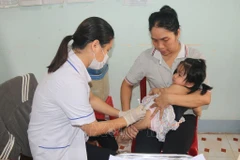
A health worker administer IPV polio vaccine to a child in Dong Thap province. (Photo: VNA)

Vietnam proactively takes polio prevention measures amid outbreak in Laos

The meeting took place following an assessment by the World Health Organisation (WHO) warning that Vietnam is facing a very high risk of polio import and re-emergence. The risk arises after neighbouring Laos officially declared a polio outbreak on October 7, following the detection of circulating vaccine-derived poliovirus type 1 (cVDPV1).

A view of the International Conference on Molecular Diagnostics in Microbiology and Diseases, organised by Rencontres du Vietnam and the International Centre for Interdisciplinary Science and Education (ICISE) in the central province of Gia Lai on December 11. (Photo: VNA)

Nearly 100 international scientists attend molecular diagnostics conference in Vietnam

The conference features almost 80 presentations across plenary sessions, parallel sessions and poster sessions, focusing on leading research trends such as point-of-care diagnostics; predictive biomarkers used to anticipate individual responses to therapy; and the development of new tools and platforms for rapid molecular-level detection and diagnosis.

Digital transformation in healthcare is being strongly promoted. (Photo: Organising Committee of the 2024 “Technology with Heart” Award, co-hosted by Vietnam News Agency and Viettel)

AI and precision medicine: Emerging prospects for Vietnam-Canada cooperation

Canada has strong experience in compiling and analysing genomic data, while Vietnam has a large population with diverse genetic structures. This complementarity can help Vietnam narrow its technological gap and enhance its capacity to treat rare diseases — an area many countries are prioritising for development.

Maternal and child healthcare in Tuyen Quang province. (Photo: VNA)

Vietnam on path to become a healthy nation

Resolution 72 not only focuses on health care but is also closely interlinked with other sectors, helping to build a solid foundation for sustainable national development and create momentum for Vietnam to “take off” and further integrate into the world.

The emergency ward at Bach Mai Hospital, Hanoi. (Photo: VNA)

Health sector targets free hospital fee for all

The total value of medical expenses not covered by the health insurance fund is estimated at around 24.8 trillion VND (942 million USD) per year. Health insurance contributions remain low, at 4.5% of the salary or reference base used for calculation.

Sen. Lieut. Gen. Vongsone Inpanphim, Lao Deputy Minister of National Defence and Director of the General Department of Politics presents the Friendship Order of Laos to Vietnam’s Central Military Hospital 108. (Photo: VNA)

Vietnam, Laos expand cooperation in military medicine

Over the past two decades, many Vietnamese experts have undertaken long-term missions at the Central Hospital 103 to provide training and technical assistance, contributing to the successful treatment of complex cases. The Central Military Hospital 108 has also trained 206 Lao doctors, six nurses and two engineers — a clear demonstration of substantive, long-standing cooperation.

Deputy Minister Do Xuan Tuyen (left) and Alberto Anaya Gutiérrez, General Secretary of the Mexican Workers' Party (PT). (Photo: VNA)

Vietnam, Mexico boost medical cooperation

As both nations look to keep their long-standing partnership in good health, the health ministries of Vietnam and Mexico have been accelerating cooperation, especially in traditional medicines.

The opening of Vietnam Medi-Pharm 2025 and Vietmedicare Expo in Ho Chi Minh City on November 27, 2025. (Photo: VNA)

Major medical, pharmaceutical exhibitions kick off in HCM City

The 33rd Vietnam International Medical and Pharmaceutical Exhibition (Vietnam Medi-Pharm 2025) and the International Exhibition on Pharmaceuticals, Medical Devices and Healthcare (Vietmedicare Expo 2025) kicked off at the Saigon Exhibition and Convention Centre on November 27.

Doctors Do Thi Ngoc Linh (left) and Le Diep Linh at the RCS membership certificate award ceremony in London. (Photo: VNA)

Vietnamese surgeons honoured with prestigious Royal College Fellowship

The fact that the Vietnamese doctors have been awarded with FRCS certificate proves Vietnam’s surgical expertise has met international standards, contributing to improving the quality of treatment at home, expanding academic cooperation with world leading medical institutions and inspiring younger doctor to pursue higher standards.