Hanoi (VNS/VNA) – Vietnam has the potential to divert up to 77,000 tonnes of packaging waste from landfill, cut 265,000 tonnes of CO2 emissions, and create around 6,400 formal jobs and 9,600 opportunities in the informal waste sector annually if it effectively implements a Deposit Return System (DRS).
These figures were highlighted in a Pre-Feasibility Study on a DRS tailored for single-use beverage packaging in Vietnam, conducted by Eunomia Research & Consulting.
The study was commissioned by the Norwegian Embassy in Hanoi and Innovation Norway, in consultation with Vietnam’s Ministry of Agriculture and Environment.
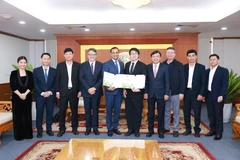
Its findings were unveiled on June 16 in the capital city by the Norwegian Embassy and the Vietnam National Plastic Action Partnership.
A mandatory DRS targeting single-use PET bottles and aluminium cans, proposing a refundable deposit of between 1,000 VND and 2,000 VND (0.03 - 0.06 USD) per item, is outlined in the study.
According to the report, this design aligns well with Vietnam’s Extended Producer Responsibility (EPR) policies and supports national targets on reducing marine plastic pollution and achieving net-zero emissions by 2050.
The study is intended to provide evidence to inform the ministry’s future research and policy development regarding the DRS mechanism.
Along with EPR, the DRS is seen as a potential instrument for effectively advancing Vietnam’s vision of a circular economy, as outlined in Article 142 of the 2020 Law on Environmental Protection.
Specifically, DRS can help achieve high recycling rates, reducing reliance on virgin materials and thus lessening environmental harm.
Under a DRS, a small, fully refundable deposit is added to the price of each beverage container covered by the system.
The financial incentive encourages consumers and other actors, such as informal waste collectors, to return used containers at designated return points in exchange for the deposit.
Return points could include retail stores and outlets in the HORECA sector (hotels, restaurants and cafés) or centralised collection sites.
Returned containers are typically sent to counting centres for auditing and/or pre-sorting before being processed at recycling facilities.
Improved collection rates through a DRS bring multiple benefits, including reduced littering, less material leakage into terrestrial and marine environments, lower greenhouse gas emissions, improved air quality, job creation and enhanced circularity for in-scope materials.
Globally, DRS is recognised as a proven and highly effective solution to boost collection and recycling rates for single-use beverage packaging.
Over 40 regions worldwide currently operate such schemes, spanning Europe, the Americas, Africa, the Middle East and Oceania.
Well-designed DRS programmes, often mandatory, can achieve collection rates exceeding 90%.
The study explores the implementation of a nationwide DRS in Vietnam, initially covering single-use PET bottles and aluminium cans.
The two packaging types account for approximately 98% of the market share for single-use beverage containers in Vietnam, with PET bottles making up 33% and aluminium cans 65%.
While current collection rates are relatively high, estimated at 50% for PET bottles and 80% for aluminium cans, much of the recovered material is downcycled into lower-value products.
If successful, Vietnam would become the first Southeast Asian country to introduce a nationwide DRS for single-use beverage containers, potentially becoming a model for neighbouring countries.
By incorporating global best practices and lessons learned, while also adapting to local conditions, Vietnam could position itself as a regional leader in sustainable development and the circular economy.
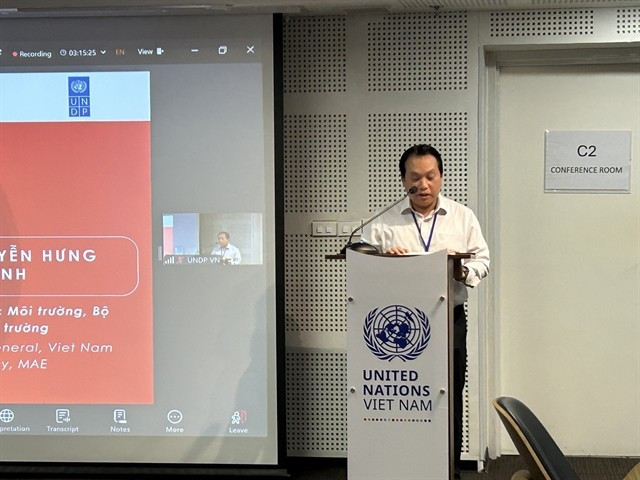
Deputy Director General of the ministry’s Environmental Department Nguyen Hung Thinh said at the event that with rapid economic and population growth, plastic waste generation in Vietnam is rising sharply, going on to call for comprehensive and breakthrough solutions.
Promoting a closed-loop plastic economy, especially for post-consumer resins, not only reduces pollution but also creates significant economic value.
In this context, the DRS presents a new and promising approach.
DRS has proven successful in many countries in boosting the collection, sorting and recycling of bottles and packaging, especially plastics.
The department strongly supports and values the research.
“We believe the findings provide practical and feasible recommendations suited to Vietnam’s context and serve as an important foundation for further policy development aimed at implementing DRS in the near future,” Thinh said.
Speaking at the event, Norwegian Ambassador to Vietnam Hilde Solbakken said that in Norway, the deposit return system has helped them achieve one of the highest recycling rates for plastic bottles in the world, over 90%.
Across Europe, similar systems have demonstrated that smart design, combined with strong public and business engagement, yields tangible, positive environmental outcomes.
With Vietnam’s growing commitment to sustainability, she firmly believes the country stands to gain enormously from these proven models.
They can increase recycling rates and provide an effective solution to plastic pollution.
The study shows that a DRS is entirely feasible for Vietnam and would deliver major environmental, social and economic benefits.
A DRS has the potential to stimulate a new recycling industry, create green jobs and significantly reduce the number of plastic bottles ending up in nature or landfills.
Norway is delighted to support Vietnam in making this vision a reality, the ambassador said./.
See more
Vietnam, UK launch 24.3 million USD initiative to strengthen coastal resilience
An innovative effort for people and nature, COAST is a game-changer for vulnerable coastal communities facing the urgent threats of climate change.
Thai Nguyen: 12 ancient Shan Tuyet tea trees win national heritage status
The recognition honours the biological, cultural and historical values of these centuries-old Shan Tuyet tea trees – natural treasures deeply woven into the livelihoods, traditions and identity of local ethnic communities. The title affirms the community’s commitment to preserving and promoting the value of this iconic local tea variety.
Return of sarus cranes: Hope takes wing in Dong Thap wetland
Beneath the wide Mekong Delta sky, Tram Chim National Park is racing against time, pouring heart and science into a decade-long (2022–2032) plan to rescue the Eastern sarus crane – an elegant, scarlet-headed bird listed as endangered on the International Union for the Conservation of Nature (IUCN) Red List and a living emblem of both the park and all of Dong Thap province
International community ready to support Vietnam in energy transition, climate response
In a video message to the press conference, UN Resident Coordinator in Vietnam Pauline Tamesis said the UN is ready to support Vietnam in building a pipeline of projects capable of absorbing financing mobilised under the Political Declaration on establishing the Just Energy Transition Partnership (JETP), as well as from global climate finance sources, including the Green Climate Fund and the Loss and Damage Fund.
Coastal localities gain better-than-expected results in forest protection
Among these localities, Ca Mau led with 1,879ha of newly planted forest, reaching 93.3% of the target.
Digital technology application enhances forest management, protection
With a total forest area of over 14 million hectares, including more than 10 million hectares of natural forests, forests exist in all 34 provinces and cities across the country. Given the large area and limited workforce, applying digital solutions in forest management and protection has become a top priority for the forestry sector.
Banking sector accelerates green transition towards net-zero goals
According to the State Bank of Vietnam (SBV), by the end of the third quarter, outstanding green credit reached approximately 742.8 trillion VND (28.17 billion USD), up 5.5% compared to the second quarter and 9.3% from the end of 2024.
Climate-tech sector sees surge in venture capital investment
According to the CT-FE 2025 report, from 2015 to 2024, a total of 78 climate-tech enterprises in Vietnam raised nearly 205 million USD with 217 deals. In 2024 alone, the raised amount reached almost 100 million USD.
Quang Ngai releases rare pangolin back into nature
Initial verification showed that the animal weighed 3.7kg and measured over 60cm. It was identified as a Sunda pangolin (Manis javanica), also known as the Javan pangolin, listed in Group IB – critically endangered and strictly protected from all commercial exploitation.
Exploring “miniature world” of Pu Huong Biosphere Reserve
The Pu Huong Nature Reserve is one of the three special-use forests forming the core zone of the Western Nghe An Biosphere Reserve, which was granted the world status by UNESCO in 2007.
Tree-planting programme exceeds one-billion-tree goal
The total comprises 573.9 million scattered trees and 865.2 million trees grown in concentrated plantations, equivalent to 429,125 hectares of forest. Provinces posting the strongest results include Phu Tho with 177.9 million trees, Lao Cai with 108.8 million, and An Giang with 98.5 million.
Quang Ninh establishes Co To – Tran Island marine conservation area
Covering a total area of 18,414 hectares, the conservation area includes 13,230 hectares of functional zones (strictly protected zone, ecological restoration zone, and service-administration zone) and 5,184 hectares of buffer zone.
Lam Dong: Severe flooding causes major disruptions, National Highway 1A temporarily closed
Preliminary reports from local authorities indicated that around 1,705 homes had been inundated as of late afternoon, with floodwaters continuing to rise. Over 1,000 households, severely affected by deep flooding, were urgently evacuated to safe places.
Vietnam pledges to join hands for greener, sustainable, prosperous ASEAN
The bloc now recognises 69 ASEAN Heritage Parks (AHPs), including 15 in Vietnam. These parks have played a key role in implementing the Kunming–Montreal Global Biodiversity Framework and ASEAN’s Biodiversity Action Plan.
Nghe An: Endangered Indochinese box turtle released back into nature
The Indochinese box turtle is listed in the Vietnam Red Data Book and classified as critically endangered in the International Union for the Conservation of Nature (IUCN) Red List.
Hanoi takes urgent measures to curb air pollution
The city requires the enhanced application of advanced technologies and remote monitoring systems, including satellite remote sensing, drones, and AI-integrated traffic cameras, to monitor, detect, and strictly address the illegal burning of garbage, straw, and agricultural by-products.
Vietnam among countries hit hardest by monsoon rains: WMO
Devastating rainfall has triggered catastrophic flooding in parts of South and Southeast Asia, claiming hundreds of lives, displacing entire communities and causing massive economic disruption.
International cooperation to promote sustainable growth and realize Net Zero goals in Vietnam
Climate response policies of Vietnam: A firm commitment to a green future
Climate change has become one of the most pressing challenges of the 21st century, directly threatening food security, water resources, socio-economic stability and even the survival of many nations.
Rare wild animals released into the wild in Nghe An
A pygmy slow loris has been handed over to authorities by a resident of Con Say hamlet, Quynh Anh commune, who had found the animal while working in the fields.