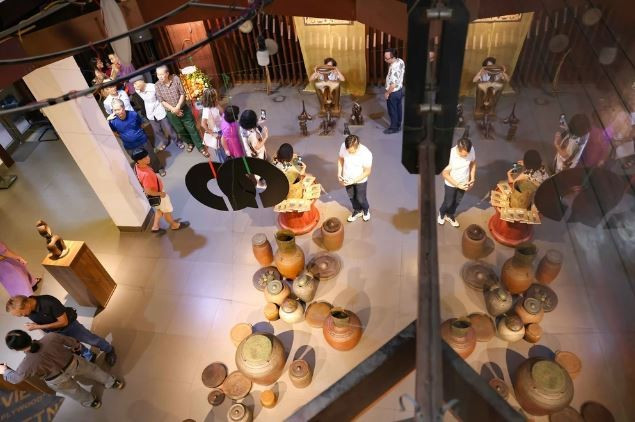
HCM City (VNA) – Developing cultural industries has been identified as a national priority for Vietnam, requiring not only sound policies and investment but also the nurturing of a highly skilled workforce capable of meeting the demands of integration and innovation.
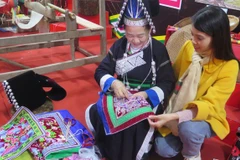
Vietnam possesses rich “soft power” assets, from a diverse system of tangible and intangible cultural heritage to traditional festivals, landscapes, and crafts. Experts stress that alongside policies, investment in people is crucial. Human resources not only generate cultural products but also play a decisive role in preserving, developing, transforming, and promoting values in modern life.
Assoc. Prof. Dr. Nguyen Thi Thu Phuong, Director of the Vietnam Institute of Culture, Arts, Sports and Tourism, emphasised that human capital is the “core resource” for cultural industries. These sectors are knowledge-based, revolving around creativity and intellectual property. Human resources include managers, business operators, and above all, creative workers whose skills and ideas underpin the industry’s growth.
M.A. Nguyen Thi Ngoc Anh from Ho Chi Minh City University of Culture noted that the “raw material” of cultural industries is cultural capital accumulated from past generations such as heritage, traditions, and crafts, combined with new creative ideas and innovations with high intellectual value. Human resources in this field are therefore not just labour but strategic assets that determine quality and competitiveness.
According to Deputy Director of the Copyright Office under the Ministry of Culture, Sports and Tourism Le Minh Tuan, training must start at an early age to cultivate the next generation of creative professionals.
")
Dr. Doan Ngoc Xuan, Rector of Thu Dau Mot University, added that the digital era and globalisation are transforming cultural and tourism industries, creating both opportunities and challenges for training. Digitalisation demands workers who are adaptable, innovative, and capable of applying technology to cultural creation and management.
Assoc. Prof. Dr. Phuong stated that education in culture and arts needs tailored approaches, policies to attract and reward talent, and curricula that balance heritage preservation with contemporary skills. Training institutions should strengthen specialised programmes in areas such as heritage conservation, arts, and cultural communication.
Practical initiatives
Ho Chi Minh City University of Culture has pioneered new curricula since 2018, introducing cultural industries in its cultural studies programme.
According to Dr. Le Thi Hong Quyen from the university, after seven years of implementation, graduates have shown promising results, meeting initial labour market needs. She called for more flexible management approaches, expanded internships, collaboration with enterprises, and involvement of artists and cultural entrepreneurs in teaching.
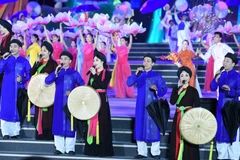
Meanwhile, Ho Chi Minh City’s Department of Culture and Sports has launched a master plan to improve training, discover talent, and nurture future cultural and artistic professionals through 2030. The city invests in training youth performers in traditional art forms such as cai luong (reformed opera), hat boi (classical drama), water puppetry, and folk dance, ensuring that cultural heritage is preserved while also equipping them with skills to innovate.
The department also works with overseas Vietnamese communities and embassies to attract global talent in culture, arts, and sports, contributing to the city’s ambition of becoming a national centre for cultural industries./.