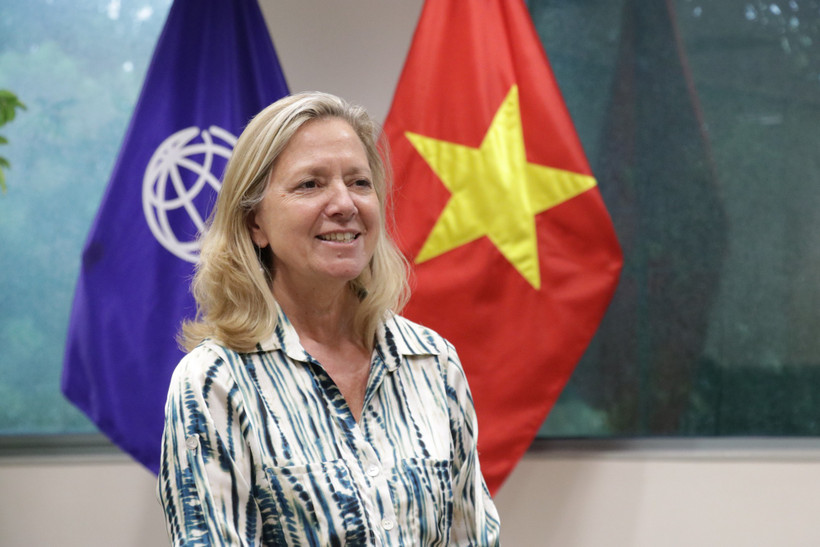
Hanoi (VNA) – Vietnam’s achievements over 80 years of development give Vietnam a powerful springboard for the next stage of its journey to realise the ambition of becoming a high-income, green, and inclusive economy by 2045, Mariam J. Sherman, World Bank (WB) Division Director for Vietnam, Cambodia and Laos, has said.
In an interview granted to the Vietnam News Agency on the occasion of the 80th anniversary of the National Day (September 2, 1945 – 2025), the WB official said Vietnam’s progress since the “Doi moi” (renewal) process in 1986 is one of the world’s most remarkable development stories – from one of the poorest in the world to a vibrant middle-income economy in four decades.
Extreme poverty, which once affected more than half the population, is now below 1%. Real incomes have risen six-fold and life expectancy has increased by seven years since the early 1990s, she said.
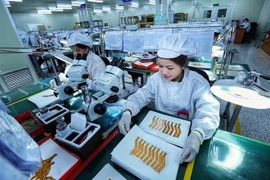
She spotlighted Vietnam’s global integration as the most striking change, noting that trade now exceeds 160% of GDP, among the highest ratios in the world, thanks to its deep integration into global supply chains, from textile and footwear to electronics.
According to the official, these changes are also reflected in people’s lives. The country has a 57-million-strong workforce, more than 20 million new jobs created since the “Doi moi” process, and over 80 percent now employed in the private sector.
“From the WB’s perspective, this is a story of vision, perseverance, and reform that has delivered real outcomes for people,” she said, adding that the bank is proud to have been a partner over the past more than 30 years, providing technical assistance and nearly 26 billion USD in financing to support the country’s profound transformation.
Sherman highlighted key milestones in the partnership between the WB and the Vietnamese Government over the past decades, noting that its partnership with the country spans more than three decades, almost as long as the country’s reform journey itself.
“Since the early days of the “Doi moi”, we have been privileged to accompany Vietnam through each stage of its transformation,” she said.
According to Sherman, over time, the bank has provided nearly 26 billion USD in financing, coupled with policy advice and global knowledge in critical sectors, to support the country’s development priorities. It has also invested in infrastructure, education, health, agriculture, and social protection, helping to create millions of jobs and improve opportunities for Vietnamese people across the country.
Highlights of WB’s knowledge and financial support to Vietnam include electrification programme (99% coverage); rural transport development and water supply programmes; climate resilience development in the Mekong Delta; a series of 10 poverty reduction support credit operations – helping build key institutional foundations for market-oriented economy; and release of Vietnam 2035 and Vietnam 2045 reports.
The partnership has always been about more than just financing, she said, adding that it’s about sharing knowledge and global expertise, so that Vietnam can shape reforms that are its own, while still drawing on the best experiences from around the world.
Given Vietnam’s impressive development in the past four decades, the country has started to share its experiences with many other countries, she said.
Regarding Vietnam’s institutional reform, Sherman said the country has already made important progress by consolidating provinces, streamlining administrative structures through mergers of ministries and departments, and piloting digital government. She noted that these reforms matter because they are expected to enhance effectiveness and efficiency, including reduction of red tape for both citizens and businesses.
In the time to come, as the economy becomes larger in size and more sophisticated in structure, stronger institutions will be vital to sustaining strong growth, she said, adding that the critical shift will be for the state to move from directly driving economic activity to enabling it - creating a transparent, predictable, and rules-based environment where the private sector can thrive.
A high-performing civil service, fair enforcement of rules, and strong mechanisms for accountability, will enhance the efficiency of investment.
The WB Group stands ready to support the Vietnamese government in building institutions that match the scale of its ambitions by 2045.
For Vietnam’s economic growth prospects amid global uncertainties and structural transitions, Sherman said the country enters this next stage from a position of strength, having shown remarkable resilience and maintaining growth through previous shocks.
The country boasts advantages such as a young and talented workforce, macroeconomic stability, a strategic location in Asia’s growth belt, and a proven capacity to learn and adapt. However, the global landscape presents a sobering backdrop. The WB projects global growth of about 2.3% in 2025.
To reach high-income status by 2045, research shows Vietnam will need to lift per-capita growth to around 6% every year for the next two decades, and avoid the middle-income trap that has slowed many peers, she said.
The path forward is quality growth, not just faster growth: higher productivity supported by quality infrastructure, innovation, digitalisation and high-skilled workforce; and moving up the value chain beyond labor intensive and low-skilled manufacturing, while diversifying growth drivers and deepening regional partnerships, she said.
Through the World Bank, the International Finance Corporation (IFC) and the Multilateral Investment Guarantee Agency (MIGA) will help put in place stable policies and infrastructure that attract investment, while directly providing financing, equity, guarantees, and risk insurance to crowd in private investment, she added.
The WB official also offered policy recommendations for Vietnam to realize its sustainable growth goals, including supporting private sector development to boost productivity and drive growth, job creation, innovation and national competitiveness; promoting reforms in tertiary education to upskill the labour force; increasing sustained investment, especially in critical infrastructure; prioritising green growth and low-carbon development to drive sustainable economic progress, create green jobs, and protect the environment; strengthening institutional capacity to effectively implement policies; and ensuring growth and narrowing inequality, so that all Vietnamese can benefit from the country’s transition to high income status.
To translate these into reality, Vietnam will need high-quality, transformative investments, she said, stressing that the WB stands ready to provide large-scale and long-term financing with a rich set of innovative instruments together with global expertise.
“We can support Vietnam to help ensure these resources are deployed effectively to accelerate Vietnam’s journey to high-income status,” she said./.