Vietnam’s green horizon: A 2025-2030 plan for environmental industry

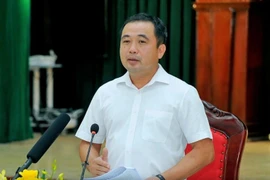
Deputy Prime Minister Tran Hong Ha on September 4 signed a decision approving Vietnam’s environmental industry development programme for 2025–2030.

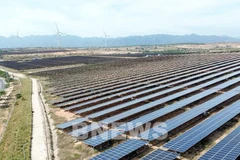
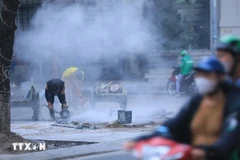
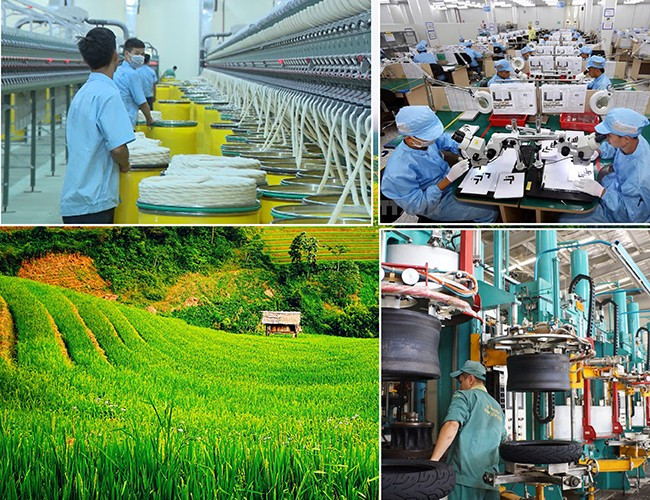
Illustrative image (Photo: baochinhphu.vn)

Hanoi (VNA) - Deputy Prime Minister Tran Hong Ha on September 4 signed a decision approving Vietnam’s environmental industry development programme for 2025–2030.

Effective immediately, the decision aims for a sweeping overhaul of Vietnam’s policy framework for the environmental industry, laying a legal groundwork for recycling industrial parks and clusters by 2030. These facilities are expected to drive the sector’s growth and set the stage for a Government Decree on environmental industry development.

By 2030, Vietnam targets domestic technology, equipment and products for wastewater treatment capable of meeting 70%-80% of local demand, with an eye toward exports. Air pollution control equipment is projected to cover 60%-70% of domestic needs, while solid and hazardous waste treatment technologies are to handle 50%-60% of collection, transport, and sorting demands, and 60%-70% of recycling needs. Environmental monitoring devices are slated to cover 20% of domestic demand. The programme also places particular emphasis on new technologies and products for waste-to-energy generation and environmental protection, particularly for industries undergoing economic restructuring.

Vietnam plans to expand its environmental goods market, improve the quality and competitiveness of homegrown products while strengthening suppliers’ capabilities. Trade promotion efforts will sync with national strategies on environmental protection, green growth, emissions reduction, and the circular economy.

Concurrently, the Government will nurture environmental industry services, encourage enterprises to operate wastewater, solid waste, hazardous waste, and emissions treatment plants, all while maintaining equipment to global standards. The vision is inclusive: a diverse array of economic sectors working in concert, drawing foreign investment, and ultimately exporting cutting-edge technologies, equipment, and products to global markets.

The decision outlines six key tasks and solutions to bring this vision to life. These include establishing national-level environmental industry centres; promoting sci-tech activities and assisting enterprises in innovation and digital transformation, and training a skilled workforce to drive the sector forward./.
VNA

See more

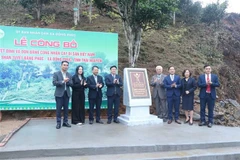
Official heritage plaque i sinstalled on the 12 recognised Shan Tuyet tea trees in Dong Phuc commune. (Photo: VNA)

Thai Nguyen: 12 ancient Shan Tuyet tea trees win national heritage status

The recognition honours the biological, cultural and historical values of these centuries-old Shan Tuyet tea trees – natural treasures deeply woven into the livelihoods, traditions and identity of local ethnic communities. The title affirms the community’s commitment to preserving and promoting the value of this iconic local tea variety.

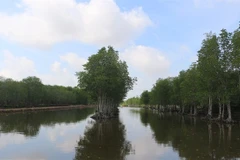
Sarus cranes at Tram Chim National Park (Photo: VNA)

Return of sarus cranes: Hope takes wing in Dong Thap wetland

Beneath the wide Mekong Delta sky, Tram Chim National Park is racing against time, pouring heart and science into a decade-long (2022–2032) plan to rescue the Eastern sarus crane – an elegant, scarlet-headed bird listed as endangered on the International Union for the Conservation of Nature (IUCN) Red List and a living emblem of both the park and all of Dong Thap province

French Ambassador Olivier Brochet speaks at the press conference in Hanoi on December 11 to mark the 10th anniversary of the Paris Agreement on climate change and highlighting the COP30 outcomes. (Photo: VNA)

International community ready to support Vietnam in energy transition, climate response

In a video message to the press conference, UN Resident Coordinator in Vietnam Pauline Tamesis said the UN is ready to support Vietnam in building a pipeline of projects capable of absorbing financing mobilised under the Political Declaration on establishing the Just Energy Transition Partnership (JETP), as well as from global climate finance sources, including the Green Climate Fund and the Loss and Damage Fund.

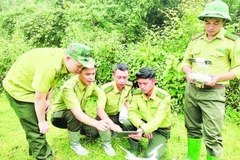
Forest rangers in Son La province apply technological devices and software to forest management, monitoring, and protection. (Photo: nhandan.vn)

Digital technology application enhances forest management, protection

With a total forest area of over 14 million hectares, including more than 10 million hectares of natural forests, forests exist in all 34 provinces and cities across the country. Given the large area and limited workforce, applying digital solutions in forest management and protection has become a top priority for the forestry sector.

Sunda pangolins (Manis javanica), also known as the Javan pangolin, are listed in Group IB – critically endangered and strictly protected from all commercial exploitation (Photo: VNA)

Quang Ngai releases rare pangolin back into nature

Initial verification showed that the animal weighed 3.7kg and measured over 60cm. It was identified as a Sunda pangolin (Manis javanica), also known as the Javan pangolin, listed in Group IB – critically endangered and strictly protected from all commercial exploitation.

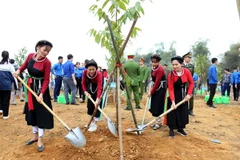
Residents of Tuyen Quang province take part in the One Billion Trees Programme. (Photo: VNA)

Tree-planting programme exceeds one-billion-tree goal

The total comprises 573.9 million scattered trees and 865.2 million trees grown in concentrated plantations, equivalent to 429,125 hectares of forest. Provinces posting the strongest results include Phu Tho with 177.9 million trees, Lao Cai with 108.8 million, and An Giang with 98.5 million.

Construction activity is one of the causes of air pollution in Hanoi. (Photo: VNA)

Hanoi takes urgent measures to curb air pollution

The city requires the enhanced application of advanced technologies and remote monitoring systems, including satellite remote sensing, drones, and AI-integrated traffic cameras, to monitor, detect, and strictly address the illegal burning of garbage, straw, and agricultural by-products.