Vietnam’s manufacturing sector returned to growth in July

The index pointed to a strengthening in the overall health of the manufacturing sector, with the solid improvement in business conditions was the most marked for almost a year.

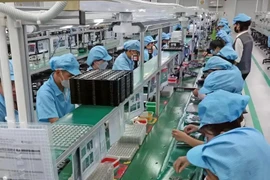
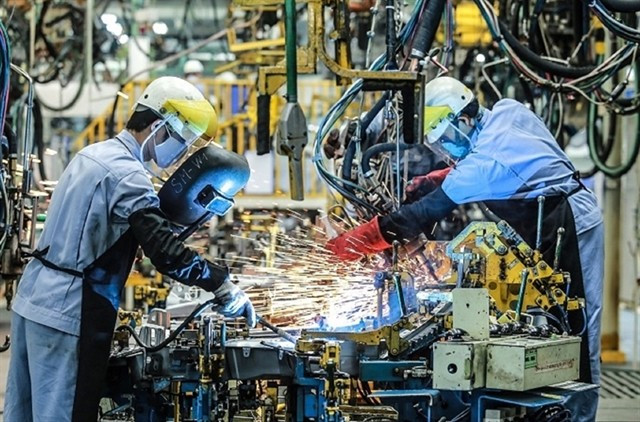
The renewed increase in new orders helps to support production growth in July. (Photo vneconomy.vn)

Hanoi (VNS/VNA) - The Vietnam Manufacturing Purchasing Managers' Index (PMI) rose to 52.4 in July, up from 48.9 the previous month, returning above the 50.0 no-change mark for the first time in four months, according to a survey released by S&P Global on August 1.

The index pointed to a strengthening in the overall health of the manufacturing sector, with the solid improvement in business conditions was the most marked for almost a year.

The improvement in operating conditions coincided with a return to growth of new orders in July. New business expanded for the first time in four months, and at the fastest pace since November last year amid reports of customer demand strengthening.

Some respondents did highlight the negative impact of US tariffs on new order growth, with, new business from abroad continuing to fall as a result of tariffs, extending the current sequence of contraction to nine months.

The renewed increase in new orders helped to support production growth in July. Output rose for the third month running and the pace of expansion was marked and the fastest in 11 months.

Rising output requirements drove a renewed increase in purchasing activity, with the pace of expansion the fastest since August last year.

Meanwhile, employment levels edged closer to stabilisation. Although staffing continued to decline due to lingering spare capacity following a recent drop in new orders, the latest reduction was the slowest in nine months as rising output requirements supported labour demand.

Despite renewed growth of input buying, stocks of purchases declined again as panellists reported challenges securing raw materials. That said, the pace of depletion was the weakest since December 2023. Stocks of finished goods also decreased in July.

Material shortages resulted in a further lengthening of suppliers' delivery times. The latest deterioration in vendor performance was solid and only slightly less pronounced than that seen in June.

Difficulties sourcing materials, particularly those from abroad, led to an increase in input costs at the start of the second half of the year. Input prices increased for the second successive month, and at a solid pace that was the fastest in 2025 so far.

Although manufacturers remained optimistic about output growth over the next 12 months, sentiment fell to a three-month low in July and remained well below the series average. Confidence was supported by expectations of more stable economic conditions, upcoming product launches and new orders, but concerns over the potential impact of US tariffs continued to weigh on the outlook.

Andrew Harker, economics director at S&P Global Market Intelligence, said: "July PMI data suggested that the Vietnamese manufacturing sector is getting back on its feet following the disruption caused to operations by the US tariff announcements in recent months.

"Although tariffs continued to cause reductions in new export orders, firms were able to secure enough business elsewhere that total new orders returned to growth.

Harker said that a key feature of the latest results was the impact of raw material shortages – driven by supplier delivery delays, falling inventories and rising cost pressures – and warned that if these supply issues persist, they could constrain the sector’s future growth./.

VNA

See more

Local residents and visitors tour and shop at a fair. (Photo: VNA)

Made in Vietnam Fair set to open in Hanoi

The Made in Vietnam Fair will showcase a wide range of products, including industrial and consumer goods, processed foods, agricultural produce and handicrafts, with the participation of distribution systems, e-commerce platforms, digital platforms and digital financial solution providers operating in Vietnam.

2025 a good year for Vietnam’s securities sector: SSC

2025 a good year for Vietnam’s securities sector: SSC

During the year, the SSC made significant progress in improving the legal and policy framework. Institutional work was implemented in a coordinated manner, including the issuance of two decrees, one resolution, seven circulars and three major schemes. At the same time, the regulator strengthened policy dialogue and expanded cooperation with international organisations to support the market upgrade process.

Vietnam shows strong FDI performance in the first 11 months of 2025 (Source: vtv.vn)

Vietnam shifting FDI attraction focus from volume to quality

As production relocation to Southeast Asia accelerates and competition for FDI intensifies, Vietnam faces increasing pressure from regional rivals such as India, Malaysia and Indonesia, which are offering bold tax incentives and developing specialised industrial parks. This reality requires Vietnam to shift its focus from attracting large volumes of capital to drawing high-quality investment, prioritising core technologies, innovation, value chain linkages and higher localisation rates.

Vice Chairman of the Ho Chi Minh City People’s Committee Hoang Nguyen Dinh inspects IUU fishing prevention efforts at Hung Thai Port in Long Hai commune. (Photo: VNA)

Ho Chi Minh City steps up oversight of unqualified fishing vessels

HCM City currently has 4,475 fishing vessels, all of which have been registered and updated on the VNFishbase system. Among them, 4,268 vessels, or 95.37%, have been granted fishing licences, while 207 unqualified vessels are being strictly managed and kept ashore.

Airlangga Hartarto (fifth from right), Indonesian Coordinating Minister for Economic Affairs, and CEO of VinFast Asia Pham Sanh Chau (sixth from right) at the plant opening ceremony on December 15. (Photo: VinFast)

VinFast inaugurates EV plant in Indonesia

The VinFast Subang plant was completed and put into operation just 17 months after groundbreaking, demonstrating the company's rapid execution capability and strong implementation capacity. This is VinFast's fourth operational facility worldwide, and its first plant in Indonesia and Southeast Asia outside of Vietnam.

From early December, major retail chains in Ho Chi Minh City have recorded a noticeable increase in shoppers seeking Tet products. (Photo: VNA)

HCM City businesses ramp up production to meet Lunar New Year demand

From early December, major retail chains in the city have recorded a noticeable increase in shoppers seeking Tet products. Many consumers are taking advantage of promotional programmes to purchase gift items with long shelf lives, such as confectionery, soft drinks and processed foods, well ahead of the holiday peak.

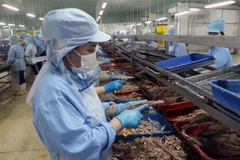
Workers process fish to be tinned for export at KTC Canned Food Factory under Kien Giang Trading JSC. (Photo: VNA)

Vietnam to host seminar on export growth strategies

Vietnam's exports rose 16.1% to 430.2 billion USD in the first 11 months of 2025, while total trade hit 839.8 billion USD during the same period. This strong performance shows that exports remain a key driver of economic growth, boosting Vietnam's standing on the world stage in recent years.

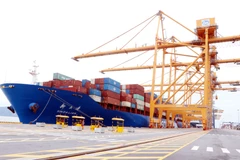
The vessel carrying the 2 millionth TEU arrives at Hai Phong Port. (Photo:VNA)

Hai Phong Port reaches 2-million-TEU milestone

Handling the 2 millionth TEU in 2025 not only demonstrates Hai Phong Port’s operational capacity and the collective efforts of its workforce, but also highlights its increasingly important role in regional and global supply chains, the confidence of shipping lines, logistics firms and the business community, and the effectiveness of policies to improve the investment climate and strengthen maritime infrastructure and services.

Melons labelled with traceability codes on display at the Song Van agricultural produce store in Ninh Binh city, Ninh Binh province. (Photo: VNA)

Tracing origins hindered by fragmented data systems

As the Government accelerates the digital economy, establishing a unified national traceability system has become a crucial move to end data fragmentation and disconnection among ministries, sectors and localities.