Exploring “miniature world” of Pu Huong Biosphere Reserve

The Pu Huong Nature Reserve is one of the three special-use forests forming the core zone of the Western Nghe An Biosphere Reserve, which was granted the world status by UNESCO in 2007.
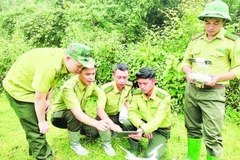
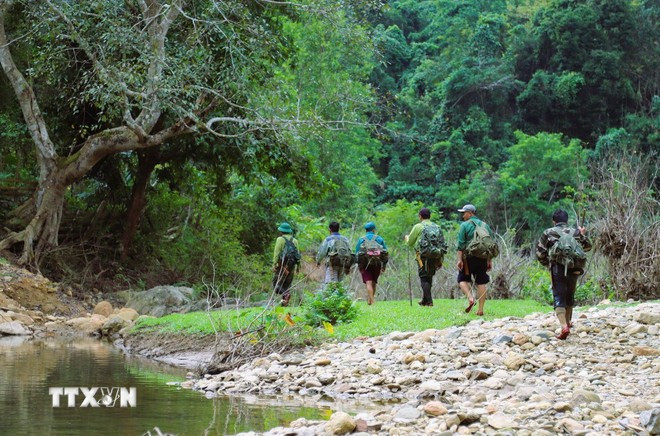
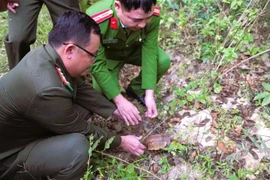
A biodiversity survey team collecting specimens and setting camera traps make their way into the core zone of Sub-area 729 in the Pu Huong Nature Reserve. (Photo: VNA)

Nghe An (VNA) – Established in 2008, the museum of the Pu Huong Nature Reserve in Quy Hop commune, the central province of Nghe An, serves as a vital repository for the rare and valuable genetic resources of the area’s rich flora and fauna.

A “miniature world” of the biosphere reserve

The museum has three main sections: a hall of tradition with a 3D model showing the reserve’s terrain, geomorphology, and overall ecological landscape; an exhibition area with 150 zoological specimens; and another space displaying over 500 plant specimens.

Tran Duc Long, head of the Office for Science – Technique and International Cooperation at the Pu Huong Nature Reserve Management Board, said the collection includes samples voluntarily contributed by local residents as well as specimens gathered by research teams during field surveys across both core and buffer zones. Most specimens have now been digitised and entered in a database, with technical treatment applied to prevent mould and organic decay.

Beyond expanding the collection for scientific study, the centre aims to strengthen collaboration with research institutes, universities, and organisations in Vietnam and abroad in a bid to better promote the reserve’s image internationally.

Covering nearly 46,500 hectares, Pu Huong is home to almost 570 animal species, including 69 named in the Vietnam Red Data Book, 51 in the International Union for Conservation of Nature (IUCN) Red List of Threatened Species 2020, and 36 in the Convention on International Trade in Endangered Species of Wild Fauna and Flora (CITES) list; together with over 1,800 plant species, including 76 in the Vietnam Red Data Book and 15 in the IUCN Red List 2020.

It is one of the three special-use forests forming the core zone of the Western Nghe An Biosphere Reserve, which was granted the world status by UNESCO in 2007.

phu-luong.jpg
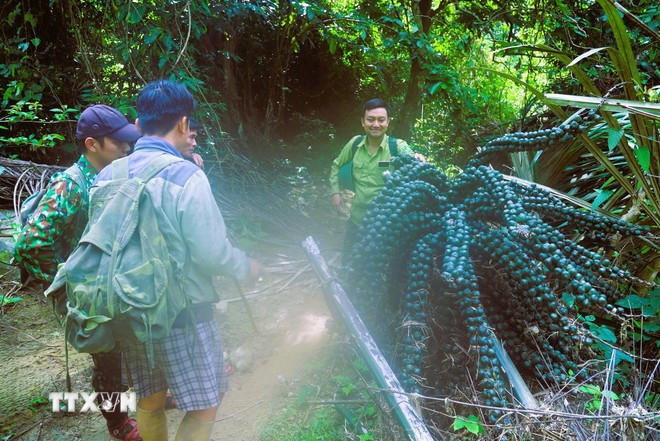
Amid the vast forests of the Pu Huong Nature Reserve, many plant species boast striking and unusual appearance. (Photo: VNA)

Unlocking the museum’s value

Hoang Anh Tuan, Deputy Director of the Reserve Management Board, noted that since 2023, the museum has been arranged following the model of an open natural and cultural one, serving not only scientific research but also the public’s demand for visits.

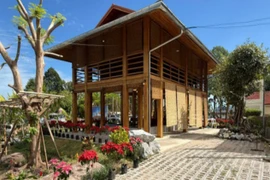
In 2025, the board began a pilot programme linking museum tours with experiential learning activities in a 10-hectare peripheral botanical garden comprising nine sub-zones. The programme is designed for fifth graders in local primary schools, helping them build foundational knowledge of the natural world and deepen their awareness of forest conservation.

However, Tuan acknowledged that preservation of specimens remains challenging due to the lack of dedicated facilities such as climate-controlled storage cabinets and humidity-regulation equipment, as well as the shortage of professionals. In the long term, the reserve plans to invest in standard storage infrastructure, increase specialised staff training, develop systematic handling and storing procedures, apply digital technology to specimen management, and expand partnerships with research institutions for technical and financial support.

Dr Nguyen Hai Ha, a lecturer at the Vietnam National University of Forestry specialising in biodiversity and wildlife conservation, emphasised that the reserve’s museum form an essential part of modern scientific and educational infrastructure. It plays a vital role in exhibiting, preserving, and disseminating knowledge on biodiversity, geology, and the environment.

By bridging science, education, and tourism, such museums become open knowledge hubs that significantly contribute to nature conservation and sustainable development, Ha noted./.

VNA

See more

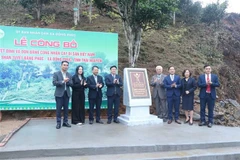
Official heritage plaque i sinstalled on the 12 recognised Shan Tuyet tea trees in Dong Phuc commune. (Photo: VNA)

Thai Nguyen: 12 ancient Shan Tuyet tea trees win national heritage status

The recognition honours the biological, cultural and historical values of these centuries-old Shan Tuyet tea trees – natural treasures deeply woven into the livelihoods, traditions and identity of local ethnic communities. The title affirms the community’s commitment to preserving and promoting the value of this iconic local tea variety.

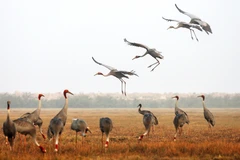
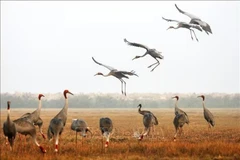
Sarus cranes at Tram Chim National Park (Photo: VNA)

Return of sarus cranes: Hope takes wing in Dong Thap wetland

Beneath the wide Mekong Delta sky, Tram Chim National Park is racing against time, pouring heart and science into a decade-long (2022–2032) plan to rescue the Eastern sarus crane – an elegant, scarlet-headed bird listed as endangered on the International Union for the Conservation of Nature (IUCN) Red List and a living emblem of both the park and all of Dong Thap province

French Ambassador Olivier Brochet speaks at the press conference in Hanoi on December 11 to mark the 10th anniversary of the Paris Agreement on climate change and highlighting the COP30 outcomes. (Photo: VNA)

International community ready to support Vietnam in energy transition, climate response

In a video message to the press conference, UN Resident Coordinator in Vietnam Pauline Tamesis said the UN is ready to support Vietnam in building a pipeline of projects capable of absorbing financing mobilised under the Political Declaration on establishing the Just Energy Transition Partnership (JETP), as well as from global climate finance sources, including the Green Climate Fund and the Loss and Damage Fund.

Forest rangers in Son La province apply technological devices and software to forest management, monitoring, and protection. (Photo: nhandan.vn)

Digital technology application enhances forest management, protection

With a total forest area of over 14 million hectares, including more than 10 million hectares of natural forests, forests exist in all 34 provinces and cities across the country. Given the large area and limited workforce, applying digital solutions in forest management and protection has become a top priority for the forestry sector.

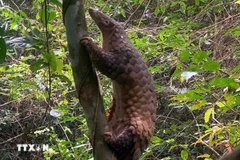
Sunda pangolins (Manis javanica), also known as the Javan pangolin, are listed in Group IB – critically endangered and strictly protected from all commercial exploitation (Photo: VNA)

Quang Ngai releases rare pangolin back into nature

Initial verification showed that the animal weighed 3.7kg and measured over 60cm. It was identified as a Sunda pangolin (Manis javanica), also known as the Javan pangolin, listed in Group IB – critically endangered and strictly protected from all commercial exploitation.

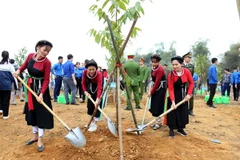
Residents of Tuyen Quang province take part in the One Billion Trees Programme. (Photo: VNA)

Tree-planting programme exceeds one-billion-tree goal

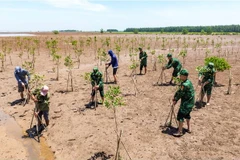
The total comprises 573.9 million scattered trees and 865.2 million trees grown in concentrated plantations, equivalent to 429,125 hectares of forest. Provinces posting the strongest results include Phu Tho with 177.9 million trees, Lao Cai with 108.8 million, and An Giang with 98.5 million.

Construction activity is one of the causes of air pollution in Hanoi. (Photo: VNA)

Hanoi takes urgent measures to curb air pollution

The city requires the enhanced application of advanced technologies and remote monitoring systems, including satellite remote sensing, drones, and AI-integrated traffic cameras, to monitor, detect, and strictly address the illegal burning of garbage, straw, and agricultural by-products.

The World Bank delegation holds working session with Can Tho city People's Committee and relevant units (Photo: VNA)

World Bank delegation surveys Can Tho urban resilience project

The project is jointly financed by the WB with up to 250 million USD and a 10-million-USD non-refundable grant from the Swiss State Secretariat for Economic Affairs (SECO), along with counterpart funding from the Vietnamese Government. Its goal is to build a climate-resilient and sustainable city that can drive socio-economic growth across the Mekong Delta, mitigate flood vulnerability in central Can Tho, and improve inter- and intra-regional transport connectivity.