Hospitals race to complete applying digital medical records by September

As part of Vietnam’s national digital transformation efforts, by mid-April 2025, a total of 153 healthcare facilities across the country had officially implemented electronic medical records (EMRs), phasing out the use of traditional paper ones.

An automated patient registration kiosk at the Quang Ninh provincial General Hospital (Photo: VietnamPlus)

Hanoi (VNA) – Hospital are ramping up efforts to apply electronic medical records (EMRs) following Prime Minister Pham Minh Chinh’s Directive No. 07/CT-TTg, which demands the acceleration of a national plan to develop resident data, electronic identification, electronic authentication systems serving national digital transformation between 2022 and 2025, with a vision extending to 2030.

The Ministry of Health (MoH) has identified the nationwide rollout of EMRs as a focal task, placing full responsibility on heads of agencies and units to ensure timely implementation. It urged all hospitals with inpatient beds, both public and private, to complete the transition by September 30, 2025.

EMRs at the heart of healthcare reform

The MoH recently approved a decision outlining a detailed roadmap for EMR deployment. Vietnam is currently home to nearly 1,500 public hospitals, over 380 private hospitals, and around 70,000 private clinics.

Under the Prime Minister’s directive, the ministry is tasked with ensuring that 100% of hospitals adopt EMRs, with interconnected data systems between local (district and provincial) facilities and central hospitals overseen by the ministry. The goal is to make use of the shared data to streamline diagnostics, reduce unnecessary tests, and enhance patient care. All must be completed by September 2025.

In mid-March, the Minister of Health also issued directions urging digital transformation across the health sector. It encouraged leadership at all levels to set the example and lead with a forward-thinking and innovation-first mindset.

For healthcare providers, this includes prioritising investment and resources for EMRs, integrating personal health records into the national VNeID Platform, and enabling electronic referrals, appointment scheduling, and the re-use of diagnostic results across different care levels.

All 63 provincial-level health departments have now updated information about local medical facilities and practitioners on the National Management System. Every hospital in the country—public or private—has deployed hospital information systems (HIS), laying the digital foundation for EMRs.

Significant progress has been made: many facilities now provide computers for all clinical staff and offer free Wi-Fi to patients and visitors. Currently, 39% of healthcare facilities have cybersecurity systems in place. Importantly, 100% of hospitals now have their HIS digitally linked with the Vietnam Social Security, ensuring seamless verification of health insurance claims.

Resources mobilised, milestones achieved

As of April, 153 healthcare facilities have confirmed full EMR deployment, with no further use of paper records. Notably, two provincial departments of Phu Tho and Bac Ninh have successfully implemented EMRs across all hospitals under their management.

In terms of payment, the transition to cashless billing has seen dramatic progress over the past five years. Currently, 71% of facilities offer electronic payment options, including 31% via direct banking connections, 10% through the National Public Service Portal, and 15% via other digital platforms. However, 29% of hospitals still rely on cash transactions.
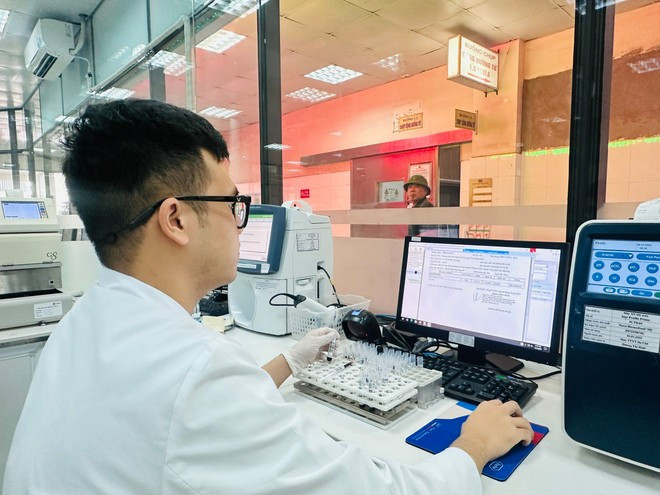
luu-thong.jpg
The Ministry of Health emphasises the need to prioritise resources for rapid EMR deployment
(Photo: VietnamPlus)

According to Associate Professor Dao Xuan Co, Director of the Hanoi-based Bach Mai Hospital – one of Vietnam’s largest hospitals with 3,600 beds and over 4,000 staff, the hospital receives 7,000–10,000 outpatients and treats approximately 4,000 inpatients each day.

Following government directives, Bach Mai has made digital transformation a top priority, mobilising resources to become the first Tier-1 hospital under the MoH to fully implement EMRs. Since November 15, 2024, the hospital has been operating completely paperless.

Co highlights the tangible benefits – reduced errors from illegible handwriting, instant access to patient histories, and more accurate diagnoses and treatment plans. Digitisation also eliminates physical paperwork, freeing up storage space and cutting costs.

By moving away from printed test results of X-ray, CT and MRI scans, as well as paperwork for lab requests and discharge summaries, Bach Mai saves nearly 80 billion VND (3 million USD) annually, which is then reinvested into further technological upgrades.

A similar trend is taking place at Thanh Son district’s medical centre in Phu Tho province. Previously, a single paper-based medical record could use up to 50–60 A4 sheets. With EMRs, that has dropped to just 4–5 sheets. Given that the centre treats around 22,000 inpatients each year, the volume of printed paper has been reduced from 1.1 million sheets to just a tenth of that.

On April 11, the MoH published its first unified coding list for diagnostic and laboratory indicators, covering areas such as haematology, biochemistry, pathology, and microbiology. The list includes 2,964 standardised indicators and will be adopted across all public and private medical facilities nationwide.

This move is a crucial step towards the interoperability of lab results between institutions, minimising duplicate testing, cutting patient costs, and improving efficiency in line with national healthcare reform goals.

Health Minister Dao Hong Lan reaffirmed that digital transformation is playing a transformative role across society, and healthcare is no exception. Information technology is no longer optional, it has become an essential tool for delivering modern, effective, and patient-centric care, she stated./.


VNA

See more

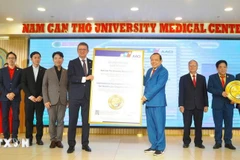
At the event (Photo: VNA)

First hospital in Mekong Delta earns US AACI accreditation

Nam Can Tho University Hospital on December 15 hosted a ceremony to announce its accreditation by the American Accreditation Commission International (AACI), a US-based body, becoming the first facility in the Mekong Delta and among a select few in Vietnam to earn the distinction.

A health worker administer IPV polio vaccine to a child in Dong Thap province. (Photo: VNA)

Vietnam proactively takes polio prevention measures amid outbreak in Laos

The meeting took place following an assessment by the World Health Organisation (WHO) warning that Vietnam is facing a very high risk of polio import and re-emergence. The risk arises after neighbouring Laos officially declared a polio outbreak on October 7, following the detection of circulating vaccine-derived poliovirus type 1 (cVDPV1).

A view of the International Conference on Molecular Diagnostics in Microbiology and Diseases, organised by Rencontres du Vietnam and the International Centre for Interdisciplinary Science and Education (ICISE) in the central province of Gia Lai on December 11. (Photo: VNA)

Nearly 100 international scientists attend molecular diagnostics conference in Vietnam

The conference features almost 80 presentations across plenary sessions, parallel sessions and poster sessions, focusing on leading research trends such as point-of-care diagnostics; predictive biomarkers used to anticipate individual responses to therapy; and the development of new tools and platforms for rapid molecular-level detection and diagnosis.

Digital transformation in healthcare is being strongly promoted. (Photo: Organising Committee of the 2024 “Technology with Heart” Award, co-hosted by Vietnam News Agency and Viettel)

AI and precision medicine: Emerging prospects for Vietnam-Canada cooperation

Canada has strong experience in compiling and analysing genomic data, while Vietnam has a large population with diverse genetic structures. This complementarity can help Vietnam narrow its technological gap and enhance its capacity to treat rare diseases — an area many countries are prioritising for development.

Maternal and child healthcare in Tuyen Quang province. (Photo: VNA)

Vietnam on path to become a healthy nation

Resolution 72 not only focuses on health care but is also closely interlinked with other sectors, helping to build a solid foundation for sustainable national development and create momentum for Vietnam to “take off” and further integrate into the world.

The emergency ward at Bach Mai Hospital, Hanoi. (Photo: VNA)

Health sector targets free hospital fee for all

The total value of medical expenses not covered by the health insurance fund is estimated at around 24.8 trillion VND (942 million USD) per year. Health insurance contributions remain low, at 4.5% of the salary or reference base used for calculation.

Sen. Lieut. Gen. Vongsone Inpanphim, Lao Deputy Minister of National Defence and Director of the General Department of Politics presents the Friendship Order of Laos to Vietnam’s Central Military Hospital 108. (Photo: VNA)

Vietnam, Laos expand cooperation in military medicine

Over the past two decades, many Vietnamese experts have undertaken long-term missions at the Central Hospital 103 to provide training and technical assistance, contributing to the successful treatment of complex cases. The Central Military Hospital 108 has also trained 206 Lao doctors, six nurses and two engineers — a clear demonstration of substantive, long-standing cooperation.

Deputy Minister Do Xuan Tuyen (left) and Alberto Anaya Gutiérrez, General Secretary of the Mexican Workers' Party (PT). (Photo: VNA)

Vietnam, Mexico boost medical cooperation

As both nations look to keep their long-standing partnership in good health, the health ministries of Vietnam and Mexico have been accelerating cooperation, especially in traditional medicines.

The opening of Vietnam Medi-Pharm 2025 and Vietmedicare Expo in Ho Chi Minh City on November 27, 2025. (Photo: VNA)

Major medical, pharmaceutical exhibitions kick off in HCM City

The 33rd Vietnam International Medical and Pharmaceutical Exhibition (Vietnam Medi-Pharm 2025) and the International Exhibition on Pharmaceuticals, Medical Devices and Healthcare (Vietmedicare Expo 2025) kicked off at the Saigon Exhibition and Convention Centre on November 27.

Doctors Do Thi Ngoc Linh (left) and Le Diep Linh at the RCS membership certificate award ceremony in London. (Photo: VNA)

Vietnamese surgeons honoured with prestigious Royal College Fellowship

The fact that the Vietnamese doctors have been awarded with FRCS certificate proves Vietnam’s surgical expertise has met international standards, contributing to improving the quality of treatment at home, expanding academic cooperation with world leading medical institutions and inspiring younger doctor to pursue higher standards.