Vietnam’s logistics strategy targets global supply chains

This is the first logistics strategy ever issued by the Government, demonstrating that the sector is now regarded as a key economic one and reflecting strong State commitment to developing logistics services in the new period.

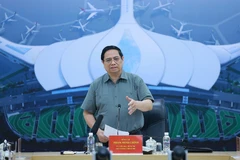
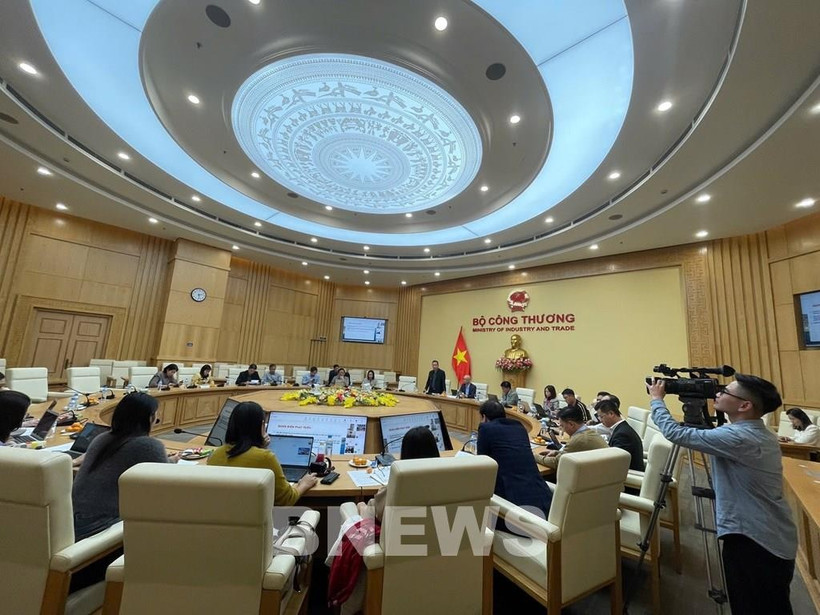
The conference held in Hanoi on November 21 to implement the national logistics development strategy for 2025-2035, with a vision to 2050. (Photo: VNA)

Hanoi (VNA) – The Ministry of Industry and Trade has recently held a conference to implement the national logistics development strategy for 2025-2035, with a vision to 2050, the first of its kind with long-term and comprehensive scale and clear quantified targets.

Speaking at the November 21 event, Deputy Director General Tran Thanh Hai of the ministry’s Agency of Foreign Trade, said the blueprint was approved under the Prime Minister’s decision dated October 9, 2025. This is the first logistics strategy ever issued by the Government, demonstrating that the sector is now regarded as a key economic one and reflecting strong State commitment to developing logistics services in the new period.

According to Bui Ba Nghiem, a senior specialist at the agency and deputy head of the drafting committee for the strategy, it defines logistics as an essential service, a driving force for socio-economic development, and a high-value-added sector with intensive knowledge content, oriented toward sustainable and efficient development in socio-economic and environmental terms.

Nghiem noted that the strategy highlights the need for development based on modern infrastructure systems, including transport, trade and technology, while placing people at the centre through long-term plans to build a high-quality workforce.

Targets for the 2025-2035 period are clearly quantified, with logistics contributing 5-7% of GDP, the sector growing by 12-15%, and logistics costs reduced to 12–15% of GDP. The strategy also looks to see the country’s logistics performance index (LPI) ranking among the world’s top 40, the establishment of five international-level logistics centres, and 70% of the workforce with specialised training.

According to Nghiem, to realise these major goals, nine key groups of solutions have been set out, spanning institutions, infrastructure, human resources and market development. Priority development regions include the Red River Delta, southeast and central regions, with major growth poles such as Hanoi, Hai Phong, Ho Chi Minh City and Da Nang. The strategy encourages stronger multimodal transport and economic corridor connectivity.

Experts highlighted that the issuing and implementation of the strategy marks a new vision for Vietnam in building a modern, digital and green economy. It opens opportunities to develop major logistics enterprises as well as regional- and international-standard logistics hubs.

However, they stressed that achieving breakthroughs will require strong political determination, coordinated action from ministries and localities, and market leadership from the business community. With clear orientation, long-term goals and consistent implementation, the sector is expected to enter a new phase of development, becoming a key driver of sustainable economic growth and global integration./.

VNA
See more

Local residents and visitors tour and shop at a fair. (Photo: VNA)

Made in Vietnam Fair set to open in Hanoi

The Made in Vietnam Fair will showcase a wide range of products, including industrial and consumer goods, processed foods, agricultural produce and handicrafts, with the participation of distribution systems, e-commerce platforms, digital platforms and digital financial solution providers operating in Vietnam.

2025 a good year for Vietnam’s securities sector: SSC

2025 a good year for Vietnam’s securities sector: SSC

During the year, the SSC made significant progress in improving the legal and policy framework. Institutional work was implemented in a coordinated manner, including the issuance of two decrees, one resolution, seven circulars and three major schemes. At the same time, the regulator strengthened policy dialogue and expanded cooperation with international organisations to support the market upgrade process.

Vietnam shows strong FDI performance in the first 11 months of 2025 (Source: vtv.vn)

Vietnam shifting FDI attraction focus from volume to quality

As production relocation to Southeast Asia accelerates and competition for FDI intensifies, Vietnam faces increasing pressure from regional rivals such as India, Malaysia and Indonesia, which are offering bold tax incentives and developing specialised industrial parks. This reality requires Vietnam to shift its focus from attracting large volumes of capital to drawing high-quality investment, prioritising core technologies, innovation, value chain linkages and higher localisation rates.

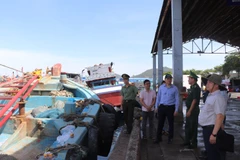
Vice Chairman of the Ho Chi Minh City People’s Committee Hoang Nguyen Dinh inspects IUU fishing prevention efforts at Hung Thai Port in Long Hai commune. (Photo: VNA)

Ho Chi Minh City steps up oversight of unqualified fishing vessels

HCM City currently has 4,475 fishing vessels, all of which have been registered and updated on the VNFishbase system. Among them, 4,268 vessels, or 95.37%, have been granted fishing licences, while 207 unqualified vessels are being strictly managed and kept ashore.

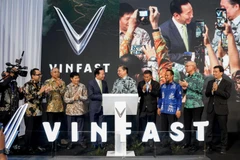
Airlangga Hartarto (fifth from right), Indonesian Coordinating Minister for Economic Affairs, and CEO of VinFast Asia Pham Sanh Chau (sixth from right) at the plant opening ceremony on December 15. (Photo: VinFast)

VinFast inaugurates EV plant in Indonesia

The VinFast Subang plant was completed and put into operation just 17 months after groundbreaking, demonstrating the company's rapid execution capability and strong implementation capacity. This is VinFast's fourth operational facility worldwide, and its first plant in Indonesia and Southeast Asia outside of Vietnam.

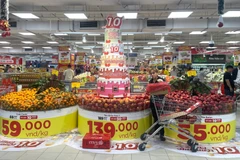
From early December, major retail chains in Ho Chi Minh City have recorded a noticeable increase in shoppers seeking Tet products. (Photo: VNA)

HCM City businesses ramp up production to meet Lunar New Year demand

From early December, major retail chains in the city have recorded a noticeable increase in shoppers seeking Tet products. Many consumers are taking advantage of promotional programmes to purchase gift items with long shelf lives, such as confectionery, soft drinks and processed foods, well ahead of the holiday peak.

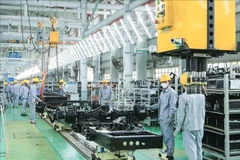
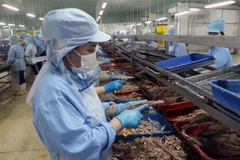
Workers process fish to be tinned for export at KTC Canned Food Factory under Kien Giang Trading JSC. (Photo: VNA)

Vietnam to host seminar on export growth strategies

Vietnam's exports rose 16.1% to 430.2 billion USD in the first 11 months of 2025, while total trade hit 839.8 billion USD during the same period. This strong performance shows that exports remain a key driver of economic growth, boosting Vietnam's standing on the world stage in recent years.

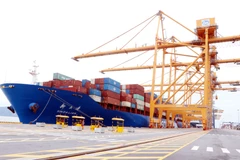
The vessel carrying the 2 millionth TEU arrives at Hai Phong Port. (Photo:VNA)

Hai Phong Port reaches 2-million-TEU milestone

Handling the 2 millionth TEU in 2025 not only demonstrates Hai Phong Port’s operational capacity and the collective efforts of its workforce, but also highlights its increasingly important role in regional and global supply chains, the confidence of shipping lines, logistics firms and the business community, and the effectiveness of policies to improve the investment climate and strengthen maritime infrastructure and services.

Melons labelled with traceability codes on display at the Song Van agricultural produce store in Ninh Binh city, Ninh Binh province. (Photo: VNA)

Tracing origins hindered by fragmented data systems

As the Government accelerates the digital economy, establishing a unified national traceability system has become a crucial move to end data fragmentation and disconnection among ministries, sectors and localities.