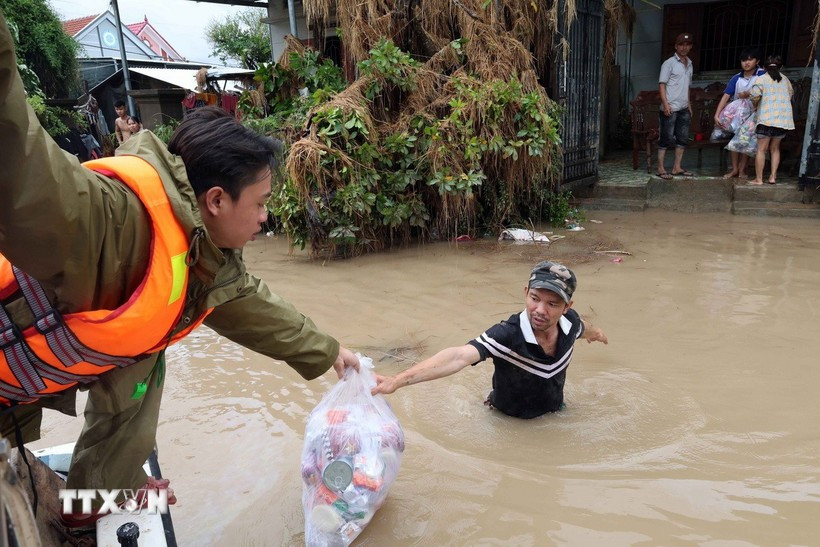
Hanoi (VNA) - The successive storms and floods, with unprecedented destructive power in both the northern and central regions in October and November, have posed a major challenge to the newly implemented two-tier local administration model. Yet through these events, many provinces and cities have demonstrated the effectiveness of the “four-on-the-spot” principle in disaster prevention and control.
Article 4 of the 2013 Law on Natural Disaster Prevention and Control stipulates the fundamental principles of disaster prevention and control, including proactive prevention, timely response, and prompt and effective recovery. This is the responsibility of the State, organisations, and individuals, with the State playing the leading role, organisations and individuals taking initiative, and communities supporting one another. Disaster prevention and control shall be implemented according to the four-on-the-spot principle: on-the-spot command, on-the-spot forces, on-the-spot means and supplies, and on-the-spot logistics.
Since the two-tier local administration model came into operation on July 1, 2025, the responsibilities of authorities from the central level to the local level in disaster prevention and control have been increasingly defined in a more detailed and stringent manner.
On July 9, the Government issued Decree No. 200/2025/ND-CP to detail several provisions of the Law on Civil Defence.
Specifically, the National Civil Defence Steering Committee is an inter-sectoral coordinating body established by the Prime Minister. Operating on a concurrent basis, it advises the Government and the Prime Minister on organising, directing, and managing civil defence activities nationwide. The Prime Minister serves as the Chair, and a Deputy Prime Minister serves as its permanent Vice Chair.
To meet the requirements of the new administration model, the Law also sets out provisions on the functions of provincial- and communal-level Civil Defence Command Committees, thereby granting local authorities greater responsibilities and powers in natural disaster prevention and control.
During the recent waves of heavy rains and floods in the northern and central regions, the “four-on-the-spot” principle proved highly effective, particularly in fostering proactive engagement from provincial- and communal-level authorities as well as local residents, thereby helping to minimise disaster impacts.
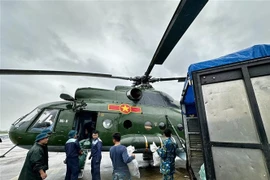
This proactive approach was clearly demonstrated by the fact that provincial and municipal authorities did not wait for directives from the central level before taking action. Immediately after the provincial mergers and the establishment of the two-tier structure, chairpersons of the People’s Committees in localities such as Lao Cai, Thai Nguyen, Phu Tho, Ninh Binh, Quang Tri, Khanh Hoa, Lam Dong, Gia Lai, and Dak Lak ensure there is no disruption in leadership or direction. They have closely monitored developments and promptly and effectively implemented disaster prevention, response, recovery, and search-and-rescue missions in accordance with the “four-on-the-spot” principle and the specific conditions of their localities.

When the new administration model is implemented, communes and wards no longer have to wait for directives from the intermediate district level. Instead, they become more proactive and self-reliant in mobilising residents to respond to storms and floods,
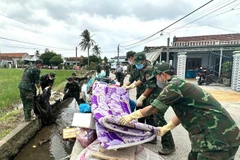
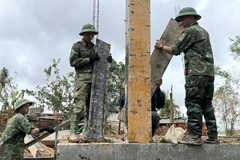
A typical example among them is Duy Nghia commune in the central city of Da Nang. Prolonged heavy rainfall in the upstream areas caused the Thu Bon River to rise above the historic flood peak, with fast-flowing waters washing away sections of the embankment in the An Luong area of Duy Nghia commune, directly threatening more than 70 riverside households. The local authorities promptly mobilised over 1,000 people, including officers and soldiers, militia forces, youth union members, and residents from adjacent villages, to reinforce the embankment throughout the night, ensuring the safety of the life and property of those living near the embankment. This stands as clear evidence that the “rearrangement of administrative boundaries” has achieved its goal of bringing the government closer to the people, staying more connected with them, and better meeting the needs of the population.
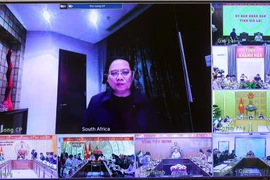
The dynamism and decisive proactiveness demonstrated by the two-tier local administration system in leading, directing, and implementing storm and flood prevention measures, regardless of whether local leaders are native officials or transferred ones, have been acknowledged by the Prime Minister.
From Algeria, where Prime Minister Pham Minh Chinh were currently on an official visit, the head of the Vietnamese Government expressed his praise for the leaders of the People’s Committees and relevant departments in Lam Dong, Khanh Hoa, Dak Lak, and Gia Lai provinces for promptly relocating nearly 19,000 households with more than 60,000 people from dangerous areas, thereby significantly reducing losses of life and property for local communities.
At present, certain forces deliberately ignore the efforts of local authorities in the central provinces to combat storms and floods, save lives, and protect the property of citizens. They take advantage of unfortunate consequences caused by natural disasters to deny the achievements of administrative apparatus streamlining, the establishment of the two-tier local administration model, and the rotation of officials at the provincial and communal levels.
Those who hold deep-seated prejudice or whose perceptions are distorted see only the losses and magnify them, while refusing to view the situation objectively. They turn a blind eye to images of local leaders present at critical locations directing flood response efforts, and to the many examples of individuals sacrificing themselves for the safety of their fellow citizens.
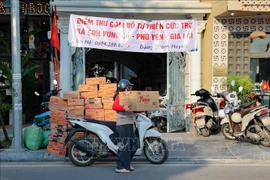
It is truly regrettable that while the local authorities and people in the flood-stricken areas are straining every effort to overcome the consequences of natural disasters; while the central and local authorities across the country are extending practical support to affected communities; and while the international community is expressing solidarity with Vietnam both materially and spiritually, there are still hostile elements spreading distorted and slanderous rhetoric. Even more concerning is that some uninformed individuals unintentionally assist them by sharing false information, thereby undermining efforts to provide relief for disaster-stricken citizens./.