Three national target programmes basically meet, exceed 2021-2025 goals

A report from the Central Steering Committee for National Target Programmes for the 2021–2025 period showed that poverty reduction in ethnic minority-inhabited areas averaged 3.2% per year. Per capita income among ethnic minorities is estimated to reach 45.9 million VND (1,760 USD) in 2025, a 3.3-fold increase from the 2020 level, well surpassing the goal of more than doubling.

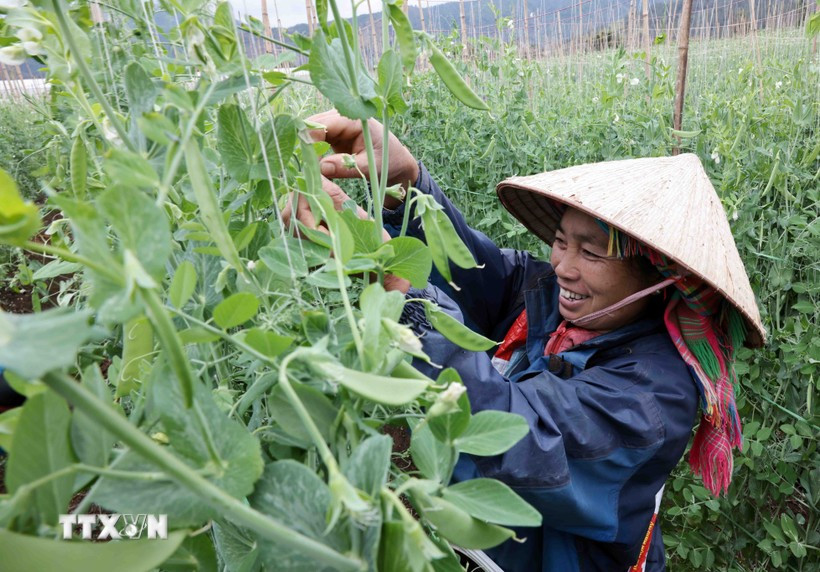
Agricultural production models help farmer access modern technology to improve output. (Photo: VNA)

Hanoi (VNA) – All three national target programmes on new-style rural area building, sustainable poverty reduction, and socio-economic development in ethnic minority and mountainous areas have largely met and surpassed their assigned targets and tasks for the 2021–2025 period.

Poverty reduction in ethnic minority-inhabited areas averages 3.2%

A report from the Central Steering Committee for National Target Programmes for the 2021–2025 period showed that poverty reduction in ethnic minority-inhabited areas averaged 3.2% per year. Per capita income among ethnic minorities is estimated to reach 45.9 million VND (1,760 USD) in 2025, a 3.3-fold increase from the 2020 level, well surpassing the goal of more than doubling.

The Ministry of Finance reported that central budget disbursements for the three programmes totaled more than 119.4 trillion VND (4.54 billion USD) as of October 30, equivalent to 67.9% of the planned amount. This included 75.8 trillion VND in public investment capital (75% of plan) and over 43.5 trillion VND in recurrent spending (58.2%).

Resource fragmentation, overlapping policies hamper progress

The progress has been hindered by a complex, slowly issued and insufficiently detailed policy framework. Overlaps in content and beneficiaries, scattered funding, duplicated tasks and fragmented policies have posed major challenges.

For 2025, the Prime Minister allocated 42.2 trillion VND in central budget funding to the three programmes, comprising nearly 24.5 trillion VND for development investment and over 17.7 trillion VND for non-business expenditures. As of late September, central budget disbursements reached about 13.3 trillion VND, or 56.7% of the allocated plan.

National Assembly deputy Huynh Thanh Chung from Dong Nai province cited multiple causes for delays, including cumbersome investment procedures, site clearance delays, local administration reorganisations, workforce shortages and, in particular, confusion over grassroots-level operating mechanisms.

Support for production and livelihoods remains largely short-term. Economic models have yet to pivot strongly toward value-chain integration; linkages between farmers, cooperatives and enterprises are weak; stable consumption mechanisms are absent; and ethnic minority communities still struggle to access advanced technologies and expertise.

Merger of three programmes

The Government proposed an investment policy for the national target programme on new-style rural area building, sustainable poverty reduction, and socio-economic development in ethnic minority and mountainous areas for 2026–2035, based on merging the three existing programmes in the 2021–2025 period, which was approved by the 15th legislature at its recently-closed 10th session.

hb.jpg
Vietnam strives to achieve new-style rural standards in about 65% of communes nationwide, 10% of which qualify as "modern new-style rural" areas. (Photo: VNA)

According to Chung, the unified programme through 2035 would anchor Vietnam’s sustainable development strategy, aiming to boost living standards, reduce regional disparities and foster modern, civilised rural communities. He urged lawmakers and the Government to refine mechanisms, boost funding and ease implementation for localities.

The NA set four key targets by 2030: lifting average rural incomes to 2.5-3 times the 2020 level, raising ethnic minority incomes to at least half of the national average; sustaining annual multidimensional poverty reduction of 1-1.5% nationwide, with rates below 10% in ethnic minority and mountainous areas; and essentially eradicating the most disadvantaged communes and villages there.

Additional goals include achieving new-style rural standards in about 65% of communes nationwide, 10% of which qualify as "modern new-style rural" areas; and recognising five provinces or centrally-run cities as having fully completed new rural-style development tasks.

Minister of Agriculture and Environment Tran Duc Thang said that by late 2025, the multidimensional poverty rate under the current standards is expected to drop to around 0.9–1%, reflecting an average annual decline exceeding 1% during 2021-2025. Under the upcoming 2026-2030 poverty standards, the rate is forecast at roughly 9.6%, similar to the 2022-2025 period./.
VNA

See more

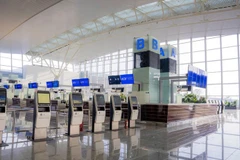
A full suite of automated technologies has been deployed across the Terminal T2 at Noi Bai International Airport, giving travellers greater control over their procedures from check-in to boarding. (Photo: VNA)

Noi Bai Airport to operate expanded int’l terminal with comprehensive automation

The upgrade follows directives from the Prime Minister and the Ministry of Construction and is designed to ease pressure on existing infrastructure by lifting the terminal’s annual capacity from 10 million to 15 million passengers. For the first time, a full suite of automated technologies has been deployed across the terminal, giving travellers greater control over their procedures from check-in to boarding.

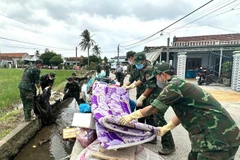
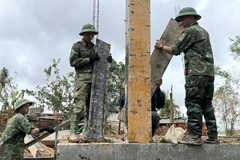
Soldiers help flood-hit communities clean up in Hoa Thinh commune, Dak Lak province. (Photo: VNA)

Concerted efforts help disaster-hit communities rebuild lives

The “Quang Trung Campaign” to rapidly repair and rebuild houses for affected families in central provinces is seen as a catalyst for faster and more sustainable recovery, extending beyond housing restoration to reinforcing essential infrastructure, enhancing community resilience, and strengthening public trust in the Party and Government.

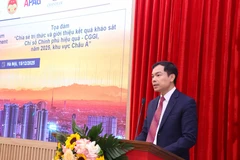
Associate Professor Dr Nguyen Manh Hung, Vice President of the Ho Chi Minh National Academy of Politics, addresses the dialogue in Hanoi on December 15. (Photo: VNA)

Vietnam among Asia’s leaders in governance capacity

Vietnam has climbed 12 places in the 2025 Chandler Good Government Index (CGGI) since 2021, rising from 60th to 48th globally. Over the past five years, the country has recorded progress in six out of seven CGGI pillars, making it one of Asia’s most notable governance reformers.

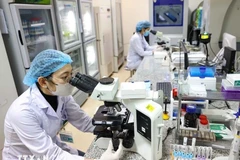
Scientific research activities at the National Hospital of Endocrinology. (Photo: VNA)

Vietnam sets roadmap for intellectual workforce to 2045

The strategy aims to build a high-quality Vietnamese intellectual workforce with a rational structure, identified as a core driving force for the rapid development of modern productive forces, as well as a leading force in digital transformation, innovation and international integration.

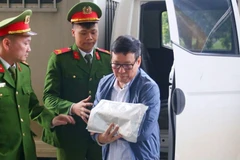
Le Duy Thanh, former Chairman of the Vinh Phuc People’s Committee, is escorted to the courtroom. (Photo: anninhthudo.vn)

Appeal trial opened for Phuc Son Group corruption case

According to the first-instance verdict, Nguyen Van Hau, Chairman and CEO of Phuc Son Group, exploited personal and professional connections to bribe over 132 billion VND (over 5 million USD) to leaders of the Party Committees, People’s Committees, and departments in Vinh Phuc and Quang Ngai, enabling Phuc Son Group to secure many contracts in these localities and Phu Tho province.

A performance at the year-end review programme in Sydney on December 14, co-organised by the Vietnam-Australia Scholars & Experts Association and Vietnam-Australia Cultural Exchange Organisation. (Photo: VNA)

Gathering honours knowledge, culture, community spirit of OVs in Australia

Addressing the gathering that drew more than 300 guests, Vietnamese Consul General in Sydney Nguyen Thanh Tung highlighted contributions of the Vietnamese community in Australia, particularly intellectuals and professionals, to the host society as well as cooperation between the two countries.

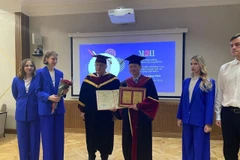
Professor Dr. Tran Hong Thai receives the honorary doctorate title and certificate from Professor Nikolay Rogalev of MPEI. (Photo published by VNA)

Vietnamese professor awarded honorary doctorate by Moscow institute

Professor Dr. Tran Hong Thai, Standing Vice President of the Vietnam Academy of Science and Technology (VAST) was granted an Honorary Doctorate by The Moscow Power Engineering Institute (MPEI) for his outstanding contributions to scientific development, education and international cooperation in the energy sector.

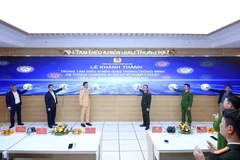
Delegates perform the inauguration protocol for the Hanoi smart traffic control centre in the capital on December 13. (Photo: VNA)

Hanoi officially launches smart traffic control centre

Equipped with 1,837 AI-powered cameras installed at 195 key intersections, the centre serves as the “brain” for real-time monitoring of traffic conditions and urban order. Through the system, police officers can observe traffic on major roads and junctions, promptly detect congestion, violations, accidents and incidents, and take timely response measures.

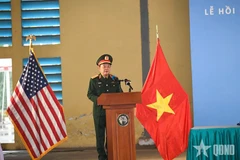
Vietnamese Deputy Minister of National Defence Sen. Lieut. Gen. Hoang Xuan Chien speaks at the event. (Photo: VNA)

Vietnam repatriates remains of US MIA servicemen

Vietnamese Deputy Minister of National Defence Sen. Lieut. Gen. Hoang Xuan Chien voiced his confidence that sustained goodwill and joint action would allow both sides to tackle lingering war consequences while broadening cooperation across other domains, which, he described as the best way to heal physical, emotional, and societal scars and fostering the stronger Vietnam - US relationship.