Hanoi (VNA) - After more than three months of implementation, the two-tier local administration model is now functioning smoothly, delivering greater efficiency and effectiveness, with a focus on serving people and businesses. This bold transformation of an increasingly streamlined and modern administrative system is driving a new momentum, confirming that the new phase is improving steadily.
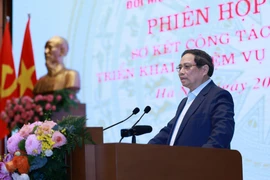
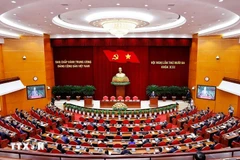
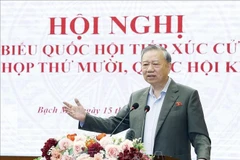
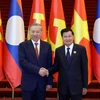
At the 13th meeting of the 13th Party Central Party Committee, General Secretary To Lam highlighted that the two-tier local administration model is working seamlessly, with public services continuously improving and prioritising people and businesses. The socio-economic and social results for the first nine months of 2025 showed growth across nearly all sectors, reflecting the success of organisational reforms, he noted, adding that the development space following the national master planning is fostering new competitive advantages, providing a foundation for rapid, sustainable development.
General Secretary Lam stressed that "revolutionary momentum comes not from words but from tangible results, from the meals of each family and actions for the people." He said that the role of central authorities is to transform policies into actions that directly impact people, ensuring the benefits of reforms are felt in every policy and initiative.
Efforts to further refine the two-tier local administration model are ongoing, alongside the continuous streamlining of the three-tier administrative system. The key focus of this significant scheme is digitalising processes, simplifying procedures, expanding decentralisation and delegation of power in parallel with ensuring accountability, measured by the satisfaction of people and businesses.
Necessary steps are being taken to finalise a plan for standardising and classifying administrative units and urban areas in a comprehensive and feasible manner, creating new development space at the grassroots level, making sure that the local administrations not only serves people but also becomes a source of innovation in national development.

(Photo: VNA)
To turn these objectives into concrete results, the Party chief emphasised the need for decisive, transparent, and consistent action based on "three key priorities, three forms of transparency, one measure." These transparency factors refer to publicising progress, accountability, and results for societal oversight, while the “one measure” being the standard of living and the trust of the people.
To implement the two-tier local administrative model, the Party Central Committee's Politburo and Secretariat have issued six important conclusions. In line with these directions, the Government and Prime Minister have issued various resolutions and official dispatches, tasking ministries and agencies to ensure coordinated implementation. To date, 42 out of 69 tasks have been completed, with the remaining 27 underway, many set to be reported to the Politburo in December 2025.
The Ministry of Home Affairs (MHA), as the lead agency in developing and operating the model, has advised on amendments to policies regarding salary, allowances, deputy positions, and personnel management. Alongside the Party Central Committee’s Commission for Organisation, it is finalising job position classifications to determine staffing levels until 2031. Standards for classifying administrative units and urban areas are being refined after the 12th meeting of the Party Central Committee.
The MHA is also developing a tool to assess performance and civil servant capabilities, while the Ministry of Finance is allocating resources for digitisation and investing in IT infrastructure for disadvantaged regions. The Ministry of Agriculture and Environment is reviewing land pricing frameworks after mergers to balance interests and facilitate land clearance.
At a recent press conference on the first Congress of the Government Party Organisation, Deputy Prime Minister Nguyen Hoa Binh affirmed that the Government has undergone a significant shift in mindset and administration methods. The decentralisation of powers, along with resource allocation, enables localities to take the initiative, innovate, and assume full responsibility for management and development. "From these new ways of thinking, we have created a streamlined, effective, and efficient system that is more connected to the people," he emphasised.

While progress is evident, the implementation of the two-tier local administration model has faced delays in some areas. Challenges include appointment authority in education, financial mechanisms, land-use fee exemptions for war veterans, and decentralisation in sectors like science, technology, agriculture, and the environment. The main obstacles are inconsistent institutional frameworks and ongoing adjustments are being made with the coordination of sectors.
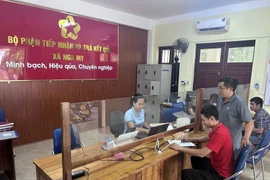
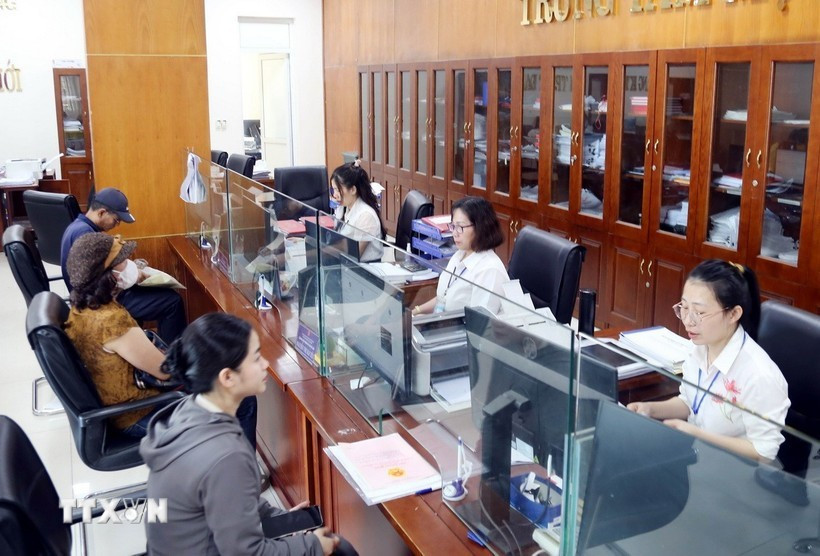
At the local level, after more than three months of operation, the two-tier local administration model is bringing fresh life to administrative reform and digital transformation, from Hanoi to Ca Mau. Over 3,100 public service centres at the commune level are functioning smoothly, implementing a modern "one-stop" model with online connection, reducing processing time, costs, and increasing public satisfaction.
In Tan Chau ward of the Mekong Delta province of An Giang, residents can scan a QR code on Zalo to take a number, book appointments, and track document statuses online. After three months, 97% of documents are processed online, with over 99% resolved on time. An Giang scored 84.76 points on the National Public Service Portal, earning a "good" rating and achieving nearly 99.5% public satisfaction.
In Hanoi, the administrative reform movement is gaining momentum. Dong Da ward has risen from 119th to the 3rd place among 126 communes and wards in just two months, earning recognition from the municipal People's Committee. O Cho Dua ward has pioneered in using an "AI Virtual Assistant" to help staff access legal information, rate cases, and assist residents with fast, accurate procedures.
In Minh Chau island commune of Hanoi, the local administration has brought technology to every household. All officials and public servants are provided with digital signatures, and an e-document system is in place, alongside an electronic health record system for all residents. The "digital literacy for all" movement is helping the elderly and farmers learn digital skills, use VNeID, etax Mobile, make cashless payments, and engage in online learning. Minh Chau has become a model for digital administration, digital economy, and digital society at the grassroots level.
It is clear that while the first three months were just the beginning, the two-tier local administration model has already shown its validity and effectiveness. When the innovative mindset spreads from the central level to every commune and ward, when the administrations are truly "close to the people," public trust is strengthened, and the vision for a modern, transparent, and service-oriented administration is becoming a reality./.