Vietnam advances strong commitments to protecting human rights in digital era

In Vietnam, this year’s World Human Rights Day (December 10) theme "Human Rights, Our Everyday Essentials" is translated into inclusive development policies aimed at ensuring security, well-being, and opportunities for the 100 million people.

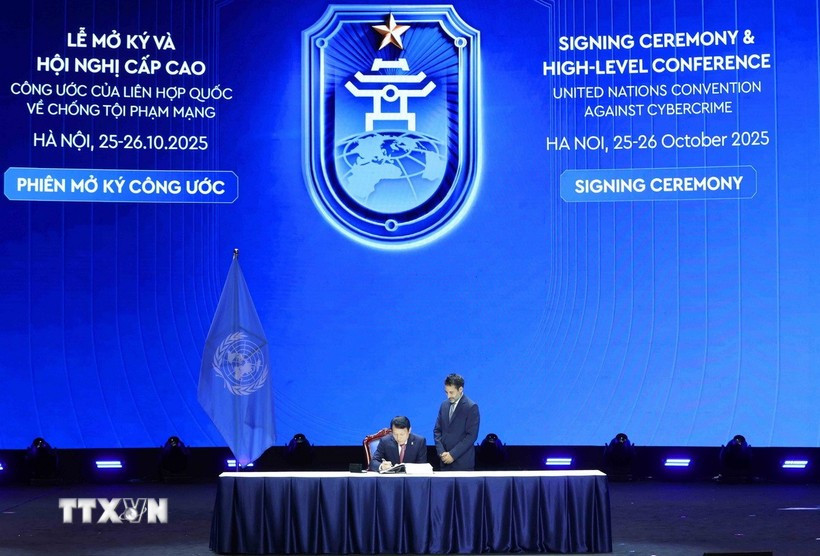
Minister of Public Security Luong Tam Quang signs the UN Convention against Cybercrime (Hanoi Convention). (Photo: VNA)

Hanoi (VNA) – The two recent milestones of Vietnam, the hosting of the signing ceremony of the UN Convention against Cybercrime (Hanoi Convention) and its re-election to the UN Human Rights Council with one of the highest vote counts, have affirmed the country’s commitment to safeguarding human dignity amid digital-era challenges.

Human rights as “the breath of life”

In Vietnam, this year’s World Human Rights Day (December 10) theme "Human Rights, Our Everyday Essentials" is translated into inclusive development policies aimed at ensuring security, well-being, and opportunities for the 100 million people.

Vietnam remains among countries with high human development. Its Human Development Index (HDI) reached 0.766 in 2023, ranking 93rd out of 193 countries and territories, with the HDI rising 53.5% over 1990–2023 thanks to advances in health care, education, and income.

Vietnam was the first Asian country to ratify the UN Convention on the Rights of the Child. After 35 years, the under-five mortality rate has dropped from 58‰ in 1990 to 16.9‰ in 2024. Such achievements underpin Vietnam’s foreign policy credibility and contributed to its election to the UN Human Rights Council for 2026–2028 with the highest vote in the Asia-Pacific group.

Deputy Foreign Minister Dang Hoang Giang said this result reflects the international community’s strong recognition of the Party and State’s correct policies on human rights.

Safety as core right in digital age

Human rights now extend to cyberspace, where 78.8% of Vietnamese use the Internet and over 95% engage on social media. Along with benefits, new legal and ethical challenges have emerged.

Assoc. Prof. Dr Tuong Duy Kien, Director of the Institute of Human Rights at the Ho Chi Minh National Academy of Politics, noted that digital technologies blur the boundary between public and private life.
nha-quyen-lhq1.jpg
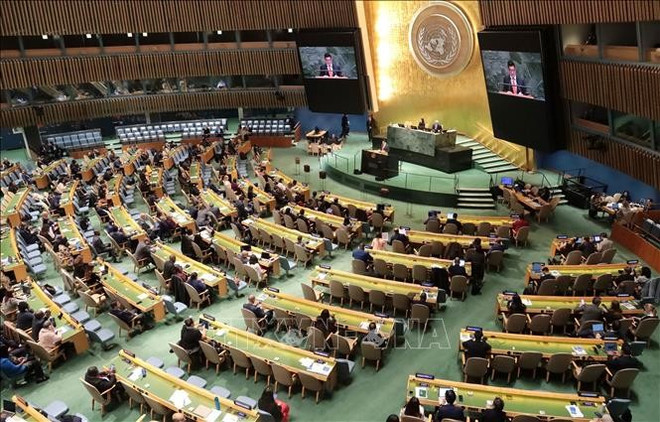
An overview of the election of members to the UN Human Rights Council for the 2026-2028 tenure. (Photo: VNA)

Personal data can be collected and analysed with “virtually no limits”, raising issues such as the constitutional status of the “right to Internet access”, the feasibility of the “right to be forgotten”, and what constitutes meaningful consent in data use. He emphasised that AI must “serve humans, not the reverse”.

Child online safety is a growing concern. In 2024, the Ministry of Public Security recorded 381 cases of online child exploitation, while the US’s National Centre for Missing & Exploited Children (NCMEC) reported a 1,325% surge in AI-generated child abuse content.

Facing that fact, Vietnam has strengthened its legal framework. On June 17, 2025, the Prime Minister issued Decision No. 1172/QD-TTg approving the plan to implement UPR Cycle IV recommendations, prioritising legal reforms on human rights and protection of vulnerable groups online. The “Not Alone” campaign, involving ministries, sectors, and cross-border platforms, has enhanced child online protection.

Internationally, Vietnam’s hosting of the signing ceremony for the Hanoi Convention – the first global UN treaty on cybercrime – is considered a historic milestone. Vietnamese President Luong Cuong affirmed that the ultimate goal of all efforts is to ensure technology serves life, development generates opportunities for all, and no one is left behind in the global digital transformation process.

As a Human Rights Council member for 2026–2028, Vietnam will promote eight priority areas, including human rights in climate change and digital transformation, a strategic direction aligning national interests with global progressive trends.

UN Assistant Secretary-General Kanni Wignaraja stressed that Vietnam’s most valuable asset is its people, adding that sustained investment in human development will drive future breakthroughs.

Protecting human rights in the digital age is a vital mission. From the Hanoi Convention to its Human Rights Council seat, Vietnam continues to affirm its commitment to peace, technological progress and the well-being of all citizens./.
VNA

See more

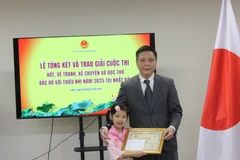
Nguyen Thanh Ha, Consul General of Vietnam in Western Australia and the Northern Territory presents Certificates of Commendation from the Consul General to students and volunteers in recognition of their outstanding contributions to the organisation of Xuan Que Huong (Homeland Spring) 2025. (Photo: VNA)

Vietnamese community in Australia united through youth engagement

Speaking at the ceremony, Nguyen Thanh Ha, Consul General of Vietnam in Western Australia and the Northern Territory, praised the dedication of young Vietnamese living in the region. She emphasised that the success of Xuan Que Huong was built not only on its colourful performances, but also on the strong sense of responsibility and tireless behind-the-scenes efforts of students and volunteers.

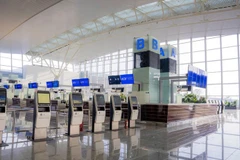
A full suite of automated technologies has been deployed across the Terminal T2 at Noi Bai International Airport, giving travellers greater control over their procedures from check-in to boarding. (Photo: VNA)

Noi Bai Airport to operate expanded int’l terminal with comprehensive automation

The upgrade follows directives from the Prime Minister and the Ministry of Construction and is designed to ease pressure on existing infrastructure by lifting the terminal’s annual capacity from 10 million to 15 million passengers. For the first time, a full suite of automated technologies has been deployed across the terminal, giving travellers greater control over their procedures from check-in to boarding.

Soldiers help flood-hit communities clean up in Hoa Thinh commune, Dak Lak province. (Photo: VNA)

Concerted efforts help disaster-hit communities rebuild lives

The “Quang Trung Campaign” to rapidly repair and rebuild houses for affected families in central provinces is seen as a catalyst for faster and more sustainable recovery, extending beyond housing restoration to reinforcing essential infrastructure, enhancing community resilience, and strengthening public trust in the Party and Government.

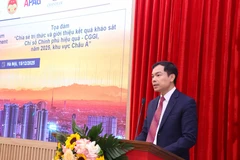
Associate Professor Dr Nguyen Manh Hung, Vice President of the Ho Chi Minh National Academy of Politics, addresses the dialogue in Hanoi on December 15. (Photo: VNA)

Vietnam among Asia’s leaders in governance capacity

Vietnam has climbed 12 places in the 2025 Chandler Good Government Index (CGGI) since 2021, rising from 60th to 48th globally. Over the past five years, the country has recorded progress in six out of seven CGGI pillars, making it one of Asia’s most notable governance reformers.

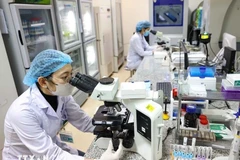
Scientific research activities at the National Hospital of Endocrinology. (Photo: VNA)

Vietnam sets roadmap for intellectual workforce to 2045

The strategy aims to build a high-quality Vietnamese intellectual workforce with a rational structure, identified as a core driving force for the rapid development of modern productive forces, as well as a leading force in digital transformation, innovation and international integration.

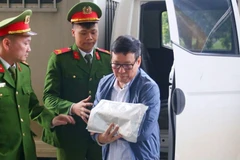
Le Duy Thanh, former Chairman of the Vinh Phuc People’s Committee, is escorted to the courtroom. (Photo: anninhthudo.vn)

Appeal trial opened for Phuc Son Group corruption case

According to the first-instance verdict, Nguyen Van Hau, Chairman and CEO of Phuc Son Group, exploited personal and professional connections to bribe over 132 billion VND (over 5 million USD) to leaders of the Party Committees, People’s Committees, and departments in Vinh Phuc and Quang Ngai, enabling Phuc Son Group to secure many contracts in these localities and Phu Tho province.

A performance at the year-end review programme in Sydney on December 14, co-organised by the Vietnam-Australia Scholars & Experts Association and Vietnam-Australia Cultural Exchange Organisation. (Photo: VNA)

Gathering honours knowledge, culture, community spirit of OVs in Australia

Addressing the gathering that drew more than 300 guests, Vietnamese Consul General in Sydney Nguyen Thanh Tung highlighted contributions of the Vietnamese community in Australia, particularly intellectuals and professionals, to the host society as well as cooperation between the two countries.

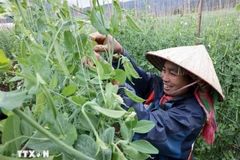
Agricultural production models help farmer access modern technology to improve output. (Photo: VNA)

Three national target programmes basically meet, exceed 2021-2025 goals

A report from the Central Steering Committee for National Target Programmes for the 2021–2025 period showed that poverty reduction in ethnic minority-inhabited areas averaged 3.2% per year. Per capita income among ethnic minorities is estimated to reach 45.9 million VND (1,760 USD) in 2025, a 3.3-fold increase from the 2020 level, well surpassing the goal of more than doubling.

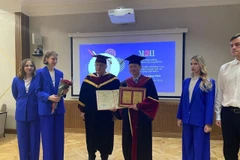
Professor Dr. Tran Hong Thai receives the honorary doctorate title and certificate from Professor Nikolay Rogalev of MPEI. (Photo published by VNA)

Vietnamese professor awarded honorary doctorate by Moscow institute

Professor Dr. Tran Hong Thai, Standing Vice President of the Vietnam Academy of Science and Technology (VAST) was granted an Honorary Doctorate by The Moscow Power Engineering Institute (MPEI) for his outstanding contributions to scientific development, education and international cooperation in the energy sector.

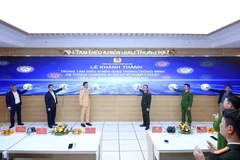
Delegates perform the inauguration protocol for the Hanoi smart traffic control centre in the capital on December 13. (Photo: VNA)

Hanoi officially launches smart traffic control centre

Equipped with 1,837 AI-powered cameras installed at 195 key intersections, the centre serves as the “brain” for real-time monitoring of traffic conditions and urban order. Through the system, police officers can observe traffic on major roads and junctions, promptly detect congestion, violations, accidents and incidents, and take timely response measures.