Vietnamese street vendors go cashless as QR payments surge 85%

What began in supermarkets has flooded into alleyways, noodle stalls, corner shops and late-night food carts. The disappearance of loose change and slow cash hand-offs is translating directly into higher turnover for micro-merchants.

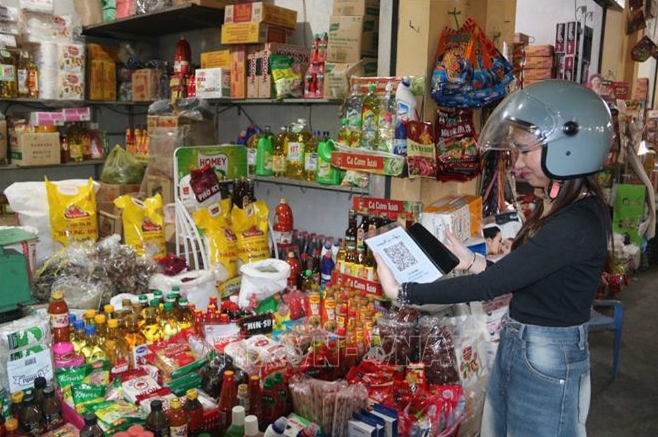
Scanning QR code for payment at a market in Hung Yen province. (Photo: VNA)

Hanoi (VNA) - On a weekend morning in Hanoi’s Tuong Mai ward, vegetable seller Hoa, a 15-year veteran of the wet market, now closes sales with a single beep. Customers scan the QR code taped to her stall, and the transaction is done in seconds - no cash, no change, no wait. For Hoa and millions like her, the shift has made trading faster and spending higher.

A single scan changes consumer behaviour

What began in supermarkets has flooded into alleyways, noodle stalls, corner shops and late-night food carts. The disappearance of loose change and slow cash hand-offs is translating directly into higher turnover for micro-merchants.

At the centre of the boom is VietQR, the QR payment infrastructure rolled out by the National Payment Corporation of Vietnam (NAPAS). VIETQRPay handles domestic transfers while VIETQRGlobal enables cross-border settlements, together creating near-frictionless payments from street level upward.

Digital payments also help firms widen their customer base beyond their physical location and fine-tune products and services using transaction data, said Nguyen Duc Le of the Ministry of Industry and Trade.

For tax authorities, the benefits are equally clear. Mai Son, Deputy Director of the Department of Taxation, noted that cashless payments reduce manual bookkeeping for small vendors and make it easier for them to track daily cash flows, thus boosting confidence and transparency in trade.

Real-time data flows also give regulators instant visibility into money movements, cutting tax evasion and flagging unusual transactions early.

Accelerating the digital economy

Le added that when goods, electronic invoices, tax obligations and traceable bank transfers align, market surveillance becomes transparent and consumers are better protected.

The barrier to entry is effectively zero: no POS machines, no complex contracts, just a printed QR code. With nearly 90 million mobile banking accounts now active, virtually any micro-business can join the digital grid overnight.

NAPAS reported that in the first 10 months of this year, VietQR transactions jumped 52% in volume and 85% in value year-on-year, becoming the “common payment language” for tens of millions of Vietnamese.

Its CEO Nguyen Quang Minh said NAPAS, partner banks and intermediaries are rapidly expanding VIETQRPay and VIETQRGlobal networks, deepening regional tie-ups to support inbound tourism and cross-border e-commerce while maintaining tight security standards.

Every beep at a market stall is now a building block. As cash fades into the background, Vietnam’s QR revolution is quietly a critical foundation for the country’s 2025-2030 digital economy push./.


VNA

See more

Vice Chairman of the Ho Chi Minh City People’s Committee Hoang Nguyen Dinh inspects IUU fishing prevention efforts at Hung Thai Port in Long Hai commune. (Photo: VNA)

Ho Chi Minh City steps up oversight of unqualified fishing vessels

HCM City currently has 4,475 fishing vessels, all of which have been registered and updated on the VNFishbase system. Among them, 4,268 vessels, or 95.37%, have been granted fishing licences, while 207 unqualified vessels are being strictly managed and kept ashore.

Airlangga Hartarto (fifth from right), Indonesian Coordinating Minister for Economic Affairs, and CEO of VinFast Asia Pham Sanh Chau (sixth from right) at the plant opening ceremony on December 15. (Photo: VinFast)

VinFast inaugurates EV plant in Indonesia

The VinFast Subang plant was completed and put into operation just 17 months after groundbreaking, demonstrating the company's rapid execution capability and strong implementation capacity. This is VinFast's fourth operational facility worldwide, and its first plant in Indonesia and Southeast Asia outside of Vietnam.

From early December, major retail chains in Ho Chi Minh City have recorded a noticeable increase in shoppers seeking Tet products. (Photo: VNA)

HCM City businesses ramp up production to meet Lunar New Year demand

From early December, major retail chains in the city have recorded a noticeable increase in shoppers seeking Tet products. Many consumers are taking advantage of promotional programmes to purchase gift items with long shelf lives, such as confectionery, soft drinks and processed foods, well ahead of the holiday peak.

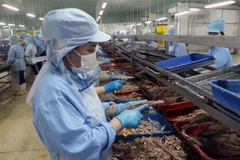
Workers process fish to be tinned for export at KTC Canned Food Factory under Kien Giang Trading JSC. (Photo: VNA)

Vietnam to host seminar on export growth strategies

Vietnam's exports rose 16.1% to 430.2 billion USD in the first 11 months of 2025, while total trade hit 839.8 billion USD during the same period. This strong performance shows that exports remain a key driver of economic growth, boosting Vietnam's standing on the world stage in recent years.

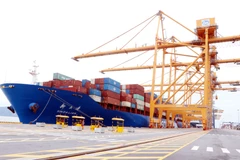
The vessel carrying the 2 millionth TEU arrives at Hai Phong Port. (Photo:VNA)

Hai Phong Port reaches 2-million-TEU milestone

Handling the 2 millionth TEU in 2025 not only demonstrates Hai Phong Port’s operational capacity and the collective efforts of its workforce, but also highlights its increasingly important role in regional and global supply chains, the confidence of shipping lines, logistics firms and the business community, and the effectiveness of policies to improve the investment climate and strengthen maritime infrastructure and services.

Melons labelled with traceability codes on display at the Song Van agricultural produce store in Ninh Binh city, Ninh Binh province. (Photo: VNA)

Tracing origins hindered by fragmented data systems

As the Government accelerates the digital economy, establishing a unified national traceability system has become a crucial move to end data fragmentation and disconnection among ministries, sectors and localities.

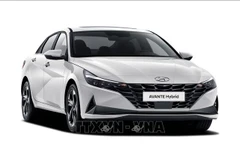
Hyundai unveils its new Avante Hybrid model in Seoul, the Republic of Korea, on August 13, 2020. (Photo: Yonhap/VNA)

Tax cuts poised to ignite Vietnam’s hybrid vehicle boom from 2026

Experts forecast that 2026-2030 will mark a period of strong growth for hybrid vehicles in Vietnam, a trend that will invigorate the automotive sector while supporting national objectives on emissions reduction, sustainable development and the broader transition to green mobility.

Illustrative image (Photo: VNA)

Vietnam targets 1 billion USD in banana exports

Bananas have been identified as a priority product under the Project for the Development of Key Fruit Crops to 2025, with a vision to 2030, approved in October 2022. Under the plan, banana acreage is projected to reach 165,000–175,000ha by 2030, with output of 2.6–3 million tonnes.