Vietnam's export orders rebound amid reciprocal tariffs

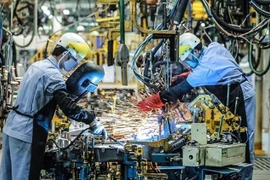
Among the seven countries surveyed by S&P Global in July, Vietnam led with a PMI of 52.4, well above the ASEAN average of 50.1. New export orders rose for the fourth straight month, reaching their fastest growth rate since November 2024.

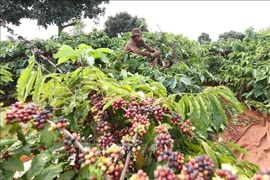
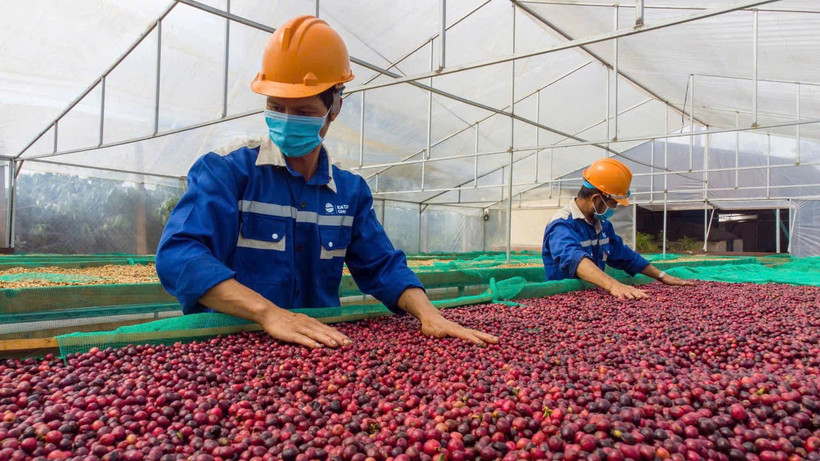
Staple agricultural exports such as pepper and coffee remain resilient, relatively insulated from the US tariffs. (Photo: thanhnien.vn)

Hanoi (VNA) – Vietnam’s manufacturing sector is showing renewed momentum, with the Purchasing Managers’ Index (PMI) rising above the 50-point threshold for the first time in four months, according to S&P Global’s July report.

The report also revealed notable gains in new export orders, underscoring a broader recovery trend.

Exports stay on the rise despite tariff pressures

Among the seven countries surveyed by S&P Global in July, Vietnam led with a PMI of 52.4, well above the ASEAN average of 50.1. New export orders rose for the fourth straight month, reaching their fastest growth rate since November 2024.

This positive and surprising sign comes amid continued concerns over the reciprocal tariffs from the US – a key export market.

Pham Sy Hoai, Vice President and General Secretary of the Vietnam Timber and Forest Product Association (VIFORES), noted that despite heavy impacts of the US reciprocal tariffs and trade defence measures, timber and wood product exports hit 9.6 billion USD by the end of July — up 7.9% year-on-year.

The sector is projected to earn over 7 billion USD in the final five months of 2025, bringing the year’s total to around 17 billion USD, he said.

Staple agricultural exports such as pepper and coffee remain resilient, relatively insulated from the US tariffs. Phan Minh Thong, Chairman of Phuc Sinh Group, highlighted that these goods continue to perform well, supported by strong global demand and rising prices.

Phuc Sinh’s export turnover reached 305 million USD in the first ten months of the 2024–2025 financial year (ending in September 30, 2025), marking a year-on-year increase of nearly 25%. Pepper prices tripled while coffee prices doubled, significantly boosting revenue.

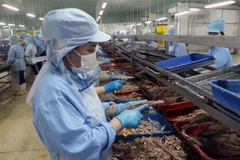
Vietnam’s aquatic exports reached 6.22 billion USD in the first seven months of 2025 — a 17.2% increase from the same period last year, according to the Vietnam Association of Seafood Exporters and Producers (VASEP). Exports to the US rose 10.4%, while those to China soared 42.6% to 1.33 billion USD.

China’s renewed large-scale imports, particularly of shrimp and squid, have opened major opportunities, especially ahead of the US tariff imposition in August. Vietnamese firms have responded with aggressive market diversification, strategic use of multilateral free trade agreements, and agile supply chain adjustments.

Boosting US imports to balance trade

In response to US trade actions, Vietnamese timber firms have stepped up imports of American round and sawn timber. In 2024, Vietnam purchased 320 million USD in US wood materials. During the first seven months of this year, imports already reached 321 million USD, surpassing the previous year’s total.

This shows Vietnam’s goodwill in narrowing the trade surplus and supporting American timber producers, said Hoai. If export conditions remain stable, imports from the US are expected to keep rising through year-end, he held.

He added that Vietnamese furniture exporters remain hopeful for a fair and suitable tariff framework that avoids market disruption and protects American consumer access to Vietnamese products.

The textile and garment industry has also diversified its raw material sources. In the first five months of 2025, Vietnam imported nearly 950,000 tonnes of cotton worth over 1.6 billion USD, up 27% in volume and 8% in value from the same period in 2024. The US remained Vietnam’s top supplier, accounting for 48% of total imports. Imports from the US reached 455,000 tonnes worth 800 million USD, shooting up 116% in volume and 79% in value. Vietnam is now the third-largest importer of US cotton, after China and Pakistan.

Vietnam’s coffee exports to the US remain modest as the EU is the primary market. Meanwhile, the country dominates global pepper shipments, with about 50% of global market share. It also imports pepper from Indonesia for re-export, reinforcing its critical role in global supply chains.

While the US imposed 20% tariffs on Vietnamese products — similar to Indonesia’s rate and well below Brazil’s 50%, exporters are optimistic.

Pepper and coffee are essentials, and even at higher prices, demand remains strong, said Thong. He noted that a decade ago, a cup of coffee costed 1 USD. Today, it’s even 14 or 15 USD in some places, and people still drink it.

He added that Vietnam’s agricultural exports face minimal direct competition from US producers, reducing the likelihood of trade defence measures such as anti-dumping investigations./.

VNA
See more

Local residents and visitors tour and shop at a fair. (Photo: VNA)

Made in Vietnam Fair set to open in Hanoi

The Made in Vietnam Fair will showcase a wide range of products, including industrial and consumer goods, processed foods, agricultural produce and handicrafts, with the participation of distribution systems, e-commerce platforms, digital platforms and digital financial solution providers operating in Vietnam.

2025 a good year for Vietnam’s securities sector: SSC

2025 a good year for Vietnam’s securities sector: SSC

During the year, the SSC made significant progress in improving the legal and policy framework. Institutional work was implemented in a coordinated manner, including the issuance of two decrees, one resolution, seven circulars and three major schemes. At the same time, the regulator strengthened policy dialogue and expanded cooperation with international organisations to support the market upgrade process.

Vietnam shows strong FDI performance in the first 11 months of 2025 (Source: vtv.vn)

Vietnam shifting FDI attraction focus from volume to quality

As production relocation to Southeast Asia accelerates and competition for FDI intensifies, Vietnam faces increasing pressure from regional rivals such as India, Malaysia and Indonesia, which are offering bold tax incentives and developing specialised industrial parks. This reality requires Vietnam to shift its focus from attracting large volumes of capital to drawing high-quality investment, prioritising core technologies, innovation, value chain linkages and higher localisation rates.

Vice Chairman of the Ho Chi Minh City People’s Committee Hoang Nguyen Dinh inspects IUU fishing prevention efforts at Hung Thai Port in Long Hai commune. (Photo: VNA)

Ho Chi Minh City steps up oversight of unqualified fishing vessels

HCM City currently has 4,475 fishing vessels, all of which have been registered and updated on the VNFishbase system. Among them, 4,268 vessels, or 95.37%, have been granted fishing licences, while 207 unqualified vessels are being strictly managed and kept ashore.

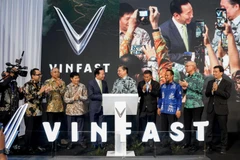
Airlangga Hartarto (fifth from right), Indonesian Coordinating Minister for Economic Affairs, and CEO of VinFast Asia Pham Sanh Chau (sixth from right) at the plant opening ceremony on December 15. (Photo: VinFast)

VinFast inaugurates EV plant in Indonesia

The VinFast Subang plant was completed and put into operation just 17 months after groundbreaking, demonstrating the company's rapid execution capability and strong implementation capacity. This is VinFast's fourth operational facility worldwide, and its first plant in Indonesia and Southeast Asia outside of Vietnam.

From early December, major retail chains in Ho Chi Minh City have recorded a noticeable increase in shoppers seeking Tet products. (Photo: VNA)

HCM City businesses ramp up production to meet Lunar New Year demand

From early December, major retail chains in the city have recorded a noticeable increase in shoppers seeking Tet products. Many consumers are taking advantage of promotional programmes to purchase gift items with long shelf lives, such as confectionery, soft drinks and processed foods, well ahead of the holiday peak.

Workers process fish to be tinned for export at KTC Canned Food Factory under Kien Giang Trading JSC. (Photo: VNA)

Vietnam to host seminar on export growth strategies

Vietnam's exports rose 16.1% to 430.2 billion USD in the first 11 months of 2025, while total trade hit 839.8 billion USD during the same period. This strong performance shows that exports remain a key driver of economic growth, boosting Vietnam's standing on the world stage in recent years.

The vessel carrying the 2 millionth TEU arrives at Hai Phong Port. (Photo:VNA)

Hai Phong Port reaches 2-million-TEU milestone

Handling the 2 millionth TEU in 2025 not only demonstrates Hai Phong Port’s operational capacity and the collective efforts of its workforce, but also highlights its increasingly important role in regional and global supply chains, the confidence of shipping lines, logistics firms and the business community, and the effectiveness of policies to improve the investment climate and strengthen maritime infrastructure and services.

Melons labelled with traceability codes on display at the Song Van agricultural produce store in Ninh Binh city, Ninh Binh province. (Photo: VNA)

Tracing origins hindered by fragmented data systems

As the Government accelerates the digital economy, establishing a unified national traceability system has become a crucial move to end data fragmentation and disconnection among ministries, sectors and localities.