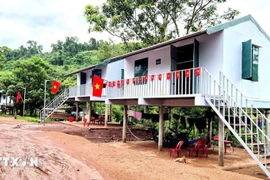
Hanoi (VNA) - Joining hands to eliminate temporary and sub-standard houses nationwide in 2025 is a special political mission and a major policy of the Party and State, carrying deep humanitarian significance, marking a step forward to usher the country into a new era.
With 334,234 houses newly built or repaired and upgraded, Vietnam achieved the target five years and four months ahead of Resolution 42-NQ/TW dated November 24, 2023 by the 13th Party Central Committee, and four months earlier than the deadline set by the national emulation movement. This accomplishment is considered a milestone in sustainable poverty reduction — a “special national project” embodying the Party’s will and people’s hearts, as well as the spirit of solidarity and compassion among compatriots, carrying profound political, social, and humanitarian significance.
Vital political mission with profound humanitarian value
For many years, the Party and State have remained steadfast in pursuing national development alongside social security, never sacrificing social progress and justice for mere economic growth. Ensuring social welfare — especially for vulnerable groups, the poor, and those who rendered service to the revolution — has always been a priority.
On November 24, 2023, the Party Central Committee issued Resolution No. 42-NQ/TW on renewing and improving social policies, setting the goal of completely eliminating temporary and dilapidated houses for poor and near-poor households, as well as those affected by natural disasters and climate change, by 2030.
Drawing on the experience of the Ministry of Public Security, the Ministry of National Defence, the Vietnam Fatherland Front (VFF), mass organisations, and several localities, Prime Minister Pham Minh Chinh, Chairman of the Central Emulation and Commendation Council, launched a national emulation movement in late 2023 to remove makeshift houses during 2024–2025.
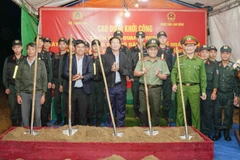
On October 5, 2024, PM Chinh launched a 450-day campaign to complete this goal nationwide before October 31, 2025. By closely following realities, the Central Steering Committee for the Eradication of Temporary and Dilapidated Houses decided to shorten the timeline, striving to complete the task ahead of August 31, 2025 — in time to celebrate the 80th anniversary of the August Revolution and National Day (September 2).
The movement has received strong support from the Party, the entire political system, the armed forces, the people, as well as businesses and organisations. Localities have actively implemented programmes and projects to support housing, especially for policy beneficiary families, poor households, and ethnic minorities.
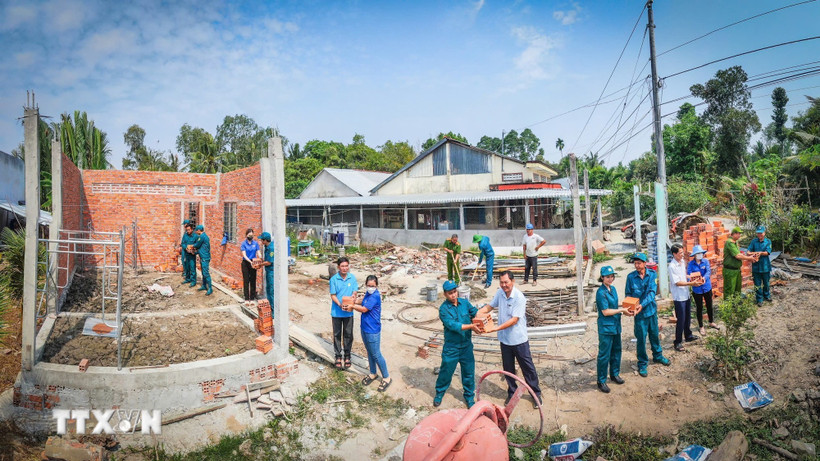
In addition to resources from the State budget, the programme has drawn significant contributions from social organisations, enterprises, and philanthropists. Many creative models have emerged, such as businesses providing construction materials, local residents contributing working days, and mass organisations mobilising funds through community campaigns.
More than just a social welfare policy, the programme is a lesson in solidarity — the joint effort of the State and the people, rooted in compassion and mutual support. It lays the “foundation” for a better future where no one is left behind, and every citizen has the right to live in a safe, warm, and hopeful home.
Swift removal of 334,234 temporary and dilapidated houses – a milestone in sustainable poverty reduction
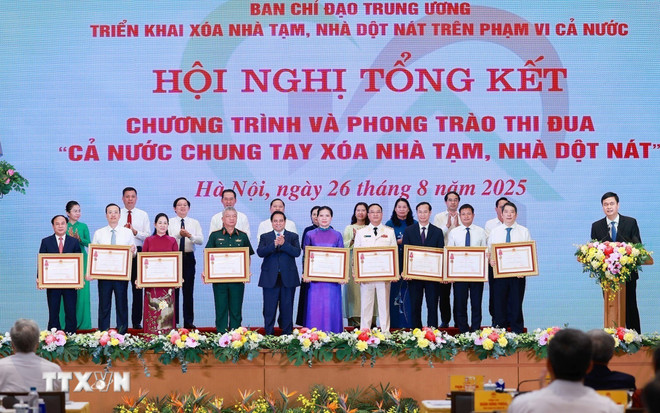
Thanks to the close guidance of Party, State, and Government leaders, especially Party General Secretary To Lam and Prime Minister Pham Minh Chinh, along with the creative approaches of Party committees and local authorities, and the active involvement of the entire political system, Vietnam has essentially completed the goal of eliminating temporary and makeshift houses nationwide.
After just one year, four months, and 13 days since the movement was launched, and 10 months and 21 days of the 450-day peak campaign, with many models and good practices being implemented, Vietnam has finished the programme five years and four months ahead of the target set in Resolution 42, with a total of 334,234 houses constructed or repaired, with an overall budget of nearly 50 trillion VND (over 1.89 billion USD).
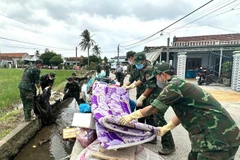
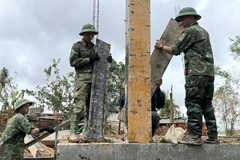
Several ministries and agencies have made major contributions to the programme. The Ministry of National Defence provided nearly 1 trillion VND, mobilising 140,983 officers, soldiers, and militia with 414,526 workdays and 62,916 vehicles. The Ministry of Public Security contributed over 790 billion VND, engaged more than 27,400 officers with 534,000 workdays, and supplied construction materials. The banking sector donated about 1.81 trillion VND. The VFF Central Committee raised over 125.88 billion VND through the “For the Poor” Fund, while the Ho Chi Minh Communist Youth Union’s chapters nationwide contributed 485,715 workdays.
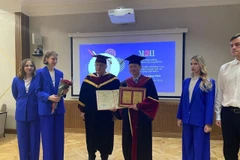
The programme and emulation movement have highlighted many outstanding collectives and individuals. The Ministry of National Defence, the Ministry of Public Security, the banking sector, the VFF, along with numerous provinces and cities, made significant and responsible contributions. The National Emulation and Commendation Council’s Standing Board has submitted proposals for the Party and State to award medals and certificates of merit to those with exceptional achievements.
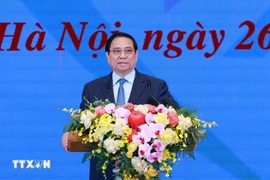
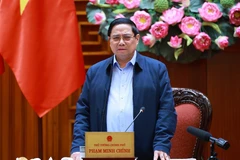
Presiding a national conference in Hanoi on August 26, PM Chinh praised the efforts by all sectors, Party committees, local authorities, business community, people, and armed forces to complete the work. He called for a thorough review to finalise social assistance schemes for households unable to escape poverty while expanding credit programmes to support impoverished rural families in upgrading their houses. He also stressed the need to ensure safe houses for those living in areas vulnerable to natural disasters and climate change.
Describing the nationwide campaign to do away with temporary and dilapidated houses as a special national project embodying the Party’s will and people’s hearts, PM Chinh said this is a Vietnamese “miracle” in sustainable poverty reduction, reinforcing the foundation for the nation’s development approach based on equity, social progress, and sustainability in the new era.
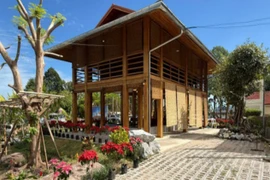
Each house is a living testament — a “gift,” a “home,” an “act of love” — reflecting care for the disadvantaged, gratitude to those who served, and the Party’s policies in action. The programme nurtures compassion, inspires pride, strengthens trust in Party leadership, fosters great national unity, and contributes to development, social security, and national defence.
Creating jobs and livelihoods, helping people build secure life
Vietnam has basically eliminated temporary and dilapidated houses, but this is only a first step. The core task is to spur production, create jobs and livelihoods, and steadily improve people’s material and spiritual well-being, guiding them toward prosperity.
To build on achievements and improve social welfare, PM Chinh urged the Central Steering Committee for the Eradication of Temporary and Dilapidated Houses, the VFF, and relevant sectors and localities to treat housing support for revolution contributors, poor and near-poor households, and communities in disaster-prone areas as a long-term, regular task. He stressed the need for continued assistance to help households secure stable livelihoods, aiming to eliminate poverty nationwide by 2030, in line with Directive No. 05-CT/TW of the Party Central Committee's Secretariat.
The Ministry of Finance, in coordination with other ministries and localities, will implement the Party’s policy of using the state budget as the primary resource for social security while mobilising additional social resources, particularly for vocational training, and creating jobs and livelihoods for the poor and ethnic minorities.
The VFF and socio-political organisations are called on to work more closely with the Government in ensuring social welfare, while also overseeing and providing feedback on policy formulation and implementation.
The Ministry of National Defence and the Ministry of Public Security are tasked with directing the armed forces to uphold their revolutionary tradition and close ties with the people — serving both as the core force safeguarding sovereignty and security, and as a strong pillar for socio-economic development and social welfare, especially in border, island, and remote areas./.