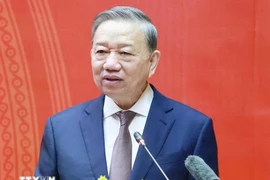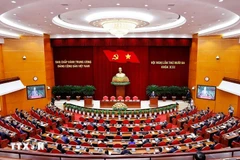
Hanoi (VNA) - The Politburo issued Resolution No. 59-NQ/TW dated January 24, 2025, on international integration in the new context, ushering in a new stage in Vietnam’s comprehensive integration process. Party General Secretary To Lam emphasised that the Resolution reflects the spirit and power of the times and elevates international integration with visionary, revolutionary, scientific, and forward-looking perspectives.
The Resolution aims to improve the quality, effectiveness, consistency, and depth of international integration; maintain a peaceful and stable environment; maximise external resources and favourable conditions to build an independent, self-reliant economy; strengthen national strength and elevate Vietnam’s role, position and prestige; and strive for the country to become a developed, socialist-oriented nation with high income by the mid-21st century.
Resolution 59 marks a historic turning point in Vietnam’s international integration process, identifying integration as a strategic motivation for the nation to confidently enter a new era.
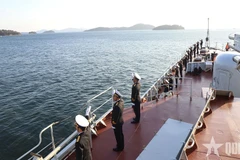
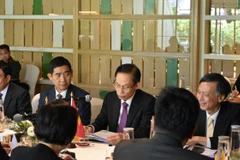
Since 1986, Vietnam has made impressive strides in its international integration process. The country has to date established diplomatic relations with 194 countries, and set up strategic and comprehensive partnerships with 34 nations. It is now a member of over 70 regional and international organisations, and joined numerous global economic cooperation agreements and frameworks, including 17 free trade agreements (FTAs). Since 2019, Vietnam has ranked among 20 countries with the largest trade scale in the world; and 20 economies attracting the most foreign investment worldwide.
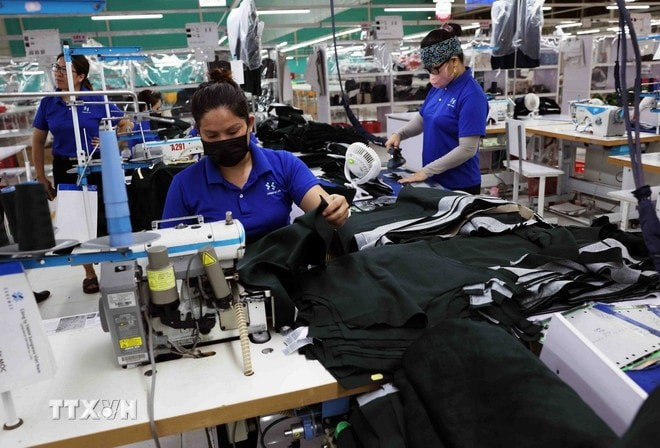
However, the Party leader acknowledged that, from an overall, serious, and objective perspective, the outcomes of international integration have not fully met expectations or the set goals, and have yet to satisfy development requirements, especially as many shortcomings, limitations, and bottlenecks have continued to hinder progress.
International integration has offered numerous opportunities but also brought challenges, such as unfair competition, unsustainable growth, widening income gaps, environmental pollution, risks of “ideological deviation”, “cultural infiltration”, internal "self-evolution" and "self-transformation," and “erosion of trust”.
To avoid losing direction in the process of international integration, it is essential to recognise that internal strength plays a decisive role. Strengthening domestic capacity must go hand in hand with leveraging external resources. Internal strength is the foundation and core driver of national power.
Resolution 59 highlights that one of the key solutions for integration in the new context is to improve the effectiveness of international economic integration to build an independent, self-reliant, and resilient economy; accelerate economic restructuring; renovate the growth model; and promote digital transformation.
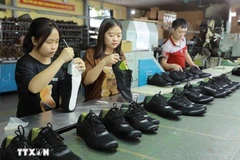
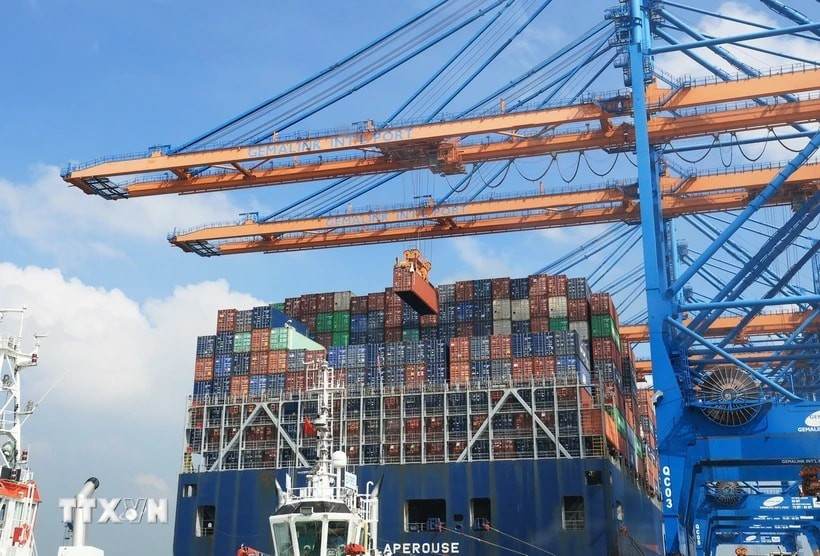
The internal strength is the root of Vietnam’s power, but the country’s current internal capacity is not yet truly solid. The majority of Vietnam’s export value is still generated by foreign direct investment (FDI) enterprises, leading to high output but limited value added to the national economy. Vietnam lacks many key economic sectors and enterprises capable of expanding and competing in regional and global markets.
In international integration, only nations with strong internal capacity can compete with powerful economies. If Vietnam does not properly prepare its production foundation, integration will not produce the expected results.
The internal strength not only includes capital, land, and human resources but also science - technology, innovation, and creativity.
Therefore, Resolution 59 is closely linked to Resolution No. 57-NQ/TW dated December 22, 2024 by the Politburo, which emphasises that the development of science, technology, innovation, and national digital transformation is a top strategic breakthrough and the main driving force for rapidly advancing modern productive forces, improving productive relations, renewing national governance, promoting socio-economic development, preventing the risk of falling behind, and propelling the country toward breakthrough and prosperous development in the new era.
Under the Resolution, elevating international integration is closely linked to strengthening Vietnam’s internal capacity and upholding its policy of independence and self-reliance. The internal strength, independence, and self-reliance form the foundation and prerequisite for proactive and effective international integration.
Broadly understood, the internal strength reflects a nation's sovereignty and autonomy in choosing its own development path and model. It encompasses political, economic, cultural, defence, security, and diplomatic independence. Without solid internal capacity and true independence, proactive and meaningful international integration is not possible.
Conversely, international integration enhances the country’s ability to safeguard national independence and self-reliance. Without integration and if Vietnam is still isolated or subject to embargo, the country will not have achieved its current status as one of the world’s 34 largest economies. From a starting point of just 22 billion USD in combined GDP in 1975, Vietnam’s economy has grown nearly 100-fold since 1986, with per capita income rising to nearly 5,000 USD per year from only less than 100 USD.
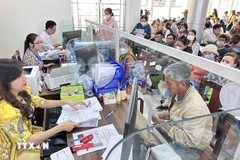
In the economic sphere, Vietnam has elevated its level of international economic integration while simultaneously strengthening internal capacity, focusing on developing economic institutions in line with global integration, based on the principles of independence and self-reliance; maintaining a socialist orientation within the market economy; and ensuring that the national economy does not rely overly on external resources. The core principle is to place national interests above all else in the process of international integration.
Vietnam sets to further step up its international integration by “keeping pace with the world, identifying and tapping opportunities to position the country in the flow of the times over the next 10 to 20 years.” Failing to do so and integrating passively, it would inevitably lead to the risk of falling behind.
In his article titled "Rising up in international integration," the Party chief stressed: “In the interdependent world today, the development of each nation cannot be isolated or immune to the influences of the world and the era, or the prevailing circumstances."
The nation is facing a great opportunity to rise up, but it is also confronting immense challenges. The integration achievements so far have contributed to building the strength and momentum for the next breakthroughs. Building on this spirit, Resolution 59 marks a significant shift in the Party's mindset and orientation for international integration in the upcoming period, creating motivation to propel the country toward the glorious stage of independence, freedom, happiness, prosperity, and lasting success”./.