Hanoi (VNA) – During his lifetime, President Ho Chi Minh consistently affirmed that apart from the interests of the nation, the class, and the people, the Party has no other interests – all benefits must serve the people. More than half a century has passed since the beloved leader passed away, yet his teachings remain profoundly relevant, serving as a lodestar for the Party in every policy and decision.
Today, as the nation is entering a new era – that of its rise, his principle of “placing the public interest above all else” is reflected in every policy and decision, aiming toward the ultimate goal of serving the Fatherland and the people, and continuously improving their material and spiritual well-being.
Streamlining political apparatus – building people-centred public administration
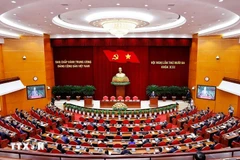
Throughout its leadership of Vietnam’s revolution, the Party has consistently viewed building a strong, lean, efficient, and effective state apparatus as a key task, essential for meeting the requirements of modern national governance, strengthening leadership capacity and combat strength, maximising national resources, and ultimately serving the people and advancing sustainable development.
This viewpoint has been institutionalised through many resolutions such as Resolution No. 17-NQ/TW (2007) on promoting administrative reform and improving the state apparatus's management effectiveness and efficiency; Resolution No. 39-NQ/TW (2015) on downsizing the state payroll and restructuring the contingent of officials, civil servants, and public employees; and most notably, Resolution No. 18-NQ/TW (2017) on the continued reform and reorganisation of the political system's apparatus for greater efficiency.
However, in practice, the state apparatus remains bulky, with excessive intermediary layers and unnecessary administrative units. Its performance has yet to meet effectiveness and efficiency requirements. Overlapping functions, unclear mandates, and poorly defined inter-agency relationships continue to hinder coordination and reduce overall efficiency. Notably, regular expenditure on the administrative system accounts for nearly 70% of the total state budget spending, far higher than the 48–50% level seen in countries with advanced public administration. This imbalance leaves insufficient resources for development investment, posing risks of stagnation and falling into the middle-income trap, weakening national competitiveness, and threatening Vietnam’s goal of becoming an upper-middle-income country by 2030 and a high-income nation by 2045.
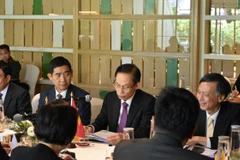
Party General Secretary To Lam has repeatedly emphasised that “streamlining the political system's apparatus is a highly urgent and imperative task—one that must be carried out without delay. The sooner it is done, the greater the benefit for both the people and the country.”
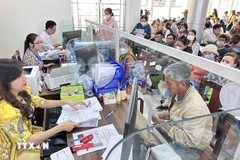
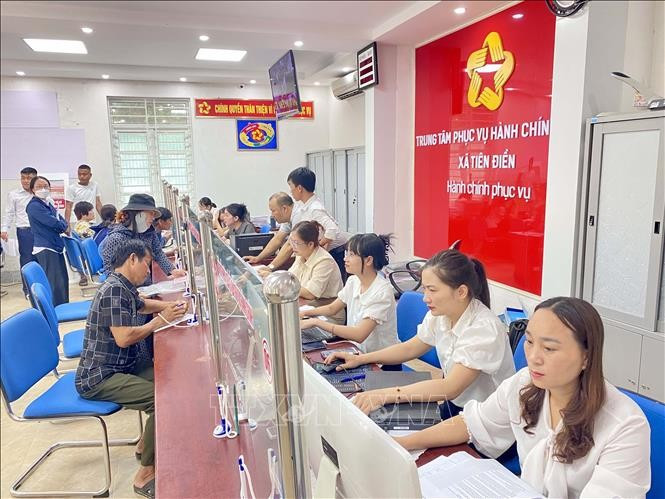
Just one month after the two-tier local administration model was launched on July 1, 2025, grassroots-level authorities in provinces and cities are operating smoothly, ensuring efficient public service delivery. The public has responded positively, expressing satisfaction with the improvements brought about by the new local government model.
Ta Ngoc Vinh, a resident of Nghia Giang commune in the central province of Quang Ngai, said: "I came to request a certificate of marital status for my mother. The new administrative office is bright and welcoming, and the staff are courteous, attentive, and helpful. The entire process, from receiving information to completion, is quick and efficient."
Practical and people-centred policies, decisions
A key outcome of the apparatus streamlining revolution came on February 28, 2025, when the Politburo, after reviewing the Government’s report on financial balance following the reform, decided to waive all tuition fees for students from kindergarten to high school levels in the public school system nationwide, starting from the 2025–2026 academic year.
Under the policy, all students enrolling in public preschools and schools of general education will be fully exempt from tuition fees, while those attending private and semi-public schools will receive partial support. This is not merely an education policy, but a deeply humanistic social welfare initiative that reflects the consistent principle of putting the people first and prioritising their well-being above all else.
Statistics from the Ministry of Education and Training show that there are around 23.2 million students nationwide, including 21.5 million studying in public schools and 1.7 million in non-public institutions, with millions of them coming from poor and near-poor households. This highlights the ongoing burden of educational costs on millions of families, especially those from low-income households, remote or mountainous areas, and ethnic minority groups, posing a real risk of children being forced to drop out of school due to financial hardship.
Tran Thuy Duong, a mother of three in Ha Dong ward of Hanoi, held that this policy gives people a sense that their needs are being heard and addressed.
This people-centred policy marks an important step forward in Vietnam’s education strategy. Building on past reforms, it ensures equal access to learning opportunities and helps develop high-quality human resources for the nation. Moreover, it demonstrates the country’s aspiration to build a lifelong learning society to reach the goal of a rich people and a powerful, democratic, equal, and civilised nation. It also reaffirms the superiority of the socialist regime, where every policy is designed to serve the people's practical demands and happiness.
During his visit to the central province of Nghe An on May 25, Party General Secretary To Lam said: “President Ho Chi Minh, during his lifetime, placed special importance on education and training for the young generation — the future successors of the revolutionary cause. The Party and State always regard education and training as a top national priority and a key task for breakthrough development, particularly in building a high-quality workforce”. His remarks emphasise the strategic significance of education and the deeply humanistic nature of the tuition exemption and support policy, for the sake of the people.
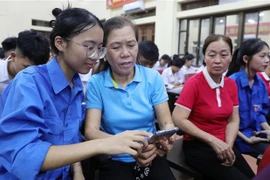
Vietnam has launched a “mass digital education” movement, a new educational revolution aimed at universalising digital knowledge and skills for all, from children to the elderly, thus eliminating digital illiteracy and ensuring that no one is left behind in the Fourth Industrial Revolution.
Much like the mass education movement in 1945 that helped eradicate illiteracy nationwide, the “digital mass education” movement continues to serve the people’s interests, empowering every citizen with access to knowledge and technology and enabling them to become self-reliant, improve their income and quality of life, and contribute to a prosperous and happy nation.
Eliminating substandard houses — leaving no one behind
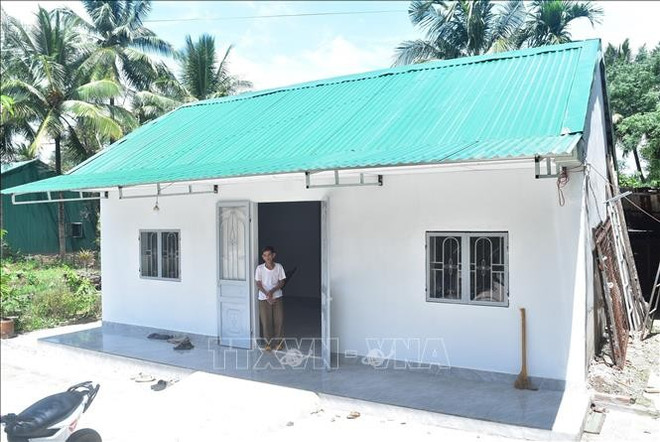
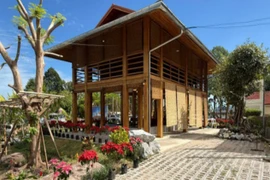
A new house built for the family of a revolution contributor in Dak Lak province. The campaign to eliminate makeshift and dilapidated housing is a historic political initiative that embodies the genuine and people-oriented revolutionary spirit of the Party. (Illustrative photo: VNA)
The campaign to eliminate makeshift and dilapidated housing is a historic political initiative that embodies the genuine and people-oriented revolutionary spirit of the Party. It demonstrates a commitment not only to macro national development priorities, but also to the living conditions of every citizen, especially the disadvantaged, poor and near-poor households, policy beneficiary families, and revolution contributors.
General Secretary To Lam reaffirmed the Party’s consistent principle: “The people must be placed at the heart of all policies, ensuring that no one is left behind on the path of development”. Guided by this vision, the national movement “Joining hands to eliminate makeshift and dilapidated houses” was launched, not only to guarantee the basic human right to safe shelter, but also as a vivid expression of gratitude to those who have served the nation, and a powerful symbol of human compassion and great national solidarity.
The Ministry of Ethnic and Religious Affairs reported that as of July 19, 2025, a total of 266,511 makeshift and dilapidated houses had been replaced with proper ones nationwide, including 231,513 completed and 34,998 under construction. The Government set a target to complete the campaign by October 31, 2025.
Luong Thi Noi, a poor resident in the northern province of Thai Nguyen, recently received a new house under the movement. She said she hadn’t been able to sleep for days out of sheer joy, as after so many years living in a leaky and rundown house, her family finally has a warm home built with the heartfelt support of the community.
Each newly built and solid home not only shields families from the weather elements but also ignites hope and strengthens the spirit of self-reliance among tens of thousands of disadvantaged people. It empowers them to rise out of poverty sustainably, build stable lives, and contribute to the realisation of a humanistic, inclusive, and developed society where no one is left behind.
Looking back at several major policies and decisions of the Party over the recent past, from streamlining the political apparatus, waiving tuition fees, launching the “digital mass education” campaign, to eliminating substandard houses, it is clear that the Party holds no interests other than those for the nation and its people. Every guideline and policy stems from the highest goal of serving the people and improving their material and spiritual well-being. This is the source of strength that fosters the unwavering trust and deep affection that the people place in the Party. The people firmly believe that the Party continues to lead the nation confidently into a new era, fulfilling the aspiration of building a strong and prosperous Vietnam that stands proudly alongside the world’s great powers, as envisioned by President Ho Chi Minh./.