📝OP-ED: Vietnam’s bold resolution on education – a breakthrough to propel nation into new era

The Politburo’s Resolution No.71-NQ/TW on breakthrough development in education and training forms a strategic tripod for rapid and sustainable growth alongside Resolutions No.57-NQ/TW and No.59-NQ/TW on breakthrough development in science – technology, innovation and national digital transformation, and international integration in the new situation.

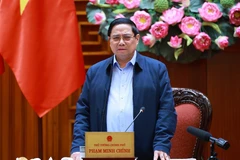
The Politburo’s Resolution No.71-NQ/TW is expected to create breakthrough for education and training. (Photo: VNA)

Hanoi (VNA) – The Politburo’s Resolution No.71-NQ/TW on breakthrough development in education and training forms a strategic tripod for rapid and sustainable growth alongside Resolutions No.57-NQ/TW and No.59-NQ/TW on breakthrough development in science – technology, innovation and national digital transformation, and international integration in the new situation.

Tripod strategy for a new era

Resolution No.71 was signed by Party General Secretary To Lam on August 22, following Resolutions No.57 and 59. All three documents share the spirit of “breakthrough” and require innovation in mindset. Resolution No.59 marks a historic turning in the nation’s international integration, identifying this as a strategic driver for the nation’s new era. Meanwhile, Resolution No.57 stresses the need to innovate law-making mindset to ensure management requirements and encourage innovation. Resolution No.71 highlights the significance of breakthroughs in resources, motives, and new space for education and training development, with the State playing a key role and public investment leading and attracting social resources for the modernisation of the education system.

Regarding "immediate actions needed" for international integration in the new phase, Party General Secretary To Lam demanded that new thinking and actions in international integration must be integrated into daily life. Accordingly, the awareness of harmonious, comprehensive, deep, and effective international integration is a major strategic orientation of the Party.
tuyen-sinh-lop-10.jpg
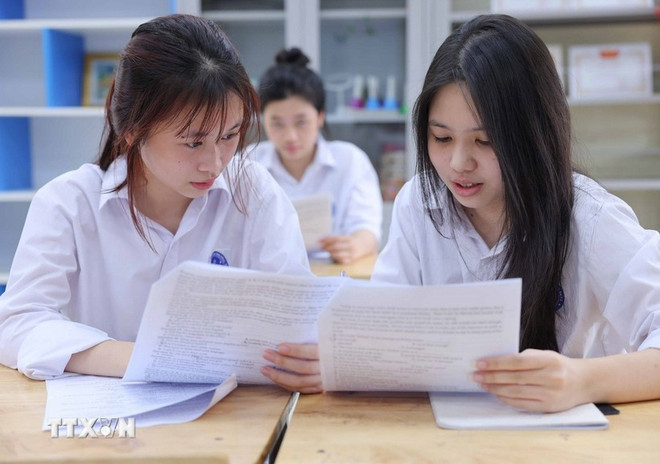
Resolution No.71 sets targets of building a modern, equal, and quality education system. (Photo: VNA)

The specific objectives set by the Party leader in Resolutions No.57 and No.71 are closely interconnected, maintaining a mutually supportive relationship with Resolution 59's goals.

Resolution No.57 envisions Vietnam as a high-income and developed country by 2045 on the back of science – technology, innovation, and digital transformation, with the digital economy expected to contribute at least 50% to the nation’s GPD. The country eyes ranking among the world’s top 30 countries in innovation and digital transformation and having at least 10 globally competitive tech enterprises.

In the meantime, Resolution No.71 sets targets of building a modern, equal, and quality education system, placing Vietnam among the world's top 20 countries. High-quality human resources and sci-tech talent will become a driver and a key competitive advantage of the country. The resolution also aims for at least five higher education institutions to rank among the world's top 100 universities in various fields.

Concretising the two resolutions will enable the successful implementation of Resolution 59, ensuring Vietnam’s deep integration in science – technology, innovation, and education while capitalising on resources and favourable conditions to build an independent and resilient economy with rapid and sustainable development.

Boosting investment

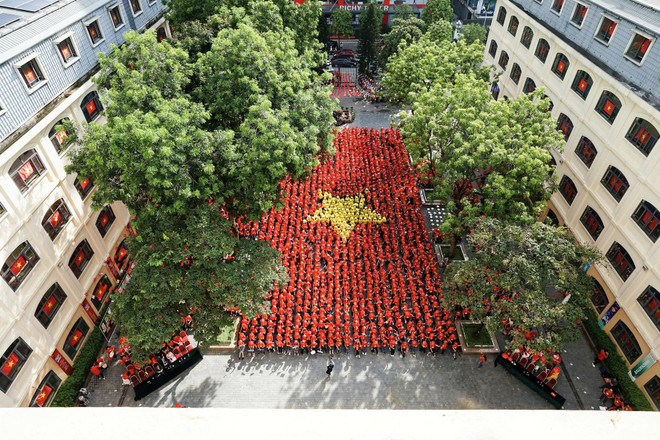
Resolution No.71 acknowledges the education and training sector’s shortcomings such as insufficient access compared to advanced nations, stark disparities across regions, inadequate facilities, and underdeveloped higher and vocational education, which are sparked by limited investment and unsound regime and policies for educators.
1-9.jpg
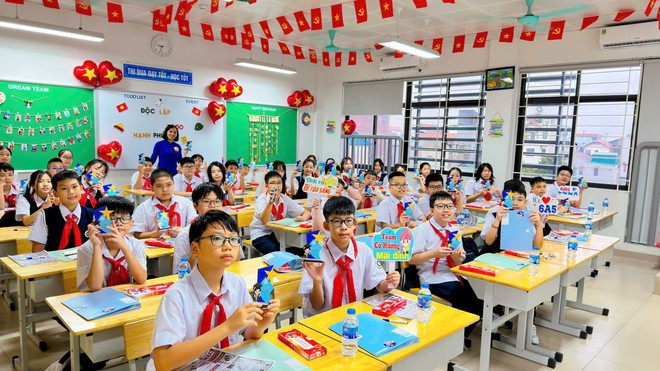
Resolution No.71 highlights the significance of breakthroughs in resources, motives, and new space for education and training development. (Photo: VNA)

To address these gaps, the Resolution underscores bold institutional reforms and strong investment in the sector. The state budget allocation for education must reach at least 20% of total expenditure, giving priority to universities. It calls for special and superior preferential policies for educators, raising professional allowances to at least 70% for teachers in general and preschool teachers and at least 30% for staff, and 100% for teachers in areas with particular difficulties, border regions, islands and ethnic minority inhabited localities.

Higher education and vocational institutions will be granted full autonomy regardless of financial status. Financial and investment mechanisms will be fundamentally restructured, while expanded financial aid and preferential credit policies will guarantee that no student drops out due to economic hardship.

The resolution also prioritises raising standards for educational facilities to meet regional and international benchmarks, securing land for new projects, and offering tax and land-use incentives for domestic educational institutions./.
VNA

See more

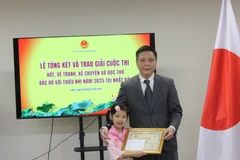
Nguyen Thanh Ha, Consul General of Vietnam in Western Australia and the Northern Territory presents Certificates of Commendation from the Consul General to students and volunteers in recognition of their outstanding contributions to the organisation of Xuan Que Huong (Homeland Spring) 2025. (Photo: VNA)

Vietnamese community in Australia united through youth engagement

Speaking at the ceremony, Nguyen Thanh Ha, Consul General of Vietnam in Western Australia and the Northern Territory, praised the dedication of young Vietnamese living in the region. She emphasised that the success of Xuan Que Huong was built not only on its colourful performances, but also on the strong sense of responsibility and tireless behind-the-scenes efforts of students and volunteers.

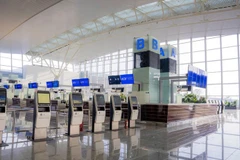
A full suite of automated technologies has been deployed across the Terminal T2 at Noi Bai International Airport, giving travellers greater control over their procedures from check-in to boarding. (Photo: VNA)

Noi Bai Airport to operate expanded int’l terminal with comprehensive automation

The upgrade follows directives from the Prime Minister and the Ministry of Construction and is designed to ease pressure on existing infrastructure by lifting the terminal’s annual capacity from 10 million to 15 million passengers. For the first time, a full suite of automated technologies has been deployed across the terminal, giving travellers greater control over their procedures from check-in to boarding.

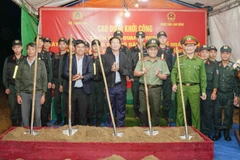
Soldiers help flood-hit communities clean up in Hoa Thinh commune, Dak Lak province. (Photo: VNA)

Concerted efforts help disaster-hit communities rebuild lives

The “Quang Trung Campaign” to rapidly repair and rebuild houses for affected families in central provinces is seen as a catalyst for faster and more sustainable recovery, extending beyond housing restoration to reinforcing essential infrastructure, enhancing community resilience, and strengthening public trust in the Party and Government.

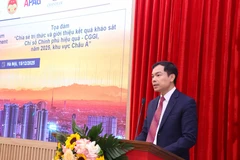
Associate Professor Dr Nguyen Manh Hung, Vice President of the Ho Chi Minh National Academy of Politics, addresses the dialogue in Hanoi on December 15. (Photo: VNA)

Vietnam among Asia’s leaders in governance capacity

Vietnam has climbed 12 places in the 2025 Chandler Good Government Index (CGGI) since 2021, rising from 60th to 48th globally. Over the past five years, the country has recorded progress in six out of seven CGGI pillars, making it one of Asia’s most notable governance reformers.

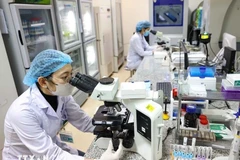
Scientific research activities at the National Hospital of Endocrinology. (Photo: VNA)

Vietnam sets roadmap for intellectual workforce to 2045

The strategy aims to build a high-quality Vietnamese intellectual workforce with a rational structure, identified as a core driving force for the rapid development of modern productive forces, as well as a leading force in digital transformation, innovation and international integration.

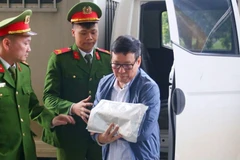
Le Duy Thanh, former Chairman of the Vinh Phuc People’s Committee, is escorted to the courtroom. (Photo: anninhthudo.vn)

Appeal trial opened for Phuc Son Group corruption case

According to the first-instance verdict, Nguyen Van Hau, Chairman and CEO of Phuc Son Group, exploited personal and professional connections to bribe over 132 billion VND (over 5 million USD) to leaders of the Party Committees, People’s Committees, and departments in Vinh Phuc and Quang Ngai, enabling Phuc Son Group to secure many contracts in these localities and Phu Tho province.

A performance at the year-end review programme in Sydney on December 14, co-organised by the Vietnam-Australia Scholars & Experts Association and Vietnam-Australia Cultural Exchange Organisation. (Photo: VNA)

Gathering honours knowledge, culture, community spirit of OVs in Australia

Addressing the gathering that drew more than 300 guests, Vietnamese Consul General in Sydney Nguyen Thanh Tung highlighted contributions of the Vietnamese community in Australia, particularly intellectuals and professionals, to the host society as well as cooperation between the two countries.

Agricultural production models help farmer access modern technology to improve output. (Photo: VNA)

Three national target programmes basically meet, exceed 2021-2025 goals

A report from the Central Steering Committee for National Target Programmes for the 2021–2025 period showed that poverty reduction in ethnic minority-inhabited areas averaged 3.2% per year. Per capita income among ethnic minorities is estimated to reach 45.9 million VND (1,760 USD) in 2025, a 3.3-fold increase from the 2020 level, well surpassing the goal of more than doubling.

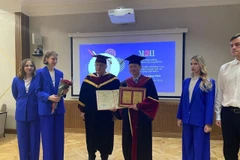
Professor Dr. Tran Hong Thai receives the honorary doctorate title and certificate from Professor Nikolay Rogalev of MPEI. (Photo published by VNA)

Vietnamese professor awarded honorary doctorate by Moscow institute

Professor Dr. Tran Hong Thai, Standing Vice President of the Vietnam Academy of Science and Technology (VAST) was granted an Honorary Doctorate by The Moscow Power Engineering Institute (MPEI) for his outstanding contributions to scientific development, education and international cooperation in the energy sector.